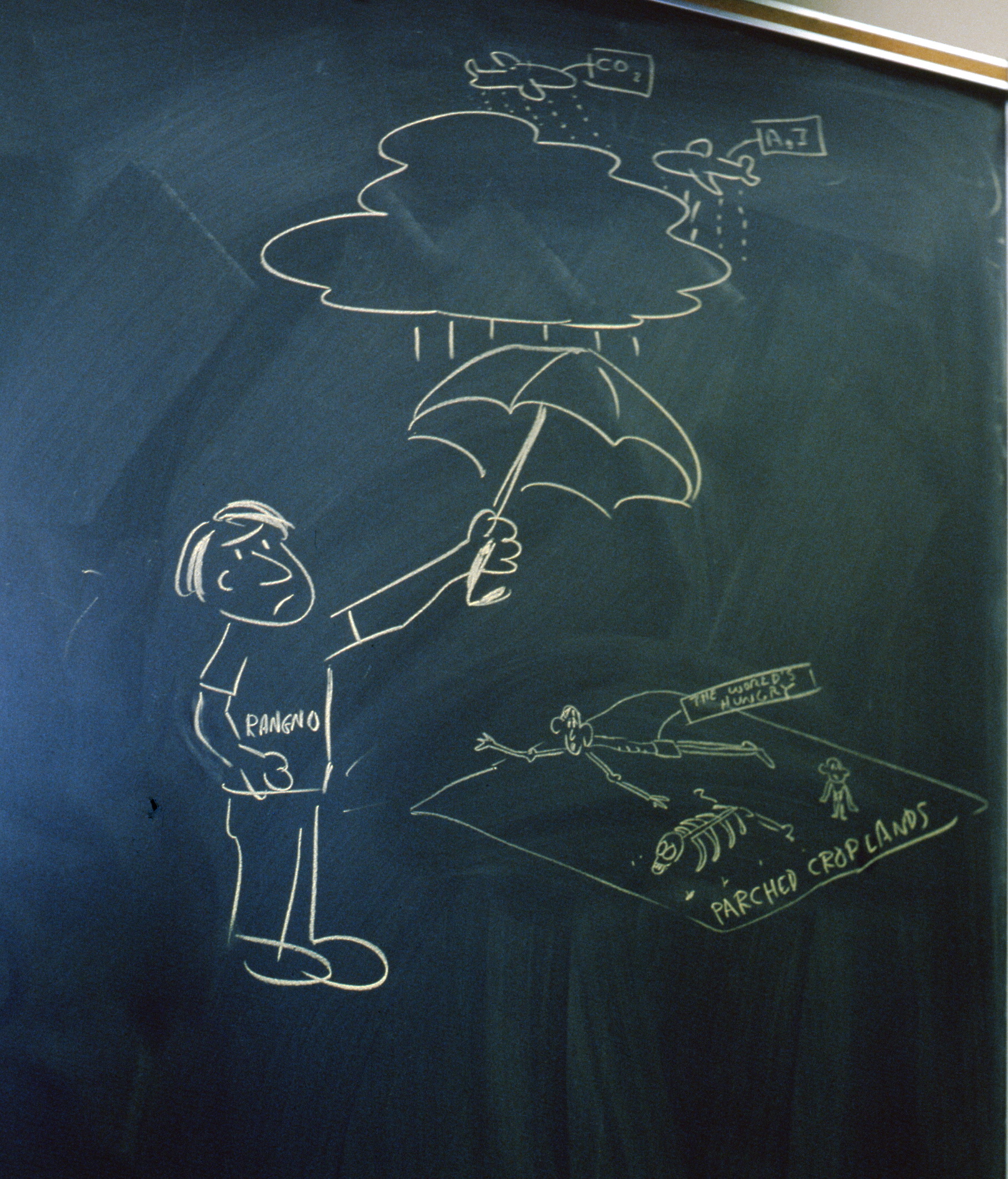
Life Stories: PETER HOBBS (!) and me (Rangno)

PETER HOBBS and me.

A well-known friend and well-published faculty member from Colorado State University, after I told him I was going write a blog about my almost 30 year professional relationship with science superstar, Prof.  Peter V. Hobbs. I worked under Prof. Hobbs in the University of Washington’s Cloud and Aerosol Research Group.  My friend, Bill Cotton, an atmo. science superstar himself,  suggested that my title should look like the one above with Peter  Hobbs in a HUGE font, and “me” a tiny one.  After all, Peter Hobbs wrote several books in the atmospheric sciences and had co-authored hundreds of journal articles that came out of his group, and thus had massive impact in his field.  Hobbs was honored by the American Meteorological Society with a symposium day in New Orleans in 2008 dedicated to his memory.  I gave a talk at that symposium on our publications in weather modification/cloud seeding.

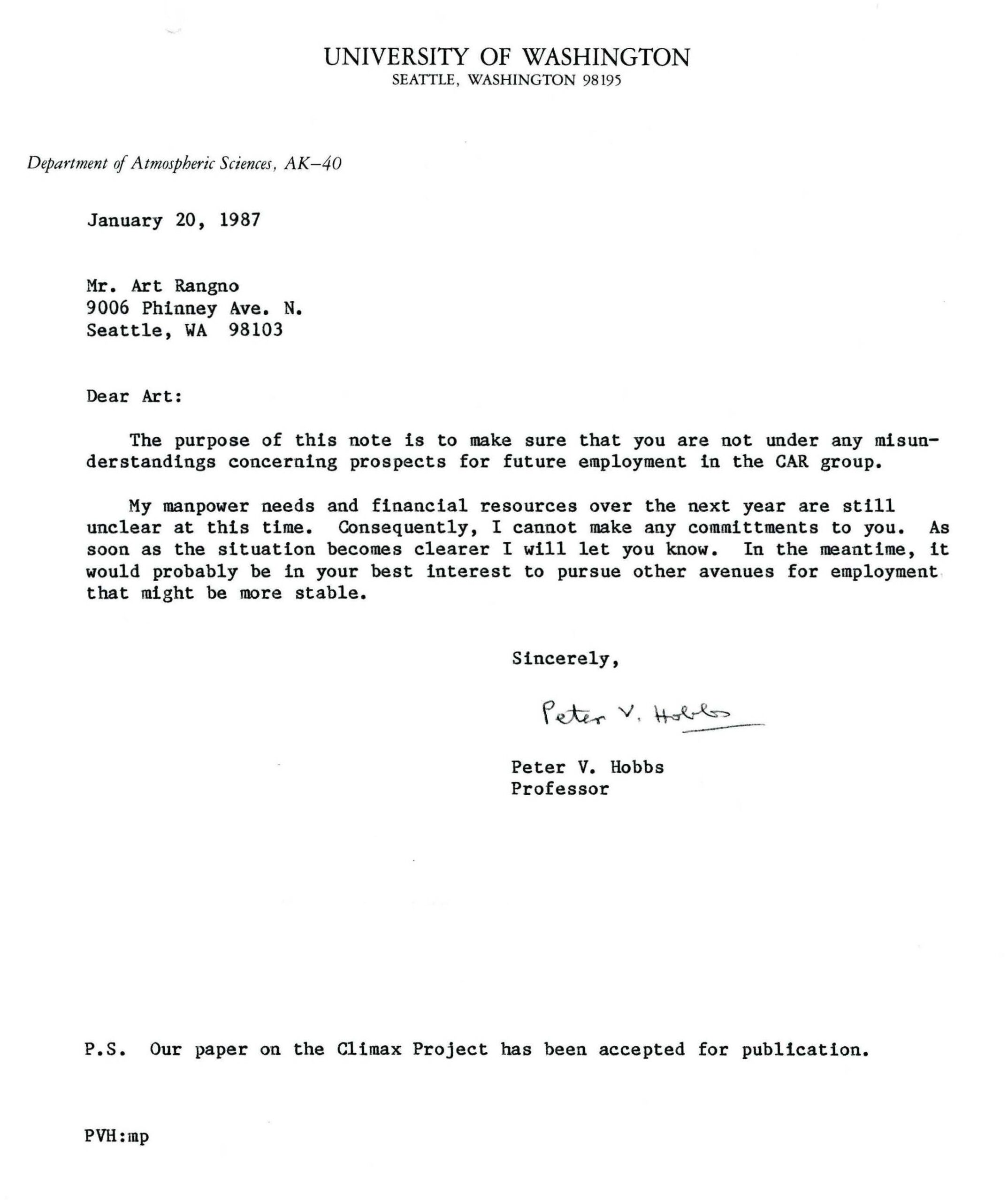
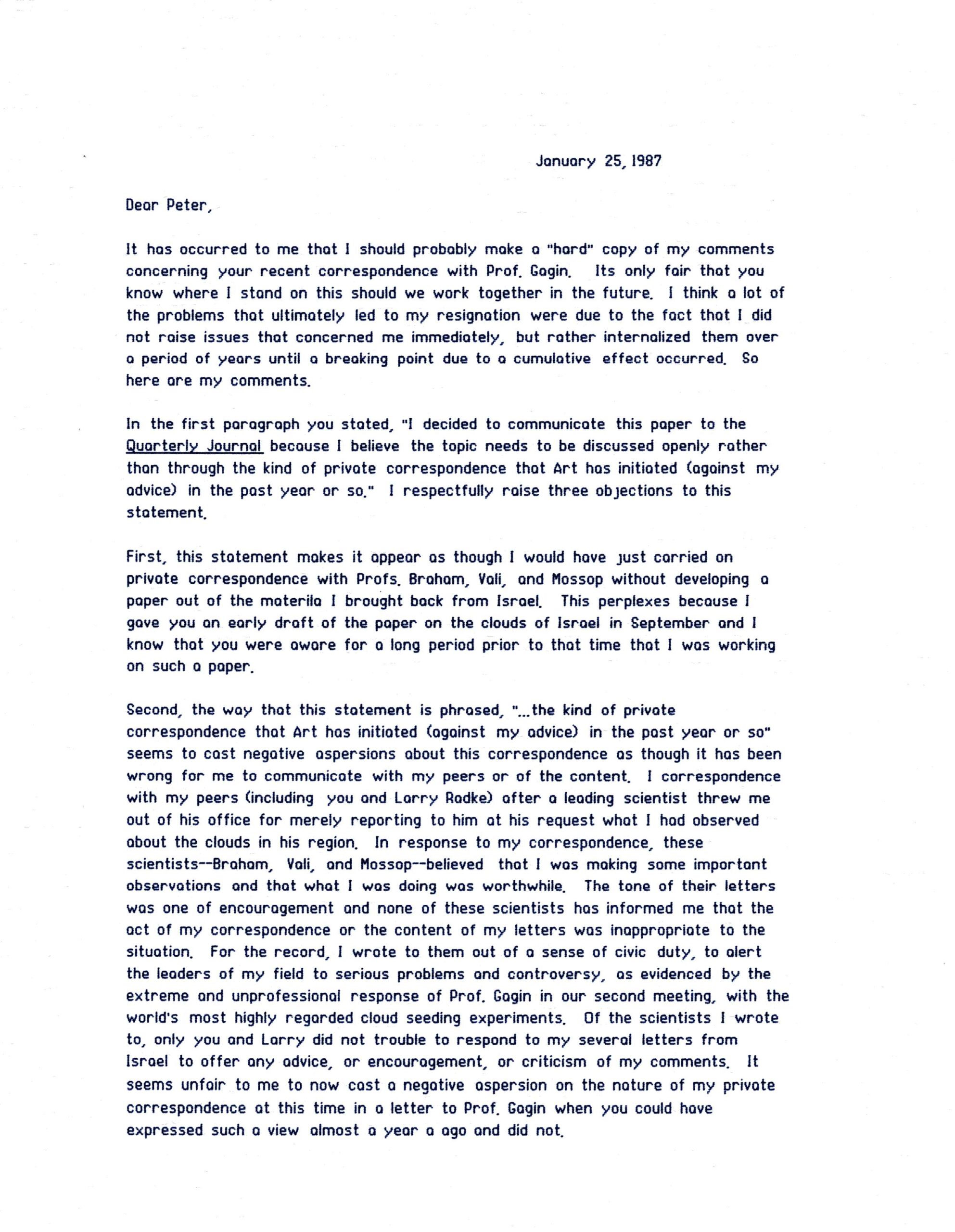
My friend’s font title suggestion made sense because I only authored a tiny fraction of what Prof. Hobbs did.  Still, I had a measurable impact, one might say, because of the opportunity that being in Peter Hobbs’ group presented, and this was critical; his support for my “contrary” findings regarding prior cloud seeding experiments that he himself passed positive views on.  I was part of his research group from 1976-2006, except for a two year hiatus (1986 and 1987) whose cause is eventually explained.

We received a monetary prize for our work in 2005.

The Cloud and Aerosol Research Group may have been the most visible part of the University of Washington’s Atmospheric Science Department due to having a research aircraft and the large, almost continuous flow of journal papers and grey literature reports that emanated from his group following field campaigns.  Groupings of published papers in numbered yellow binders were sent out across the world by Peter Hobbs.  Three hundred of each volume were sent out!

The Group’s findings were almost always at the leading edge of science due to having airborne measurements collected with the latest instrumentation, bringing new information concerning clouds, structure of rainbands, precipitation formation, and aerosols.  It was due to Professor Hobbs management of his research faculty, staff, and graduate students that so much was published in a timely manner.

When personal tragedies struck, Peter Hobbs was the first to let you know you had his support; that you could take time off as needed for them.  For example, Peter understood when I had to leave work suddenly one afternoon after receiving news that my dad had collapsed and died.  And again, when I needed to leave just as suddenly when my son was having a crisis in Germany.   There was no time limit concerning this kind of absence.  Peter understood and sympathized with these kinds of events because family to him was so important.

Peter Hobbs was always also a participant in the Cloud and Aerosol Research Group’s annual Halloween Party at which he happily dawned a costume.

And no one, worked harder than he did, staying focused at his large desk in the corner of the 5th floor of the Atmospheric Sciences Geophysics Building.  When passing his office, which I did several times a day, his head was always down concentrating on the research draft at hand.

But Peter was an enigma in his professional life at the University of Washington, too.

There were sporadic periods of tension and controversy between Peter Hobbs and his staff, graduate students, or faculty within his group, all to my knowledge over authorship issues.   Two faculty members exited his group in bitterness and anger during my time in his group.

Since I am describing problems from my own viewpoint, I have also surveyed some former members of our group, and those who knew him in his field external to his group to chip in with their own opinions, so I don’t produce a slanted account.

The range of opinions I encountered about Peter Hobbs was extreme, even among faculty and scientists at other institutions.  For example, two funding officers who represented NASA and the NSF and who passed large sums of money to Peter Hobbs and his group  told me that they liked Peter; one socialized with him.   And it was true that they got significant returns for their funding in the form of publishable science from CARG’s field programs.

However, two leading external faculty in Peter’s field, both using the exact same wording, asked me, “How could you work for that man?” Another faculty member who exited Peter Hobbs’ group due to what he felt were credit abuses, described Peter in the worst terms, “a total fraud.”  There were other exits in anger, like mine in 1985, and one major former faculty member in his group who had exited in the mid-1970s recently could not cite a rainband paper authored by Peter Hobbs in his 2022 review because he knew that Peter had not done the work.

On the other hand, one long-term member of his group never complained about the appropriation of his work by Peter Hobbs.  There were sole authored papers whose published contents were mostly carried out by this member, an outstanding researcher.   He told me he didn’t really care about getting name credit for his work because having a job and supporting his family was more important to him than fussing over issues of credit that might jeopardize that stability.   This member of his group was responsible for many of the synoptic and ice crystal studies that came out of Hobbs’ group.  He described Peter as “decent person” and socialized with he and wife on many occasions.

And, as far as I could tell, Peter Hobbs was, indeed, a good family man and was good at working the crowd at celebrations or other social gatherings that I was at.

The best outweighed the worst.

Proof of Peter Hobbs’  importance to my getting published  

Only one paper I wrote myself, of all the half-dozen or so I submitted to journals on my own, was accepted for publication (Rangno 2008, J. Atmos. Sci.)  It’s true that those that were rejected were controversial and had less chance than the “average” manuscript of being accepted in a polarized field since they were about faults in the cloud seeding literature.  Still…..

Why write about my professional relationship under Peter V. Hobbs?

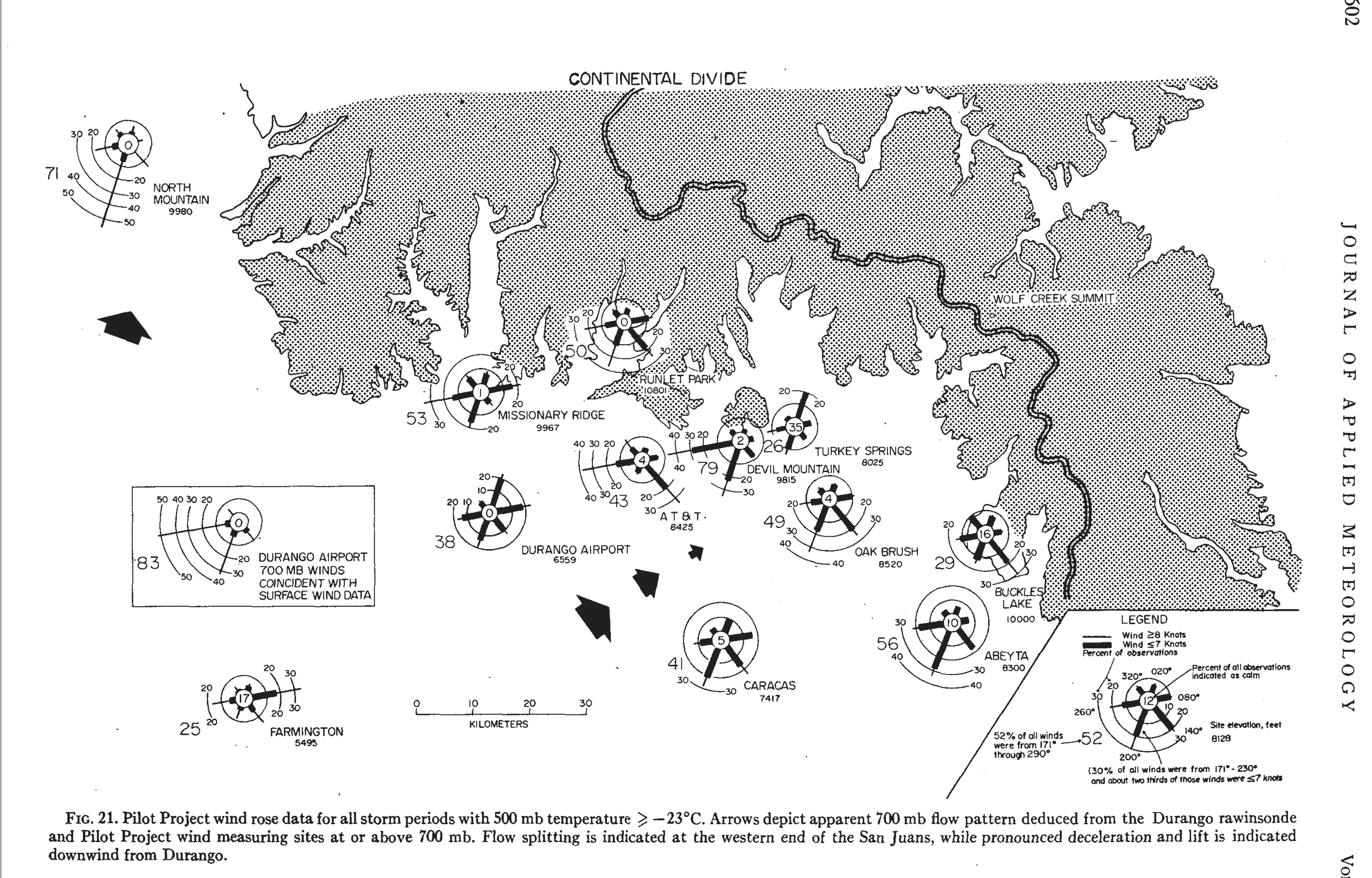
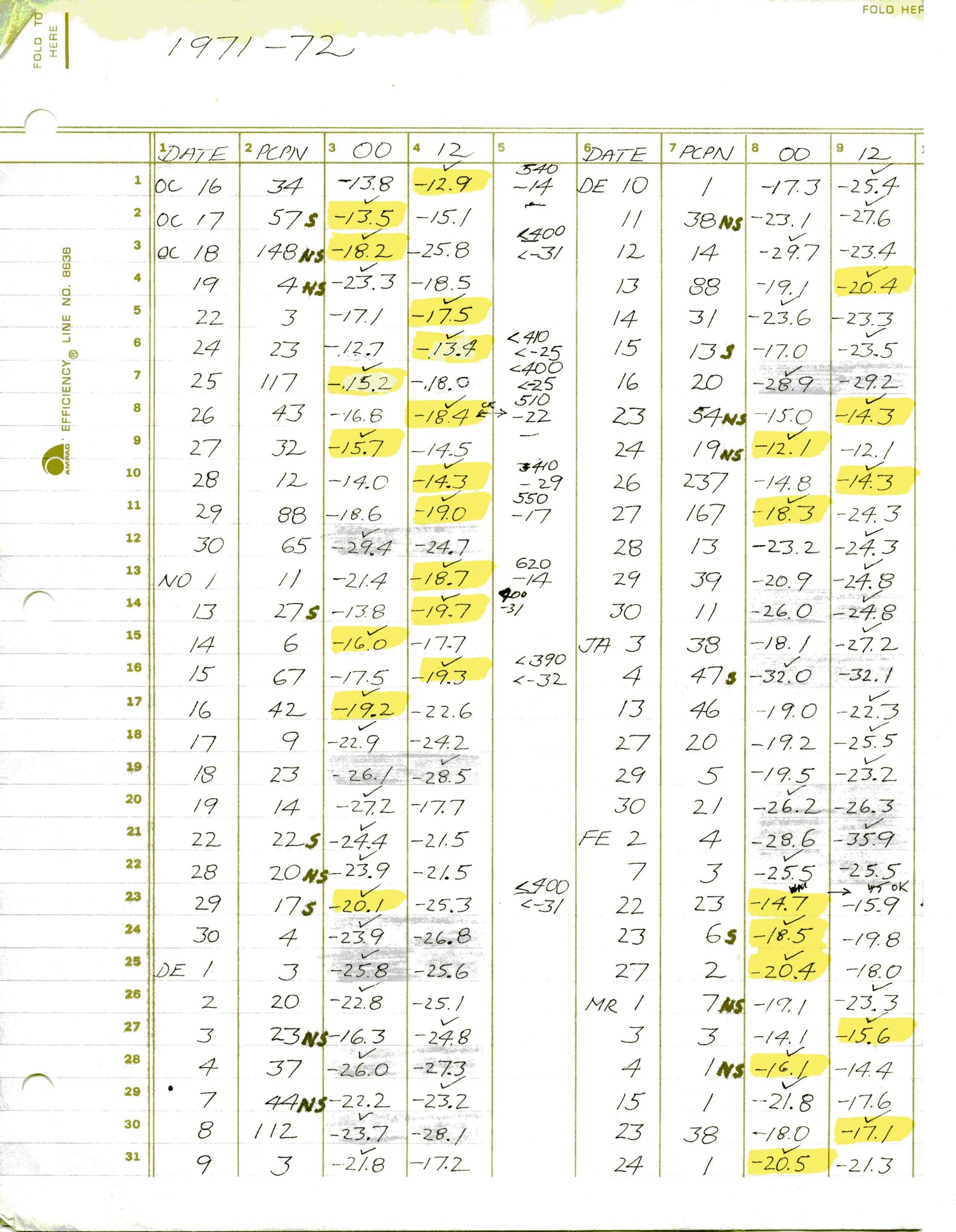
  •  I strongly want to get credit for the views and independent research I carried out when arriving in his group in 1976 from a Colorado cloud seeding experiment, the nation’s largest, most sophisticated randomized orographic one, the Colorado River Basin Pilot Project. I forecast weather there for the draw of random decisions. From the published early record, it is not clear due to authorship sequences what my role might have been in unraveling the prior seeding experiments that led to the CRBPP.  What I brought in to Peter Hobbs was to be the kind of unfunded, volunteer research I continued to carry out over the next two decades on my own time concerning cloud seeding claims that I deemed dubious.  I was bringing an expertise as an insider  that wasn’t there in the Department of Atmos. Sci. at the University of Washington due to  those troubling experiences I had with the Colorado River Basin Pilot Project.
  • All science workers want to get credit for the work and ideas they came up with, even if some are but crumbs off the table.  I certainly do, and that explains what all this is about while trying not to look like a little, itty-bitty tiny crybaby.  It’s especially true as I enter true “fogeyhood” at age 83 and the end of life may be just over the horizon.
  • Some thoughts on authorships in science were expressed almost four decades ago by William J. Broad, Nicholas Wade of the NYT, and science reporter, Daniel Greenberg, in this piece on fraud in science during NPR’s Dateline with Sanford Unger.  This 18 min piece speaks to the very same issues we have today, another reason for posting this:
  •  After I quit in 1985 due to credit issues with Peter Hobbs (my resignation “novella” is here) ,  I was  rehired by him two years later, a quite amazing thing when you think about it.   It says a lot about Peter Hobbs, too.   Authorship sequences/credit issues were no longer a problem; it was “conflict followed by reconciliation.”  And he hired me back and made sure I was still in the PERS1 retirement system instead of the newer, less generous one in those days, PERS2.  Thank you, Peter Hobbs.
  • I offered lead authorship to Peter on work I did instead of me  as in these two papers when he put me as the lead as the drafts were underway.  After all, he had written the grant proposals to get the money for these projects.  And, I didn’t feel I needed to prove my self anymore.
  • 1990:  Rapid Development of High Ice Particle Concentrations in Small Polar Maritime Cumuliform Clouds.  J. Atmos. Sci. (pdf)
  • 1998:  Microstructures of Low and Middle-Level Clouds Over the Beaufort Sea.  Quart. J. Roy. Meteor. Soc124, 2035-2071. pdf
  •  Conclusion:  It doesn’t get better than this because I was returning to a job,  people,  and university I loved (go Dawgs!)

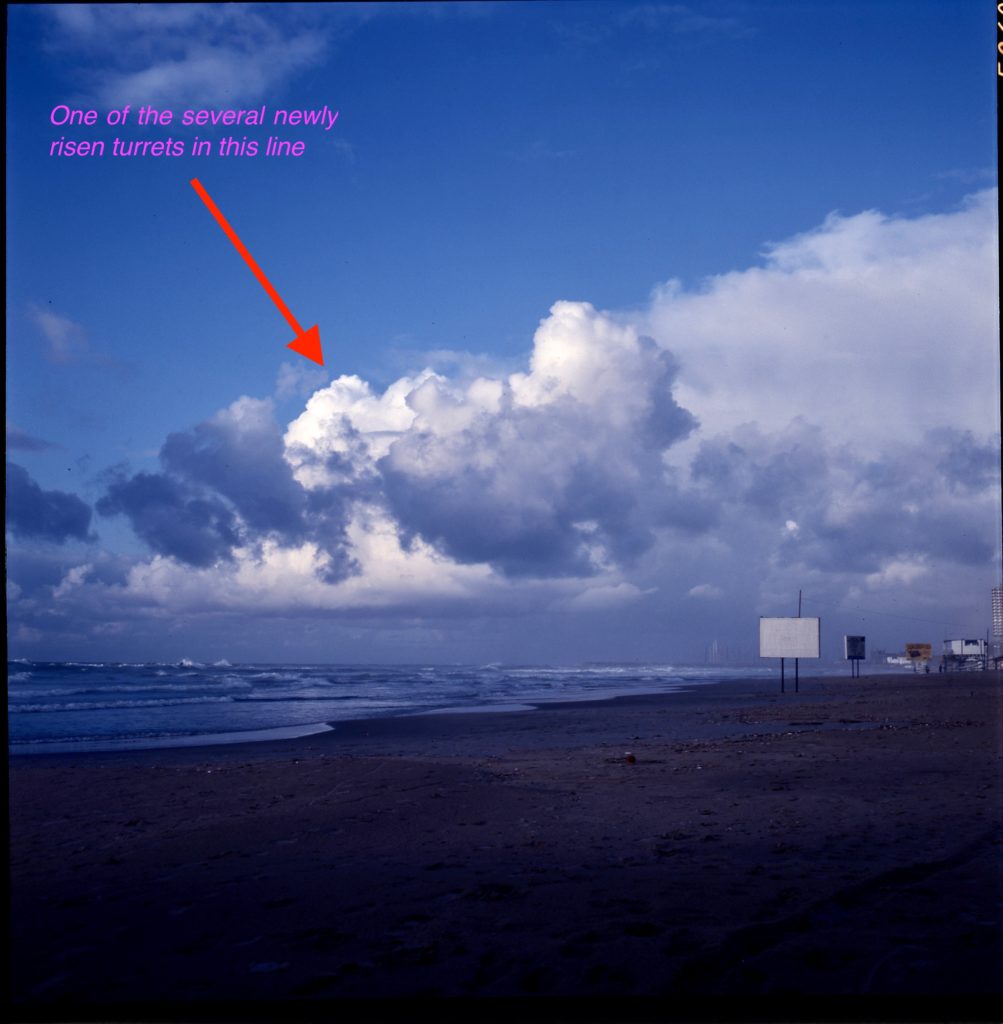
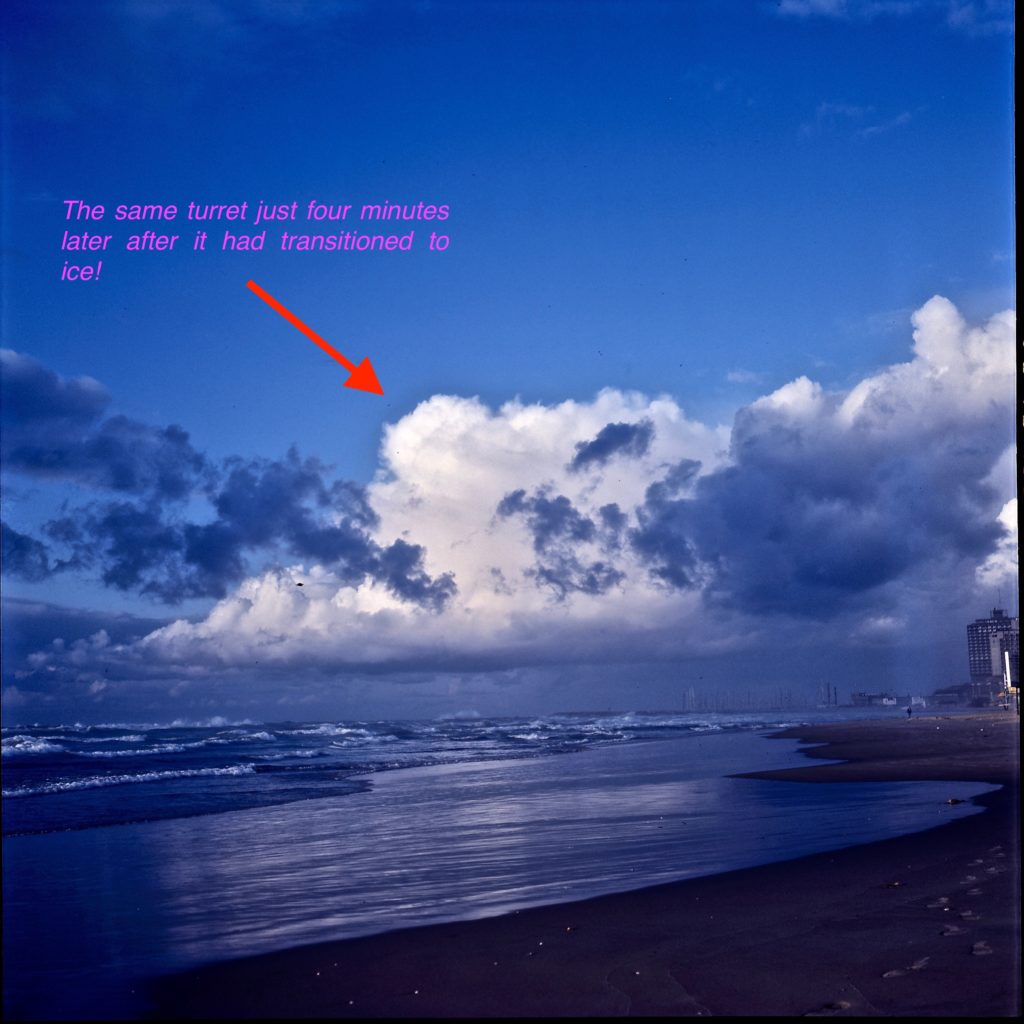
My work had a an impact in tearing down or degrading five majority science views which is probably more impact than even most faculty members have at universities.   With only a B. A. in meteorology, i.e., being a quite under-credentialed,  it makes my story  “improbable”–I’m smiling as I write this.   But, as a weather “monomaniac,” storm/hurricane chaser, weather map and data hoarder,  cloud photographing fanatic,  eyes always skyward,  I was bringing a different kind of background into Peter Hobbs’ aircraft and research group.

  • When research findings that are potentially embarrassing “come up from below,” and particularly when they could be seen as
    “low hanging fruit” in retrospect, it may not be welcomed by high-ranking scientists who could’ve easily done it.  Douglas Adams understood this “credential syndrome” so well in his Hitchhiker’s Guide to the Galaxy sci-fi parody when he wrote this:

It startled him ( a graduate student) even more when just after he was awarded the Galactic Institute’s Prize for Extreme Cleverness he got lynched by a rampaging mob of respectable physicists who had finally realized that the one thing they really couldn’t stand was a smart-ass.”

  • My work concerning “majority views” in the weather modification/cloud seeding arena was almost entirely unfunded.  I spent thousands of hours of at home unraveling false cloud seeding and false cloud descriptions in support of cloud seeding projects.  This effort  was driven by a feeling that I had a responsibility and the knowledge to do it, but also too,  because I saw that those who could also have done what I did, wouldn’t.  I was truly “driven” to do something about a deplorable situation in the weather modification/cloud seeding field as I saw it.
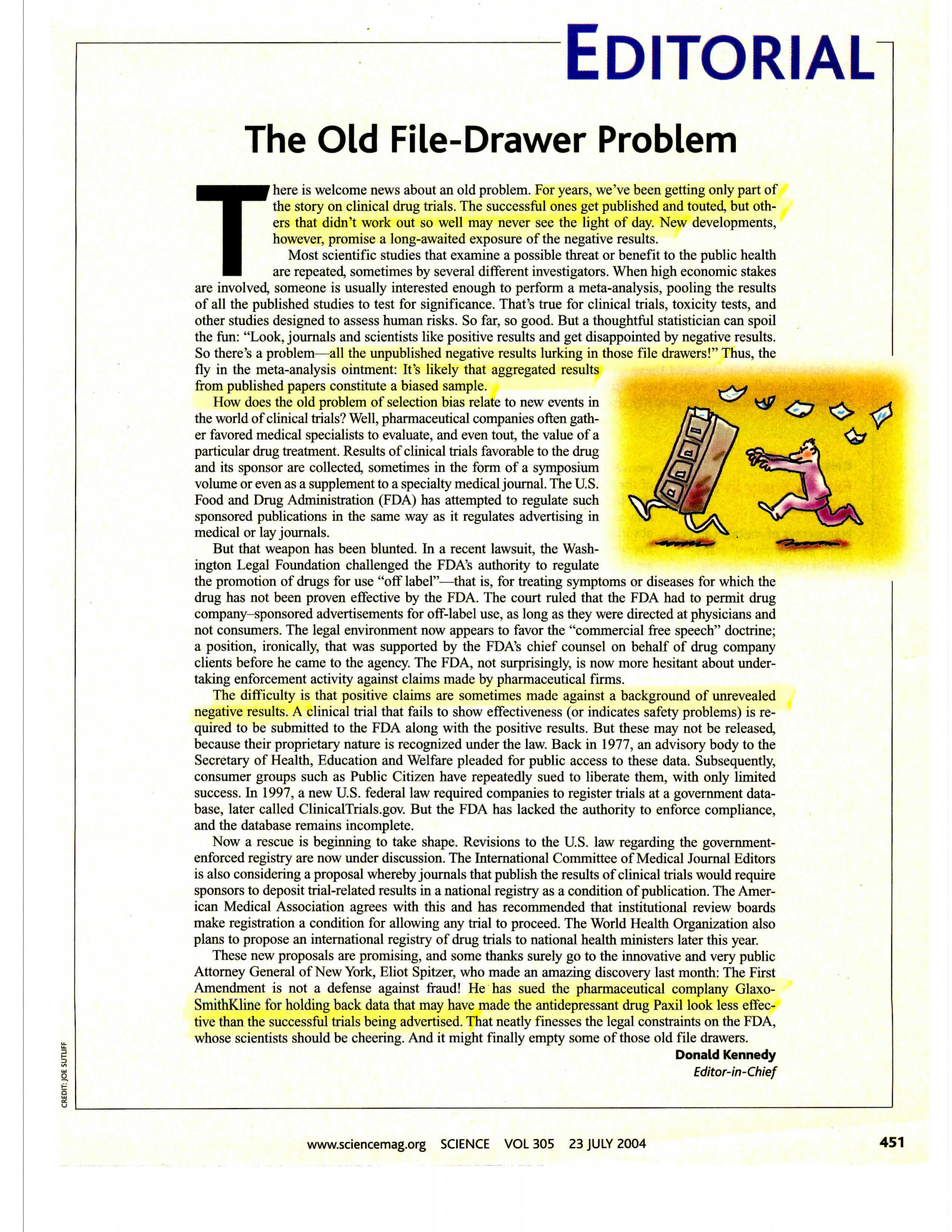
  • This is not an unusual story.  You have everything to lose by criticizing or reanalyzing the faulty, published work of others;  silence is a preferred pathway; “truth” (negative findings) remains hidden. Science’s Chief Editor, Donald Kennedy addressed this in the big Pharma arena:

  • The publication of bogus literature, certainly in the cloud seeding arena,  is due to poor peer-reviews of manuscripts in the first place.   Here’s where one starts embarrassing not only the authors when you correct their work, but also the reviewers of faulty literature.  Inadequate peer-reviews, perhaps by seeding partisans,  were responsible for the false claims I corrected in the peer-reviewed literature, ones that cost funders of cloud seeding operations, as in Colorado and Israel, based on faulty research  so much.   Namely, it didn’t have to happen had manuscripts been properly reviewed.
  • The role of Peter Hobbs:  My work was published in peer-reviewed journals mostly because of being in his research group and due to his support.   He was malleable when new facts came in and could jettison prior views,  such as those he held prior to reading my drafts of reanalyses of cloud seeding experiments.
  • Too,  Prof. Peter Hobbs’ giant reputation provided a critical mass for editors and reviewers to accept work he signed onto.   In sum, Peter Hobbs was willing to stick his neck out and support my independent research.  Thank you, again, Peter Hobbs.

I was not a great, productive researcher at the UW, but rather a mediocre one.  I feel guilty even today about  data collected by our aircraft that I never got finished evaluating and did not publish anything  about.   Part of the reason, to make an excuse,  was that when our aircraft “unterfuhrer,” Prof. Larry Radke,  left for NCAR, Peter Hobbs began to fly on all our field projects instead of remaining back at the UW churning out papers.  He had never done that before.  He needed a “cloud guy” on those flights.  So, off I went on almost every field project beginning in 1990 instead of remaining in SEA working on my own area of research that even in the best of times, progressed slowly.

What were the so-called “majority views” that were downgraded or eliminated ?

1) An aircraft cannot produce ice crystals in clouds when it flies through them at temperatures near -10°C .   This possibility was completely ignored or denied by researchers doing airborne sampling of clouds for decades.  It was thought that temperatures had to be far lower (~<-30°C) for this to happen  before Rangno and Hobbs (1983) came out.  It took eight years for the first confirmation of this effect to be published (Woodley et al.  1991).

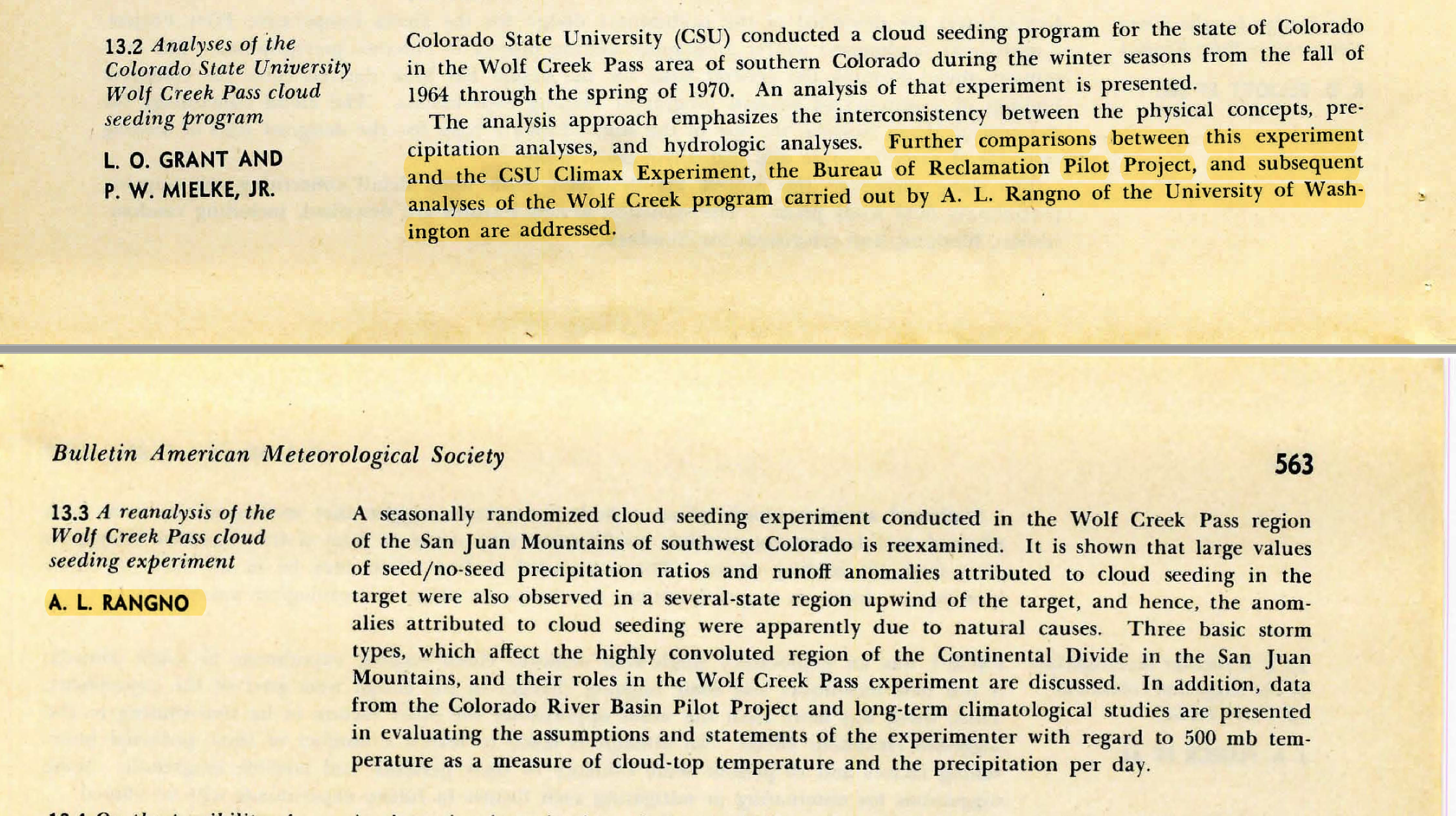
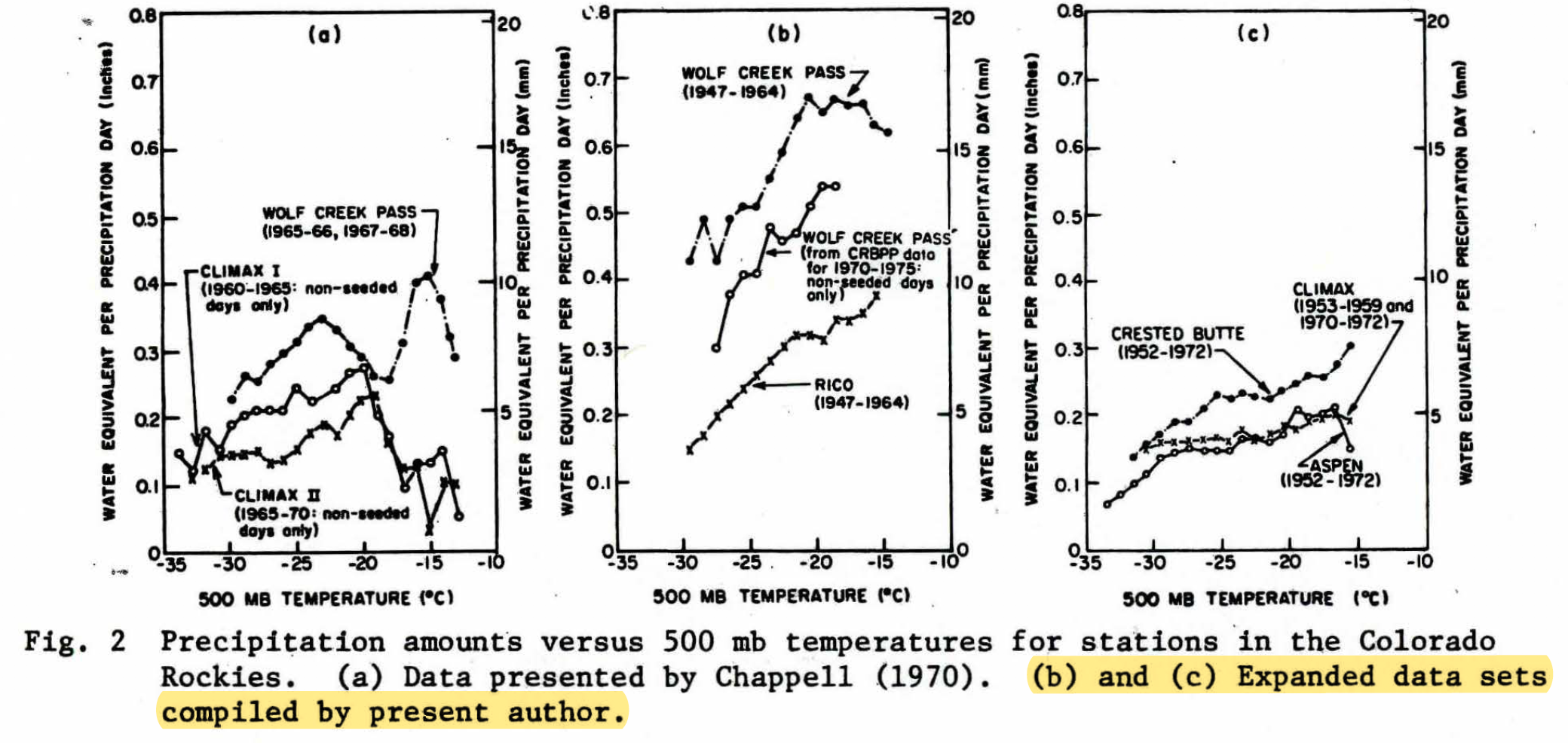
2) The Climax and Wolf Creek Pass wintertime randomized experiments in Colorado had “proved” cloud seeding (National Research Council-National Academy of Sciences 1973), among numerous other citations.   Those experiments had a seemingly strong, but false,  cloud microstructure foundation that accounted for the statistical results. All is gone due to Rangno (1979), Hobbs and Rangno1 (1979), Mielke (1979) Rangno and Hobbs (1987, 1993, 1995a).

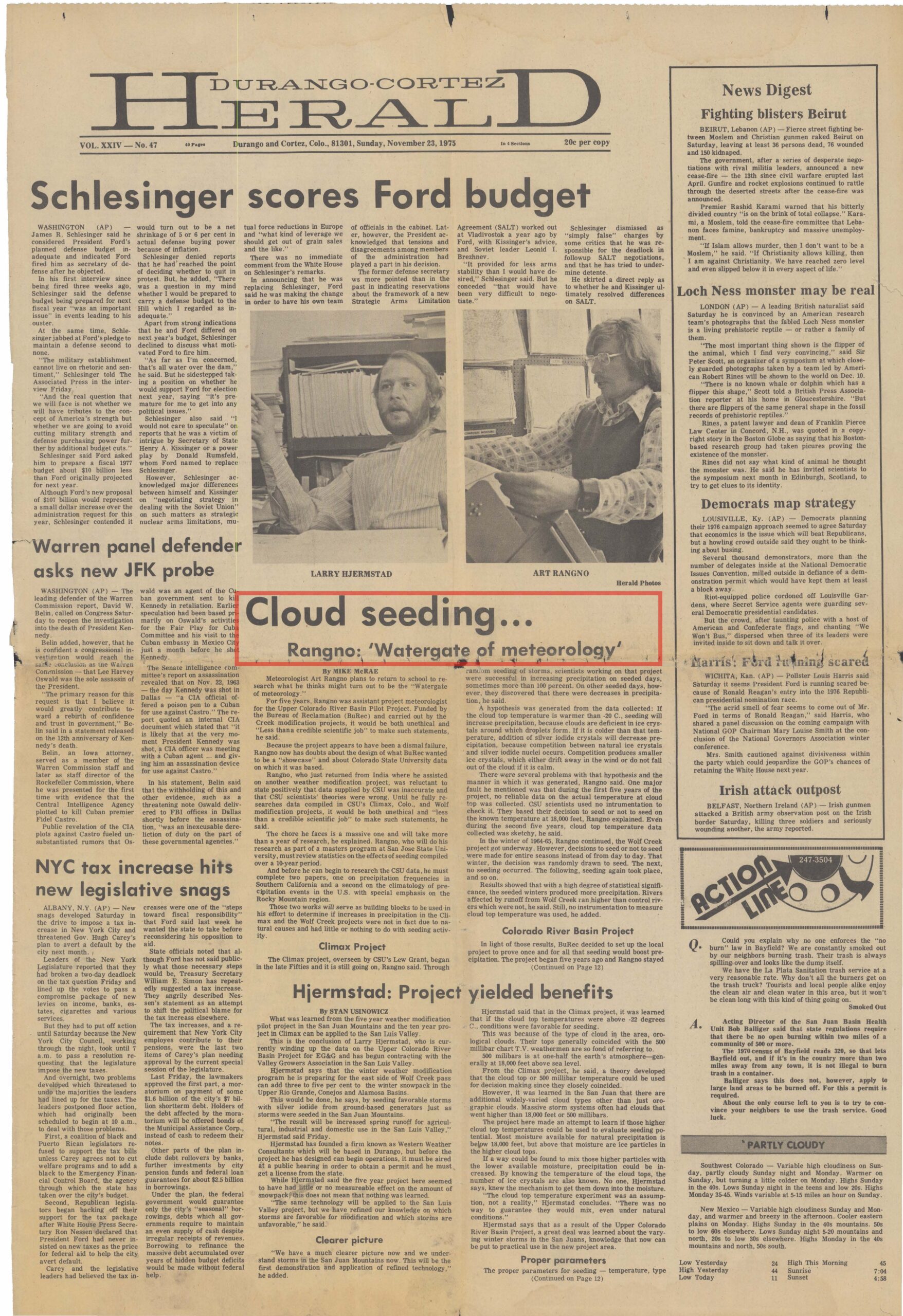
The high opinions  regarding these experiments were already in doubt by the late 1970s due to the experimenters’ own revelations (Mielke 1979), and this partly due to news they received in 1975 in a Durango newspaper headline that an outsider (guess who?)  was going to evaluate all their work (Rhea, 1975, private communication).

3) Israeli clouds do not rain until low cloud top temperatures are reached and do not exhibit ice multiplication (Silverman 1986, Amer. Meteor. Soc. Monograph, among numerous other citations).  Those ersatz claims  buttressed the statistical results of Israel’s cloud seeding that at one time indicated rain had been increased.  Cloud claim status today:  Gone.  Rangno (19882), Rangno and Hobbs (1988), Levin 1992, 1994, Levin et al. 1996, Freud et al. 2015) and others.

4) The first two Israeli cloud seeding experiments “proved” cloud seeding (Kerr 1982, Science, among numerous other citations). Gone, except in the minds of some Israeli cloud seeding promoters who cannot acknowledge error even recently (!), Benjamini et al. 2023) or the true precipitating nature of their clouds.  Rangno and Hobbs (1995, 1997a, b, c, d, e), Levin et al. (2010).

5) The Hallett-Mossop riming-splintering process produces nearly all of the 2ndary ice in clouds with tops never colder than about -12°C. (numerous citations).    There is still some doubt regarding how much this consensus view has been downgraded in recent research.  Not “gone,” but diminished due to findings that drop shattering also contributes to 2ndary ice in a measurable way but is still not quantitatively known.  Hobbs and Rangno (1985, 1990), Rangno and Hobbs 1991, 1994), Rangno (2008), Lawson et al. 20xx) have all published observations indicating the role of riming-splintering may not be the total driver of 2ndary ice formation.  Blyth and Latham (1998), however, questioned the “outlier” conclusions by myself with Hobbs.  We responded “royally” along side their critique.

6). In the late 1970s I suggested to Peter Hobbs and Larry Radke a cloud seeding experiment using a vertically pointed mm-wavelength radar as the target.  This vertically-pointed radar was located at the base of the Atmospheric Sciences Bldg.  The lightbulb went on when some Ac with virga, possible a contrail, went overhead in 1978 that resembled what a cloud seeding plume would look like.   Peter Hobbs got the money for the experiment, it was carried out in 1980 with mixed success, and the best example was published in a Science magazine article in 1981.  There was a problem.  I wasn’t mentioned in the draft Peter was about to send in despite having recommended this experiment and helped carry it out.  I complained.  He added my name to the end of the list of authors that began with himself.

==================================================

BOTTOMLINE

When you read what I have to say about the sometimes troubled relationship with Peter Hobbs, you will wonder one thing: “Would I do it again, that is, go through the joy of discovery in cloud-ice research, the overturning of peer-reviewed published, but suspect, cloud seeding literature,  amid the frustrations of working with Prof. Peter V. Hobbs that you will read about?”

The answer is an emphatic, “yes.”

This memoir, too, if I may be so presumptuous to write one, is dedicated to Professor Peter V. Hobbs, Director of the Cloud and Aerosol Research Group at the University of Washington.

============Footnotes========================

1The authorship contribution issue has been addressed recently by such high end journals as Geophysical Research Letters which now has the following criteria for authors.  Below is an example.  Had these  criteria been in place when during my first ten years in Peter’s group, there would not have been any authorship conflicts!

Author Contributions as listed in recent Geophysical Research Letters publications:

Conceptualization: Subhrendu Gangopadhyay, Connie A. Woodhouse, Gregory J. McCabe, Cody C. Routson, David M. Meko

Data curation: Subhrendu Gangopadhyay

Formal analysis: Subhrendu Gangopadhyay, Connie A. Woodhouse, Gregory J. McCabe, Cody C. Routson, David M. Meko

Investigation: Subhrendu Gangopadhyay, Connie A. Woodhouse, Gregory J. McCabe, Cody C. Routson, David
M. Meko

Methodology: Subhrendu Gangopadhyay, Connie A. Woodhouse, Cody C. Routson, David M. Meko”

PS:  I would strongly recommend adding  the following to this list:

             Editorial and organizational guidance/expertise, if any: __________________________

2Resulted from self-funded 11 week cloud investigation in Israel in 1986.

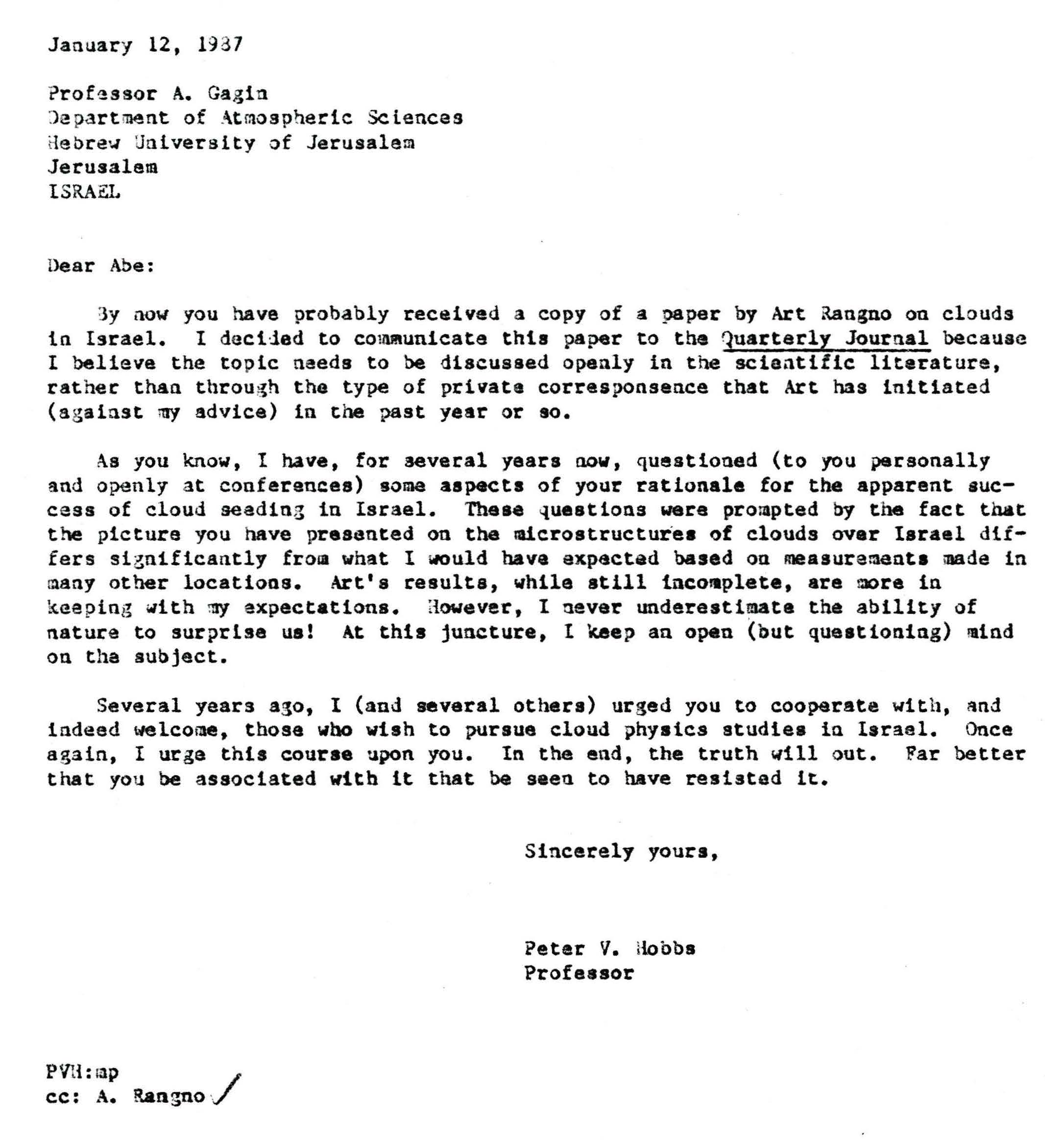
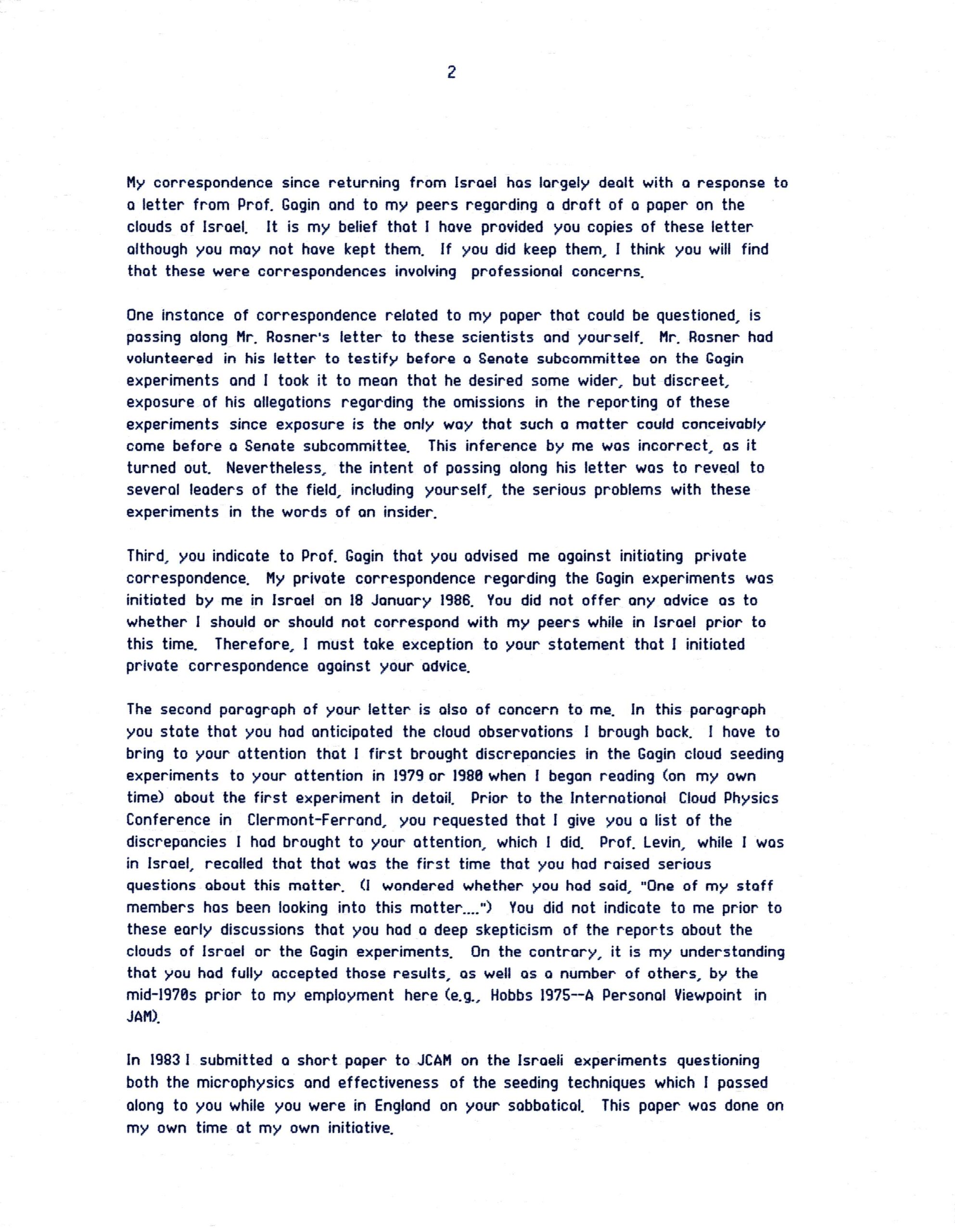
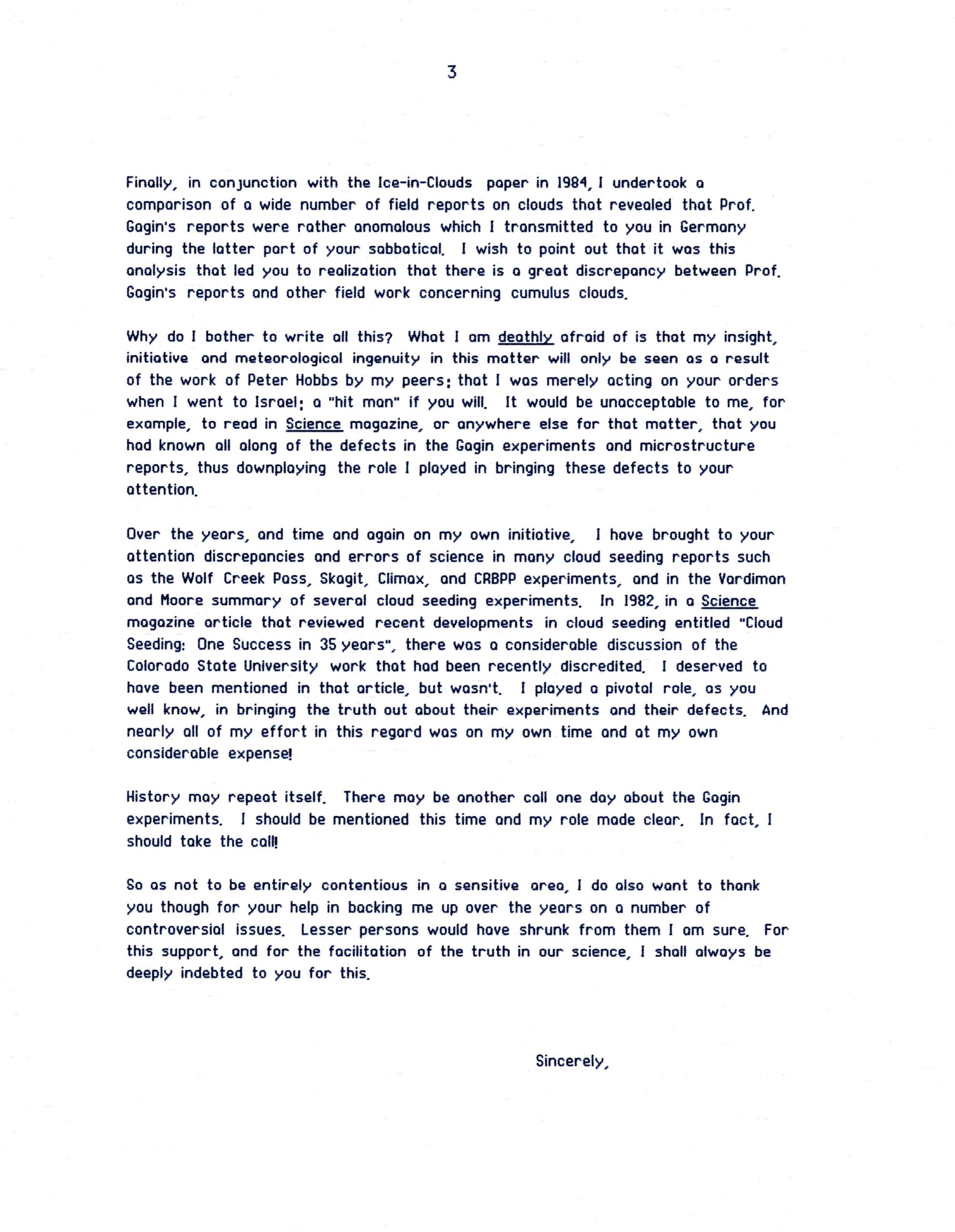
3Before I left for Israel to investigate their clouds with my own eyes, Peter Hobbs described me as being “arrogant” for thinking I “knew more about the clouds of Israel than those who studied them in their backyard.”  I smirked, holding back a laugh.  He had no idea how easy it was for me to see that something was terribly wrong with the journal descriptions of “ripe for cloud seeding” clouds by plotting rawinsonde soundings when it was raining at the launch site at Bet Dagan.  Anyone who bothered, and knew where to find such data, could have done what I did.  However, in his letter to Prof. Gagin, he asserted something very different, that the observations in my manuscript were those that agreed with his own.   This was devastating to me.  He was trying to rob me of my insights about those clouds!

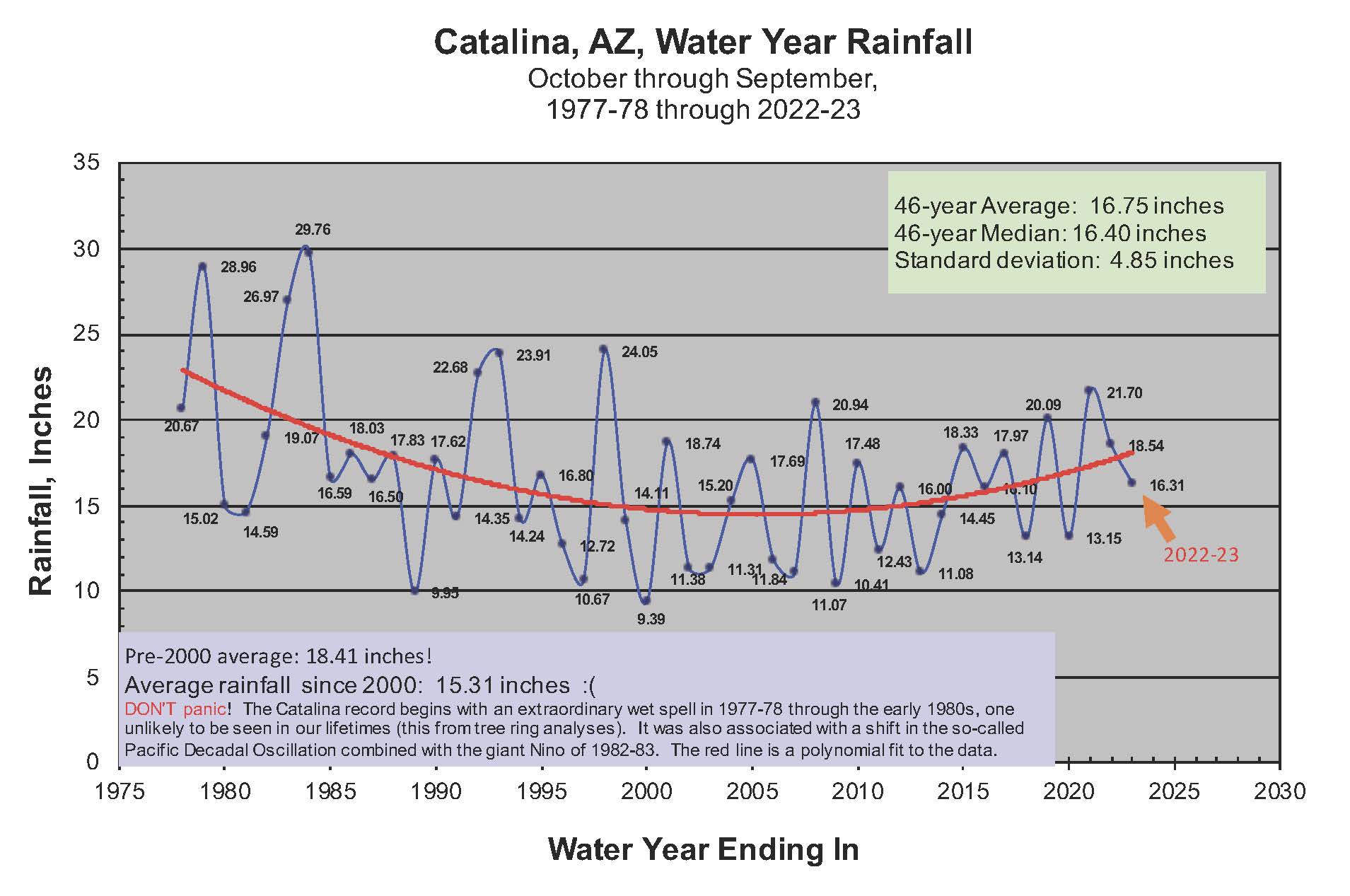
Updated Catalina, AZ, Water Year Plot, 1977-78 through 2022-23; summer temperature maximums in AZ not increasing (?)

Since the chance of measurable rain before the end of September 2023 is nil and none, I thought I would post an updated plot of the Catalina Water Year precipitation totals since records began at Our Garden from the 1977-78 Water Year, October 1 through September 30:

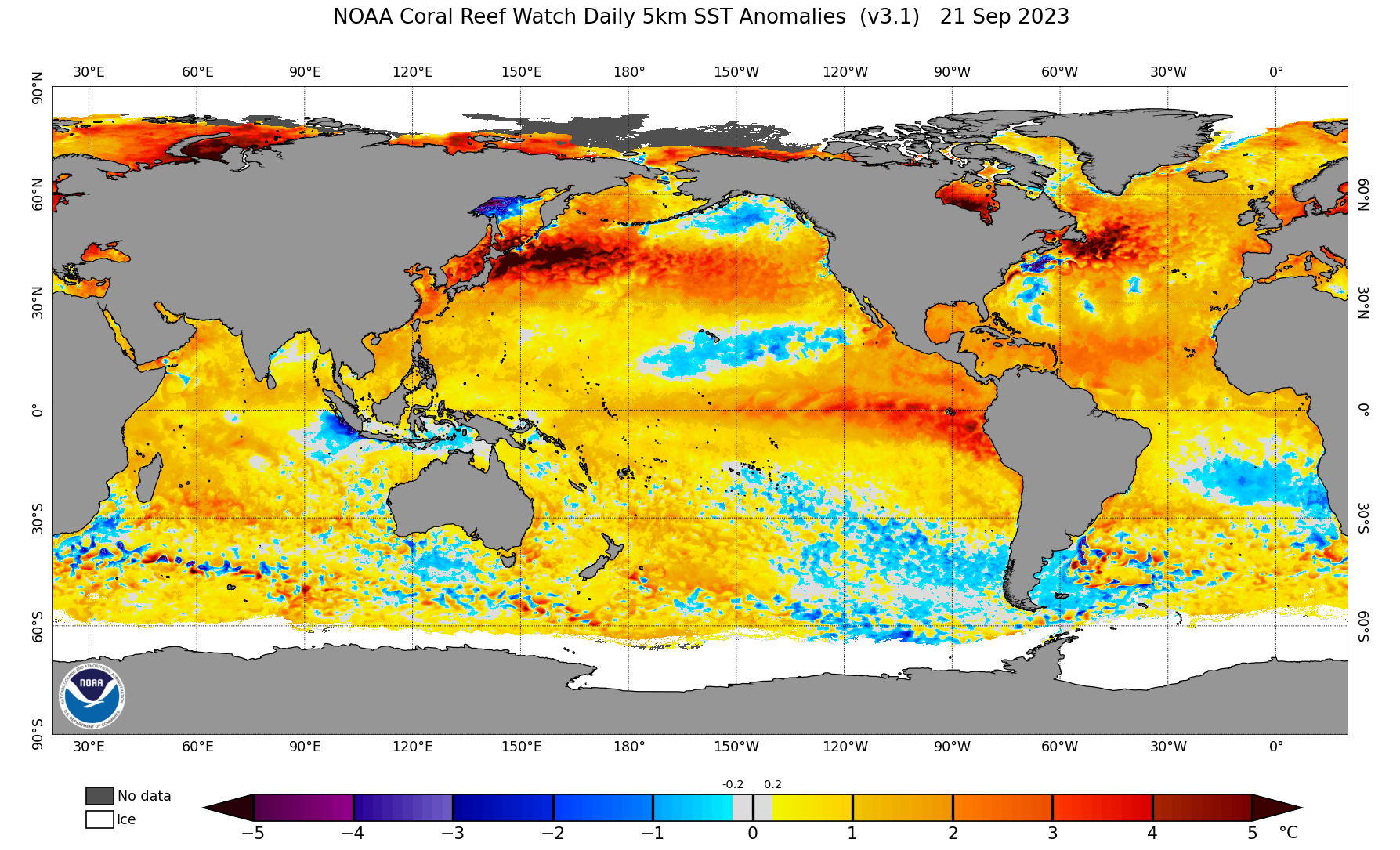
With an El Niño in the wings, it may be that the current recovery from the droughty years from 2000-2010 will be enhanced.  Ninos are supposed to bring wetter conditions the the Southwest. In case you think I am lying about a Niño in the wings, here is a chart of sea surface temperature anomalies I just grabbed from here:

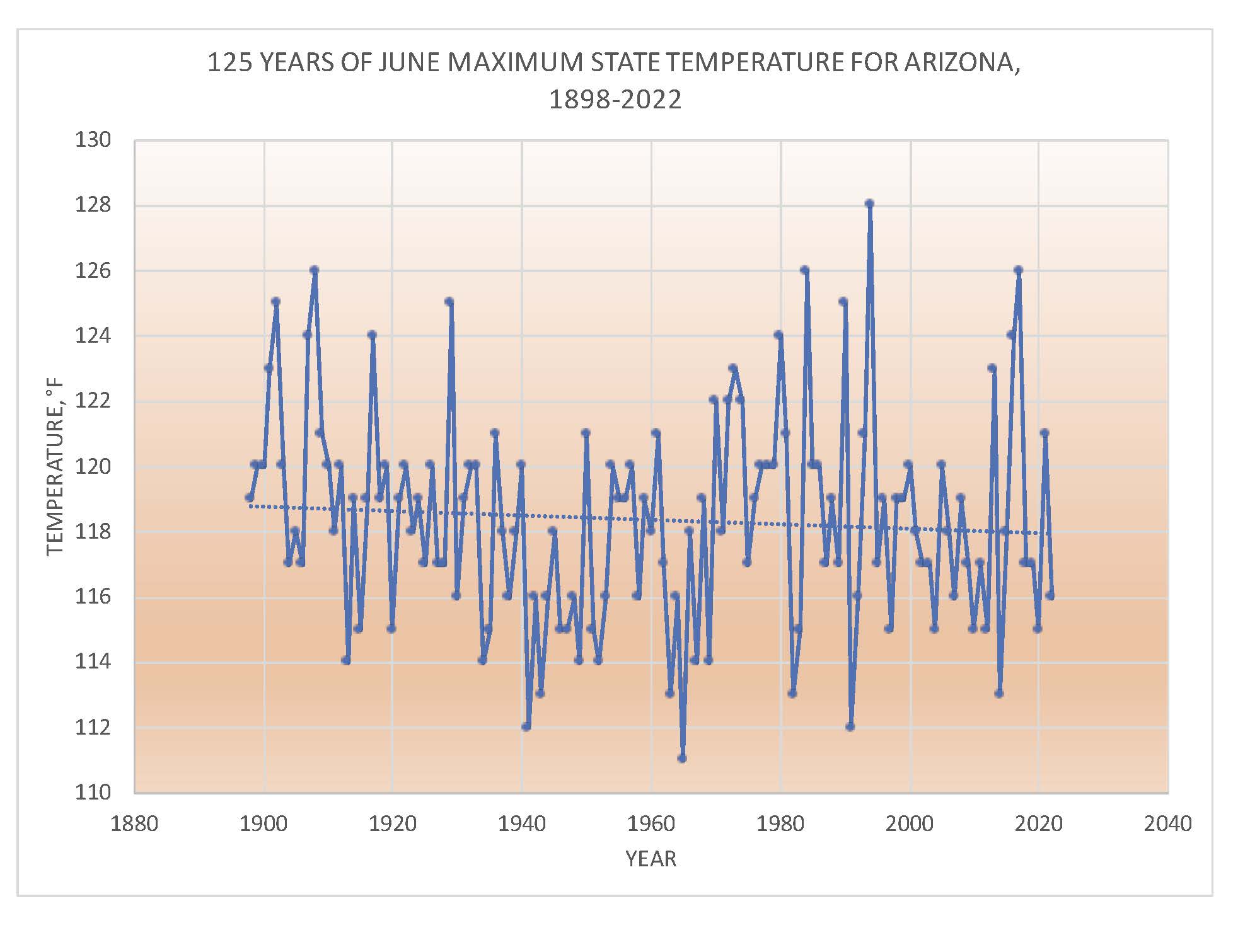
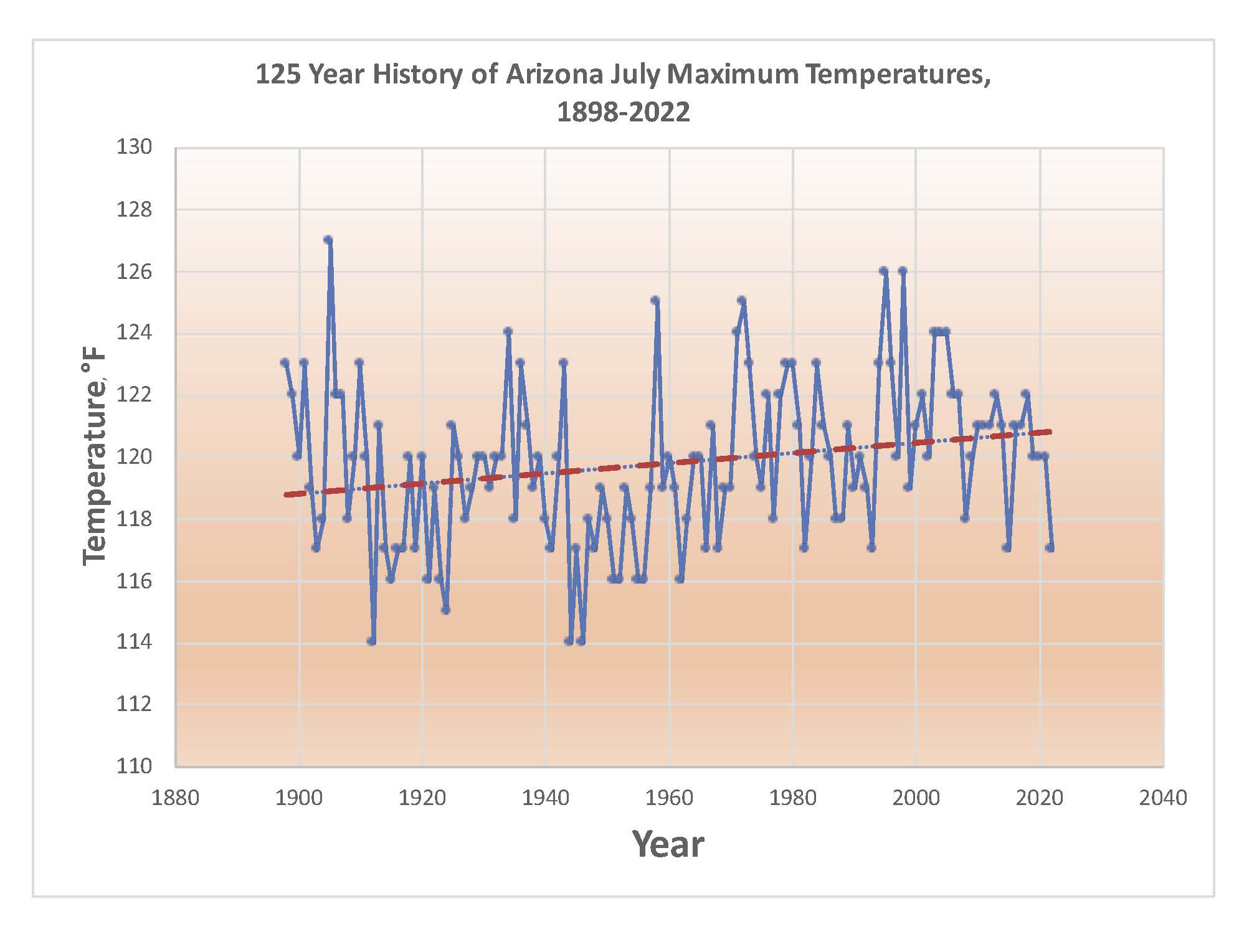
While we’re in the subject of weather, I am going to add these plots from the NOAA publication, “Climatological Data, Arizona.”  In EVERY one of these monthly publications is a table of the highest temperature observed ANYWHERE in the state since the summer of 1898.  I wanted to see how much they’ve been increasing in June and July over the 125 years since these publications started coming out.  After all, we’ve been hearing a LOT about “extremes” increasing.  I don’t why I even bothered to do this, what a waste I am sure it will be; the extremes will be shooting upward!

But, anyway, here are those plots with trend lines:

Not much going on, especially of late.  July has an overall upward trend since records began, but that last 50 years or so don’t seem to be following that upward trend.  And how can June exhibit a slight downward trend?  Not what I expected.   I dunno why.  I will leave it to the “extremists” to explain.

Thanks for reading, if anyone does.

Art, retiree, Cloud and Aerosol Research Group, University of Washington

The Trials and Travesties of a Seattle Mariners Batting Practice Pitcher, 1981-1983

When Seattle Mariners’ pitching coach, Frank Funk, called me in from the bullpen that Sunday in July 1981, I was pretty nervous.  I had never before pitched to major league batters.  Tommy Davis, the former Dodger outfielder, had been nice enough to warm me up in the bullpen instead of one of the Mariners catchers.  I strolled onto the mound, heart pounding.  I had played at this University of Washington Husky campus venue, Graves Field, where the Husky baseball team played, many times as a member of Seattle’s“ Paintings Unlimited”  semipro summer team in the Western International League.   Still, the whole scenario of the Graves Field filled with major league players just after the 1981 baseball strike had ended, was surreal.

Since I didn’t follow major league baseball at all, I had no idea who the first batter I was to pitch to was, his gray hair protruding from his Seattle Mariners’ cap.  I thought he might be a coach just to check me out before the actual players stepped in.    I began throwing in as machine-like mode as I could, one ball after another; no dawdling is permitted.  And I had velocity; the ball did not arch but zipped in.  I estimate that it was in the mid-60s to maybe 70 mph.   It was exactly as I threw BP to my semi-pro team before our games.

Somehow, I got into a rhythm in spite of my nervousness, and it was one strike after another.  And I was giving up a lot of solid line drives and bombs.  After that old guy with the gray hair sticking out from under his cap finished, then came Lenny Randle, Gary Gray, Julio Cruz, Bruce Bochte, and a couple of others.   Gray, who was having a great start until the major league baseball strike, hit quite a few out.  That whole 1981 Mariners roster is here.

Later, I found out who that gray-haired batter was; it turned out to be Tom Paciorek, the player who was leading the American League in hitting when I threw to him!  Honestly, I had no idea who he was.

After my BP stint at Husky Ballpark that day I got a lot of positive statements from the players, “sweet BP”, high fives, and such.  I was told by Coach Funk that they would call me down to the Kingdome when the games resumed.  Of course, I could never be sure that it would really happen; maybe they were just being nice.

But, in any event, whether they did or not, I had a witness that day.  My good friend and grad student in our Cloud and Aerosol Research Group, Steve Rutledge with whom I played catch with regularly at the University of Washington, was there at Husky ballpark that Saturday afternoon, and saw the whole “drama” unfold.   

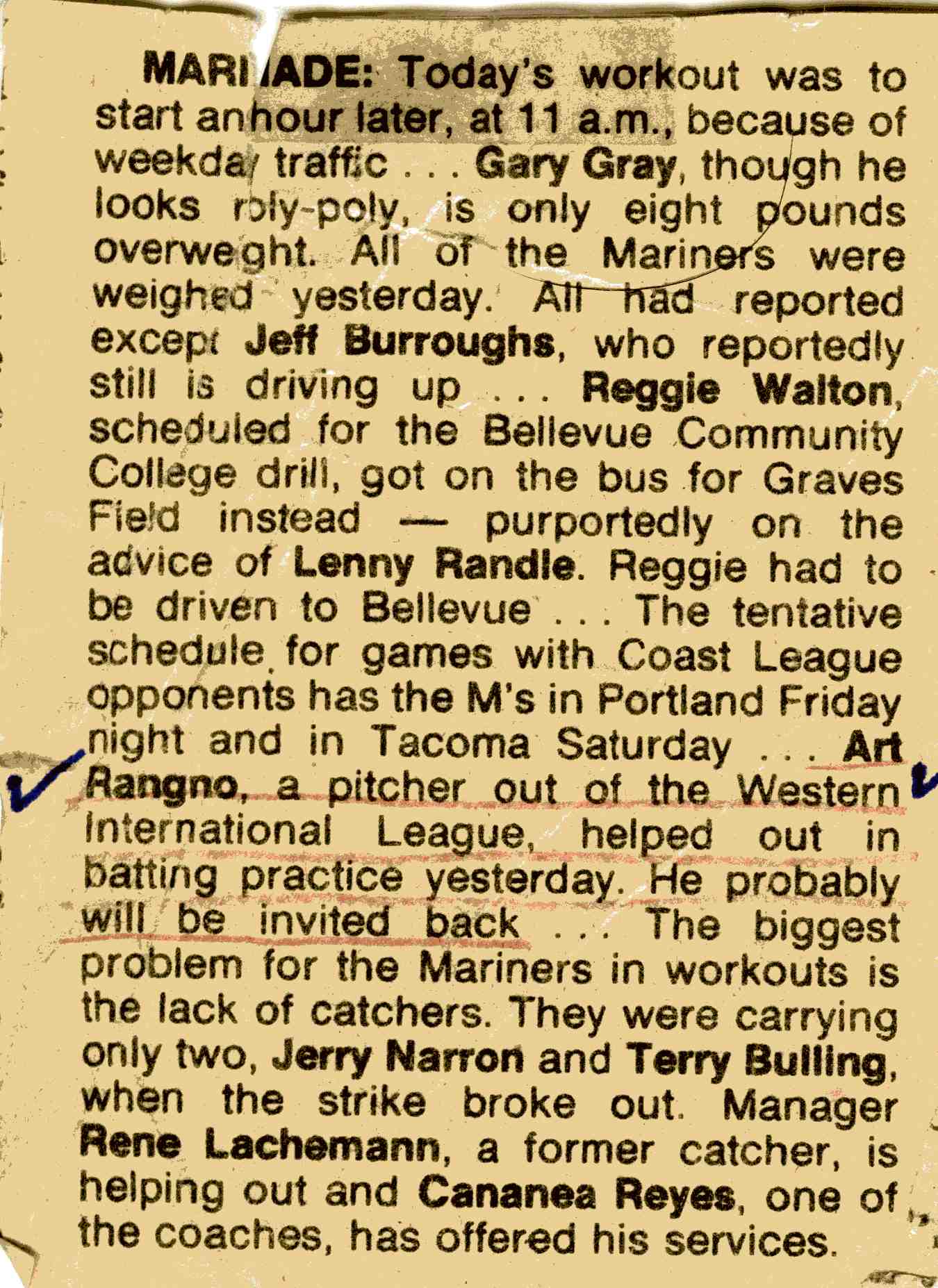
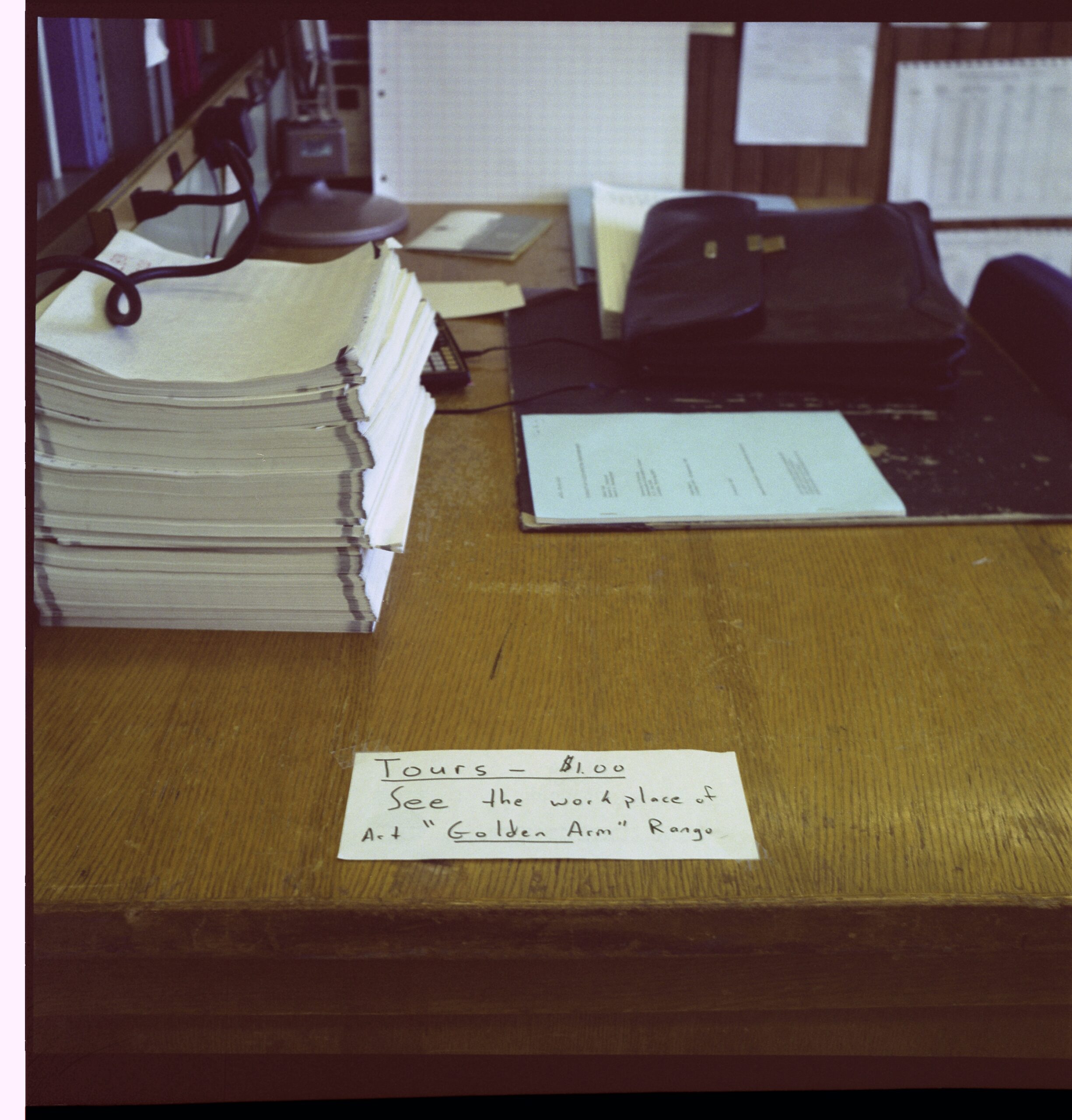
The next day, to my surprise, there was a tiny mention of “my work” in the Seattle Times.  And, to top it off, Dave Parsons, another graduate student in our group had seen that little Seattle Times note and pasted it on my desk at the U-Dub, along with a little sign that read that there would be a “$1 charge for touring the desk of Art ‘Golden Arm’ Rangno.”  It was pretty funny.  An awful lot of guys can throw BP, but to my co-workers and grad students in the department, it was something special.

A few days later the 1981 baseball season resumed its abbreviated schedule, and while I was at work, I “got the call” to join the major league team—as a batting practice pitcher!

It was pretty exciting since my desire for throwing BP was really just to see how different a major league team was in hitting a baseball compared to my own Seattle Paintings Unlimited team for whom I pitched BP to regularly.  I liked to throw BP with velocity, and my team loved it.

“Regularly” meant throwing a LOT of BP, too!  In the Western International League (WIL) that we played in, there were four-nine-inning games a week beginning in June and continuing through mid-August.  The WIL was a league comprised of a sprinkling of ex-pros and summer college teams, like the Washington Huskies (sans seniors).  One stalwart to play briefly in that summer league decades later (later renamed, the Pacific International League) was former Giant star, Tim Lincecum.

That Paintings Unlimited team had a regular supply of pro baseball signees: eight were signed from that one team during my 5-year tenure on it, including several that made the major leagues, if only for “a cup of coffee.”  One was Mike Kinnunen, a Washington State pitching star, who, the very next year after his 1979 season with Paintings, was pitching for the Minnesota Twins and against the likes of Don Mattingly! In 1980, I was batting cleanup, and the hitter before me, Jay Erdahl, was to make the last out at the College World Series in Omaha that year as his “Cinderella team,” the Hawai’i Rainbow Warriors, lost to the Arizona Wildcats.

It was a heady time playing on that Seattle north end team.

https://cloud-maven.com/wp-content/uploads/2021/06/Northend-Semi-Pro-team-026.pdf

But by 1981, at 39 years of age, and competing against area college players, I wasn’t playing anymore.  For all the years that I played beginning in 1977, I had been the oldest starting player in the league and was always vulnerable.  Not playing anymore in 1981, riding the bench, warming up pitchers, meant I was hungry to do something more with a baseball.  And it was that summer that I read that the Mariners, following the end of the baseball strike of 1981, would begin working out at the University of Washington where I worked.  And I took a chance and went out for a tryout as a BP pitcher.

——————————————————————————–

The Mariners were pretty bad during my stint as a BP pitcher, 1981-1983 under poor manager, Rene Lachemann.  Lachemann was fired during the 1983 season, and before he was fired, as you can imagine, he was under intense media scrutiny and pummeled with advice.

Lachemann ran around the perimeter of the outfield before the Mariners games, and being out there myself during BP, I yelled to him just before he was let go:

 “Hey, Rene….about the team….” At this point he turned toward me, one of his BP pitchers, with the darkest scowl you can imagine.    I continued, with a smile: “I don’t have any advice about the team.”  Lachemann broke up in laughter,  and that moment still comprises one of my fondest memories.

Another memorable moment was pitching to just two batters, Paciorek and Bochte for my whole 20-25-minute stint.  The reason?  They thought my delivery resembled that of Jim Palmer and the Mariners were playing the Baltimore Orioles that night with Palmer pitching.  Paciorek and Bochte together got five hits that night!

Then, in 1984, I was “released” by Del Crandall, the new Mariners manager.  Instead of having local amateurs come in and pitch, the team would now use its coaches almost exclusively for BP, with I think, one exception, Jerry Fitzgerald, a fellow “volunteer” BP pitcher who was a lefty.  Lefties are always in demand!

But there was another factor that led to my “release” in 1984, one that came out of the blue, a factor that was hard for me to believe.

In one 1983 BP session later in the season at the Kingdome, Steve Gordon, the Mariners bullpen catcher in those days, caught me.  Usually you just threw at the netting behind home plate.   At one point while I was throwing, Steve raised his right arm in a throwing motion and waved it at me several times, using an overhand motion.   Since I was throwing one strike after another with “velocity,” I thought he was signaling to me about how great I was throwing.

Nope.

When my session was over, Steve came over to me and said, “The guys are getting pissed because you’re cutting the ball.”

“Cutting” the ball in baseball meant that you are throwing a ball that had movement; it was not going on a straight line which makes it eminently hittable.

I was flabbergasted, and felt truly bad, since as an amateur pitcher from time to time, I never was accused of throwing a ball with movement, a downfall for anyone that wants to pitch.  It was so ironic that I was now being told that my ball had “movement!”

I also began to realize that I wasn’t giving up many home runs while throwing BP.  The fun part for the players is to just blast the ball as friggin’ far or as hard as they could; it made them feel good, get confidence, and that wasn’t happening.  Richie Zisk, the Mariners slugger of the day, once told me I had “the best sinker in the league”, but he was SURELY joking, maybe even being sarcastic I thought.  I forgot about it.

I began to think about some other not-so-great things that had happened in 1983.  One HUGELY embarrassing thing for a BP pitcher had happened during my session pitching to the struggling Al Cowens; he swung and missed a batting practice pitch!  My face turned red and I kind of apologized, muttering a “sorry” to him.  Then, he broke his bat on another pitch.  I felt horrible!  But I didn’t think I had anything to do with it; he was in mental funk about hitting that season and nothing could be hit properly.

Another dismal chapter (travesty?) in 1983 involved Gaylord Perry, a good hitting Hall of Fame pitcher.  He stepped into the batter’s box during BP wanting to crush a few just for fun—pitchers don’t bat in the American League.  After a few swings and misses, and foul balls, he quit in disgust yelling at me, “That’s terrible!”  I never forgot his comment.

I only wish I had been fast enough to add, “Hey, I was just putting goop on the ball like you did all those years to see how you liked it, you washed up buffoon.”

Perry was a well-known spitball pitcher who amassed many of his 300 wins in a dishonest way, but one in which baseball generally looked the other way.  In a 1982 weather forecast I made for KZAM-FM, I alluded to the Perry “methodology.”  My housemate, Yuko, recorded it, something that may be a candidate for the media weather forecasting “Hall of Shame.”  it’s a little muffled.  The DJ, Dave Scott, chats for about 25 s before I come on with my forecasting travesty “honoring” Gaylord:

https://cloud-maven.com/wp-content/uploads/2021/07/moisture-and-rotation.mp3

In my defense of this so-called,  “schtick” presentation of weather, let us remember that in 1981, the weather forecast methodology was described by the LA Times as consisting of “Clowns and Computers.”  I did my best to fit in!

Later, and in trying to be analytical about “movement” on the ball, I thought that maybe my sweaty hand—I was always nervous stepping out on the Kingdome mound, had maybe caused that movement that I did not mean to have.

And you were always throwing almost brand-new baseballs from the basket of balls next to you that held about 40 of them.  Those new balls had no roughness, so you had to be careful throwing them, making sure you had a good grip.  Maybe I was gripping them too tightly?

I did not move up from the pitching rubber like the other BP pitchers did.  I threw from the mound like a regular pitcher (and behind the protective screen), as I did for my semipro team.  I never changed that style.  I was not throwing anywhere  near the speed of major league fastball, of course.   But maybe that extra distance gave the ball more time to move.  I never discovered what caused the movement.

Other things that happened….

Three non-strikes in a row happened a couple of times, and the quiet, that lack of a ball being struck virtually every second, is really unsettling.  The whole Kingdome seemed to go silent at such moments.  They were rare, but they did happen.

If that wasn’t bad enough, during a 1983 BP session, I hit a Mariners batter in the knee, starting centerfielder, Joe Simpson.  There was an audible “oohhh” from the tiny early arriving Kingdome crowd.

On another major slip, I made Dave Henderson come out of his helmet when a pitch I threw got away high and inside causing him to drop to the ground.

You know, I am sounding more and more like a really bad BP pitcher!

If your wondering, only one batter on one occasion asked to practice hitting against curve balls in BP, John Moses, a Mariners center fielder.

An important fact:  in 1983 the Seattle Mariners had the 2nd lowest MLB  team batting average at 0.240.  No doubt this contributed to what happened next.

So, when I showed up in the locker room for the start of the next season in 1984 with the “guys”, I was given the word that my services were no longer needed.  I left the locker room kind of embarrassed, passing the security guard I had just said “hello” to, hopped on my bicycle, and rode home.  Yep, I peddled every time to the Kingdome from the U of Washington, and then home to north Seattle’s Greenwood neighborhood, probably a good 10 miles total, and with slopes and in traffic.  It was a great warmup coming in.

I remember, too, in those simpler days, how easy it was to get in the locker room of the Seattle Mariners with my little bag of equipment, by just saying to the security folks, “BP”.  Of course, after a couple of times they recognized you and in you went to join the “guys.”

It was fun to do that BP, too, because unlike the other BP pitchers, and before I pitched my 20 minutes or so, I ran around in the Kingdome outfield like a mad man chasing those balls hit in batting practice—I played outfield in my early amateur career and this was outfield practice.

A couple of times, too, when a player found out I was a meteorologist at the University of Washington, we would stand around in the outfield during BP and talk weather.  I remember a long conversation with Richie Zisk out there about El Ninos, a giant, headline-grabbing one having happened that 1982-83 winter.  He really asked a LOT of questions.

If you were here in Catalina, AZ, in 1982-83, you would remember that giant El Nino year.  In that water year (Oct-Sept) we received over 29 inches of rain, and 33 inches if you count the first few days of October 1983 when the worst weather disaster in Tucson history struck due to several days of heavy rains on already saturated soil at the beginning of October.

Back to baseball…

It may seem odd, but I could hardly stand watching a major league game even in the stands right behind home plate.  As a player, playing with top amateur talent, the last thing you wanted to do was sit on your butt and watch other guys play!  You wanted to be playing against the BEST yourself.

So, while my Mariners BP “pay” was to sign in for four free tickets amid the players’ wives behind home plate, I only went to one game for a few innings during those three seasons I pitched BP.  I usually gave my tickets away by signing in the names of folks from the U of WA Atmospheric Sciences Department where I worked on the guest ticket list before I left.

While I many of those great seats were used by folks in our Department, the Mariners were so bad in those days (1981-1983), that on MANY occasions I could not GIVE away the best seats at a MLB game, the ones right behind home plate!

After a while, I didn’t make much of an effort since it was kind of embarrassing to be turned down two or three times by my co-workers and grad students.  Almost as bad as being turned down two or three times for a date by the same girl.

The Mariners played music on the Kingdome sound system during BP.  One particular piece, a Beatles disco-style medley by “Stars on Long Play” that sounded exactly like the Beatles, was played repeatedly during the time I pitched:

https://youtu.be/RrAJRoCv3dQ

To this day, hearing this, if I do, puts me back in the Kingdome on the mound with a basket of baseballs next to me.

I realized I could have pitched BP for many years if I had pitched the way the other BP pitchers did; closer to home plate, off the mound, lobbing the ball at fairly low speeds.  I was arrogant to think that the way I liked BP to be thrown to myself, balls with some zip, was the way to do it for MLB batters.  It seemed OK at the start until the ball started to “move.”

Well, that’s all I can remember right now, but it’s already too much.

CHAPTER 5: GOT PUBLISHED! (I.E., “RAIN FROM CLOUDS WITH TOPS WARMER THAN -10°C IN ISRAEL”)

I was so excited…

 My trip, and the analysis of the data that came out of it,  was the first published report that something was not right with Prof. Gagin’s cloud reports.  My publication appeared in the Quart. J. Roy. Meteor. Soc., Rangno 1988, “Rain from Clouds with Tops Warmer than -10°C in Israel,” hereafter, “R88,” found here).  My manuscript was “communicated” to the Quart. J. Roy. Meteor. Soc. by the director of our airborne research group,  Prof. Peter V. Hobbs, a member of the Royal Society eligible to submit papers to that journal.  (I was not).

Neither Prof. Hobbs nor I believed that my paper refuting the many published descriptions of Israeli clouds by Prof. Gagin could be published in an American Meteorological Society journal.  Too many potential reviewers had heard Prof. Gagin’s presentations on too many occasions, or read his journal papers,  to believe that what he was saying could be so much in error.

R88 was based on rawinsonde-indicated cloud tops when it was raining at the launch site or within an hour and a half, so it was fairly primitive.  Why I had only rawinsonde data and not data from Prof. Gagin’s 5-cm modern radar data as was explained in Chapter 4.

Nevertheless, my “primitive” findings were confirmed several years later in independent airborne studies (e.g., Levin 1992, 1994, preprints; Levin et al. 1996, J. Appl. Meteor.) and on several occasions since then (e.g., Freud et al. 2015).  Spiking football now!

Why Prof. Gagin’s cloud reports were likely in error and how much they deviated from comparable clouds was shown in Rangno and Hobbs 1988, Atmos. Res.

I had experienced cloud seeding “delusionaries” in Colorado during the CRBPP, namely, credentialed “scientists” who believed things that weren’t true and even published things they knew weren’t true (as Grant and Elliott had done in 1974, J. Appl. Meteor.).  I sensed that Prof. Gagin might be one of those.  He and his staff also had a lot to lose if the clouds of Israel weren’t so ripe for seeding as his descriptions painted them.

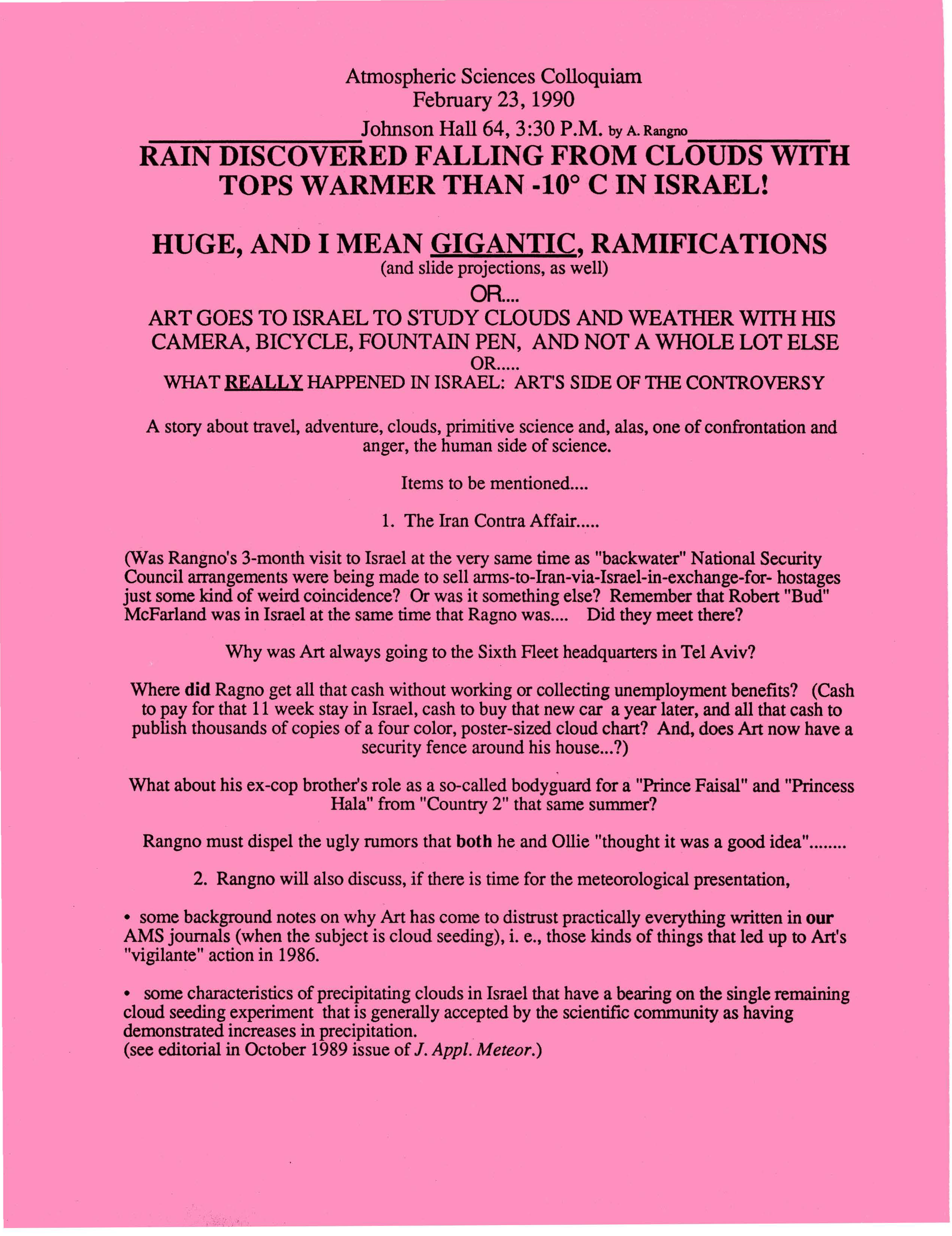
I reprised my 1988 published findings from my trip to Israel in a University of Washington Atmos. Sci. colloquium in February 1990. I was motivated by the J. Appl. Meteor. memorial issue to Prof. Gagin in October 1989.  Here’s the flyer for that talk, intended to draw interest with some topical humor concerning the Iran-Contra affair that was in progress while I was in Israel in 1986 (unknown to me at the time):

End of life story.  I consider this episode concerning Israeli clouds my greatest, costliest, volunteer science contribution of the several reanalyses that I did on my own time and dime.

Sincerely,

Art

CHAPTER 4: THE TRIP TO ISRAEL TO SEE THE “RIPE FOR CLOUD SEEDING” CLOUDS

The trip to Israel

My self-funded trip to Israel was one of 11 weeks, from January 4th  through March 11th, 1986.  I loved my time in Israel and would go back in a heartbeat any winter to see those beautiful Cumulus and Cumulonimbus clouds rolling in off the Mediterranean again!

Following my return and for the rest of 1986 I lived off my savings in Seattle to write up an analysis and draft of what I had found.  Despite my resignation, Prof. Hobbs and I retained a civil relationship as I also finished grant work that I said would before resigning (which ended up being Rangno and Hobbs 1988, Atmos. Res., “Criteria for the Onset of Significant Ice Concentrations in Cumulus Clouds.” In this short 1988 paper, it was noted that the reports from Israel concerning the onset of ice in clouds was sharply at odds with similar clouds.  I discussed why that might have been in the paper.

Prof. Hobbs also agreed to look over my drafts and figures of the Israeli cloud investigation as I brought them in to the University of Washington from time to time.  Being who he was, Prof. Hobbs greeted me when I first dropped by the University of Washington upon my return from Israel with, “I doubt you’ll get a paper out of your trip.”  However, I knew exactly what I had to do to pass journal muster because of the rejection of that 1983 paper.  It was also evident that no American Meteorological Society journal was likely to accept a paper like the one I was putting together;  too many potential reviewers had heard at conference or read in journal articles on too many occasions how Prof. Gagin had described Israel’s hard to rain natural clouds.

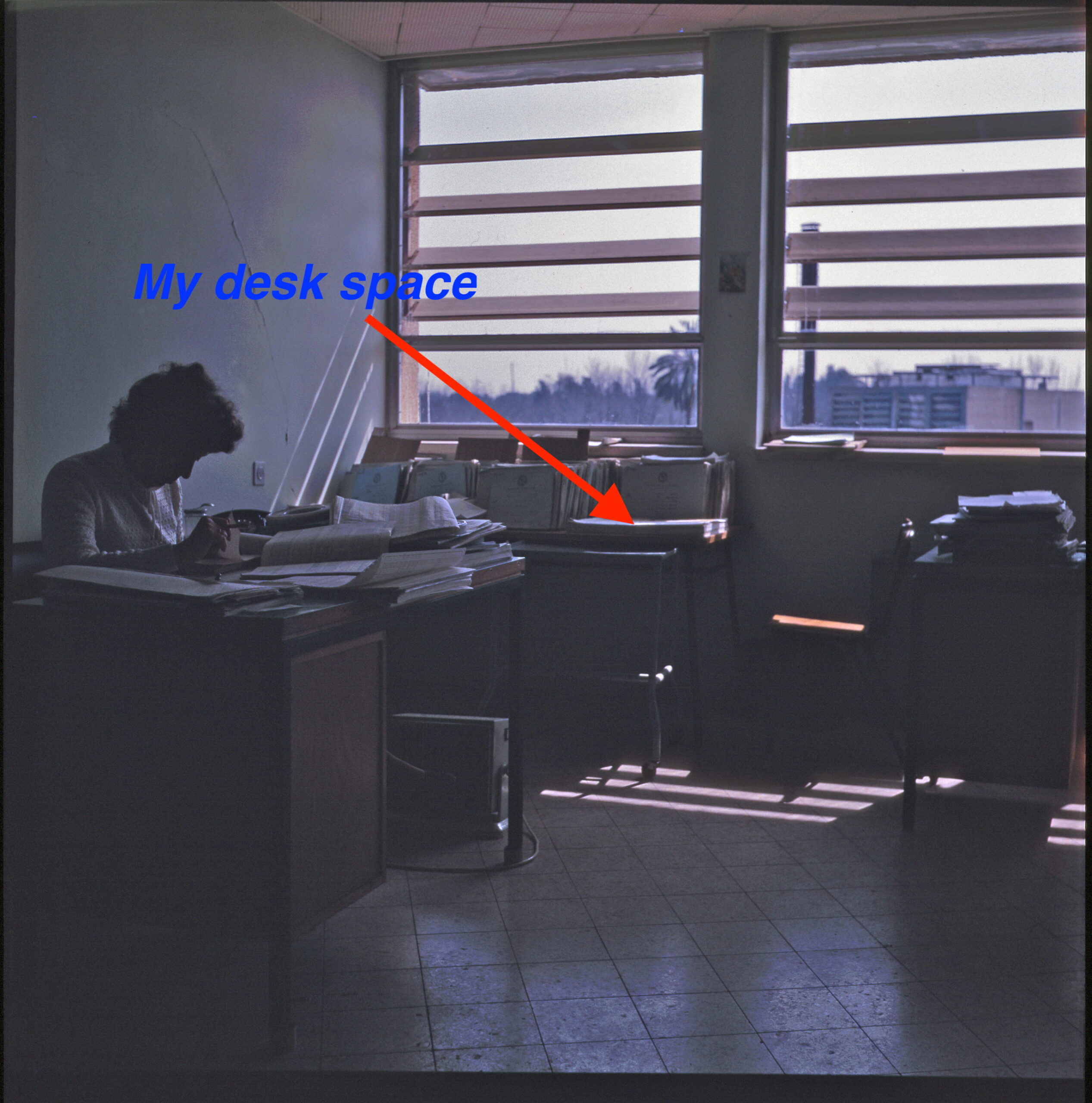
That I got any Israeli data at all to take home and analyze was to the credit and magnanimous view of my outside cloud inquiry by the Israel Meteorological Service (IMS), Director, Y. L. Tokatly, who gave me pretty much a free reign to examine historical balloon soundings and synoptic maps within their Climate Division.  The Climate Division was headed by Sara Rubin, who was also friendly and extremely helpful.  I was even given a little desk space in the climate division!  I went there every day that there wasn’t a storm to experience, clouds to assess with this experienced eyeball and photograph while traveling all over central and northern Israel on their stupendous bus system.  I had also crated my bicycle to Israel for local travel.

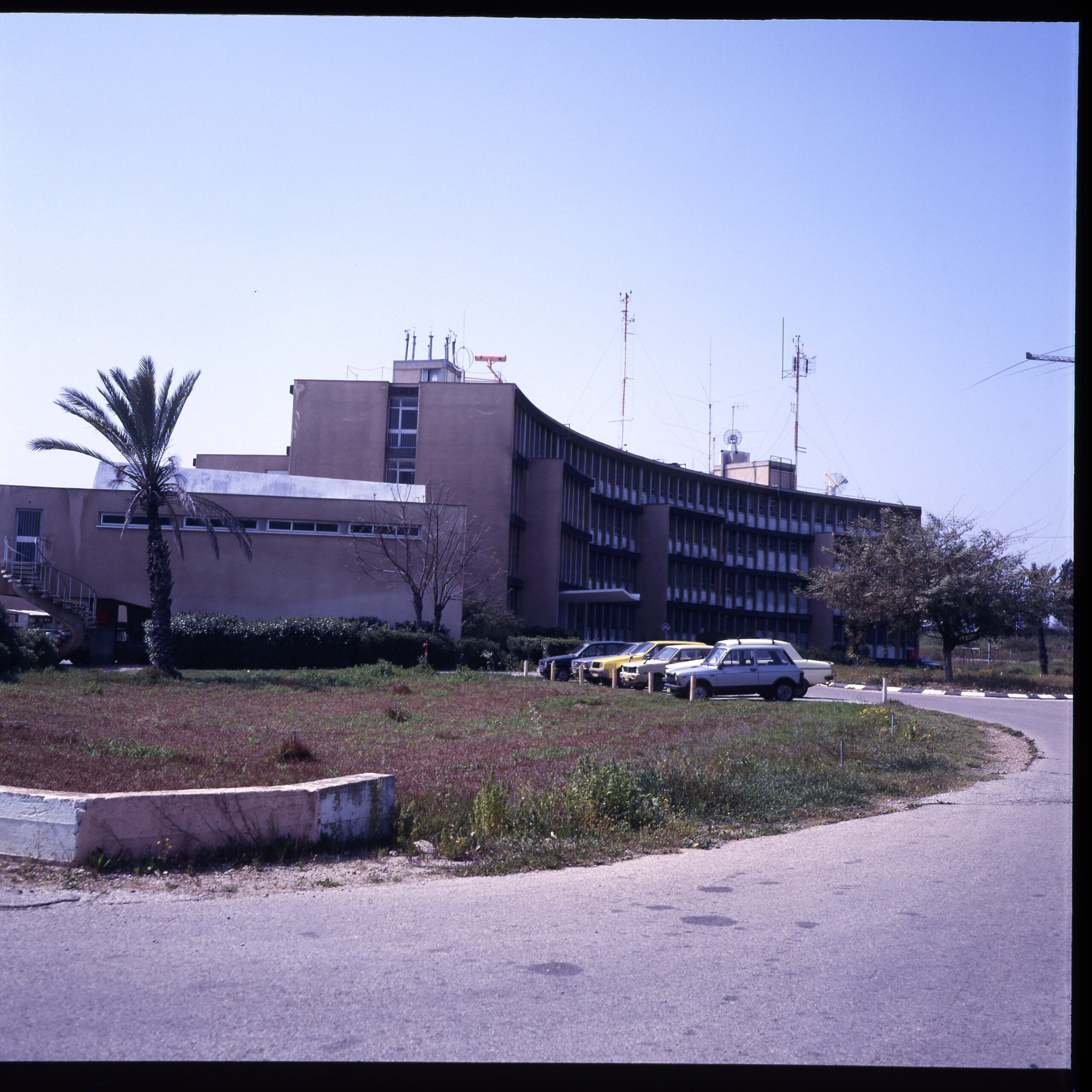
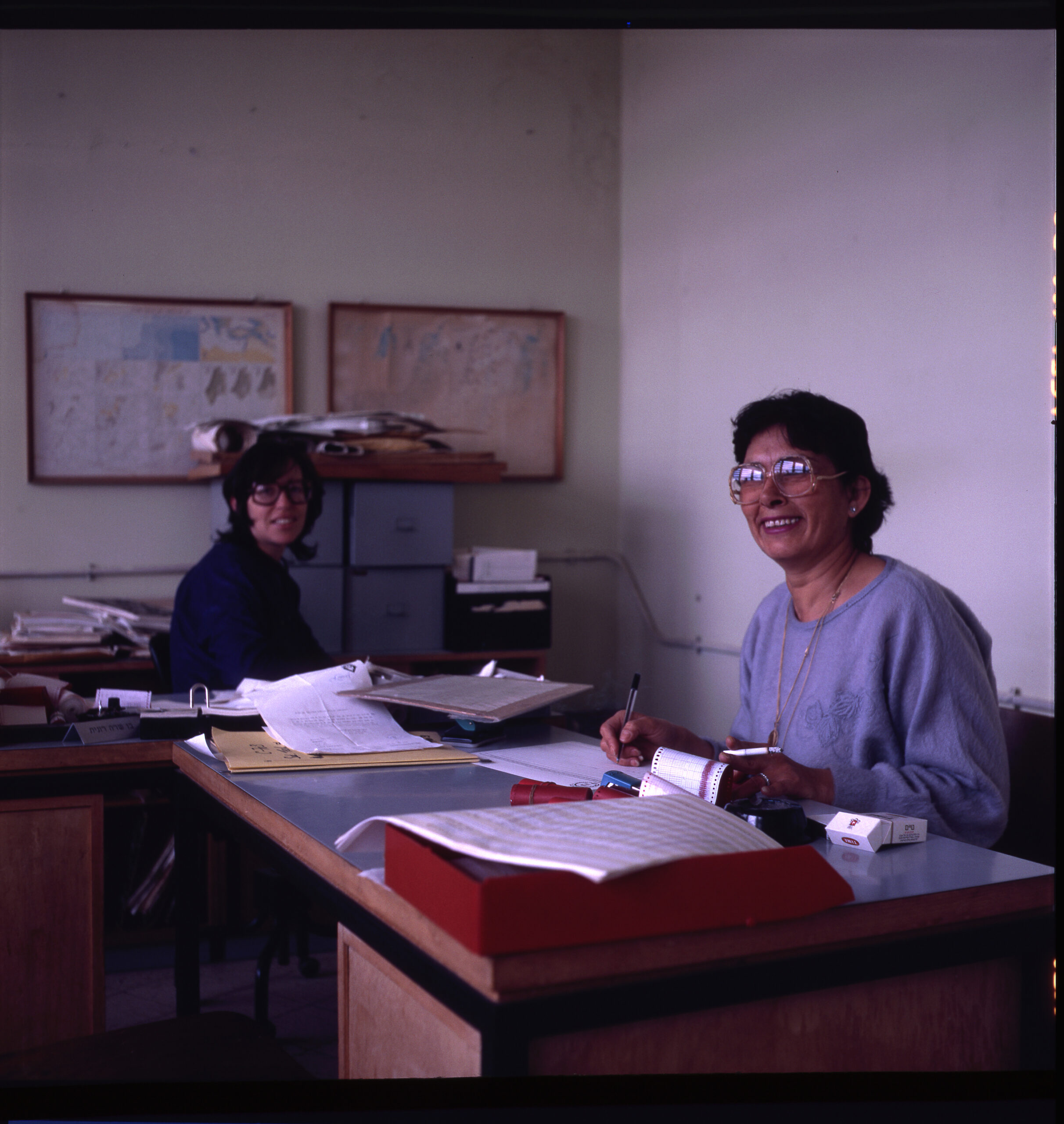
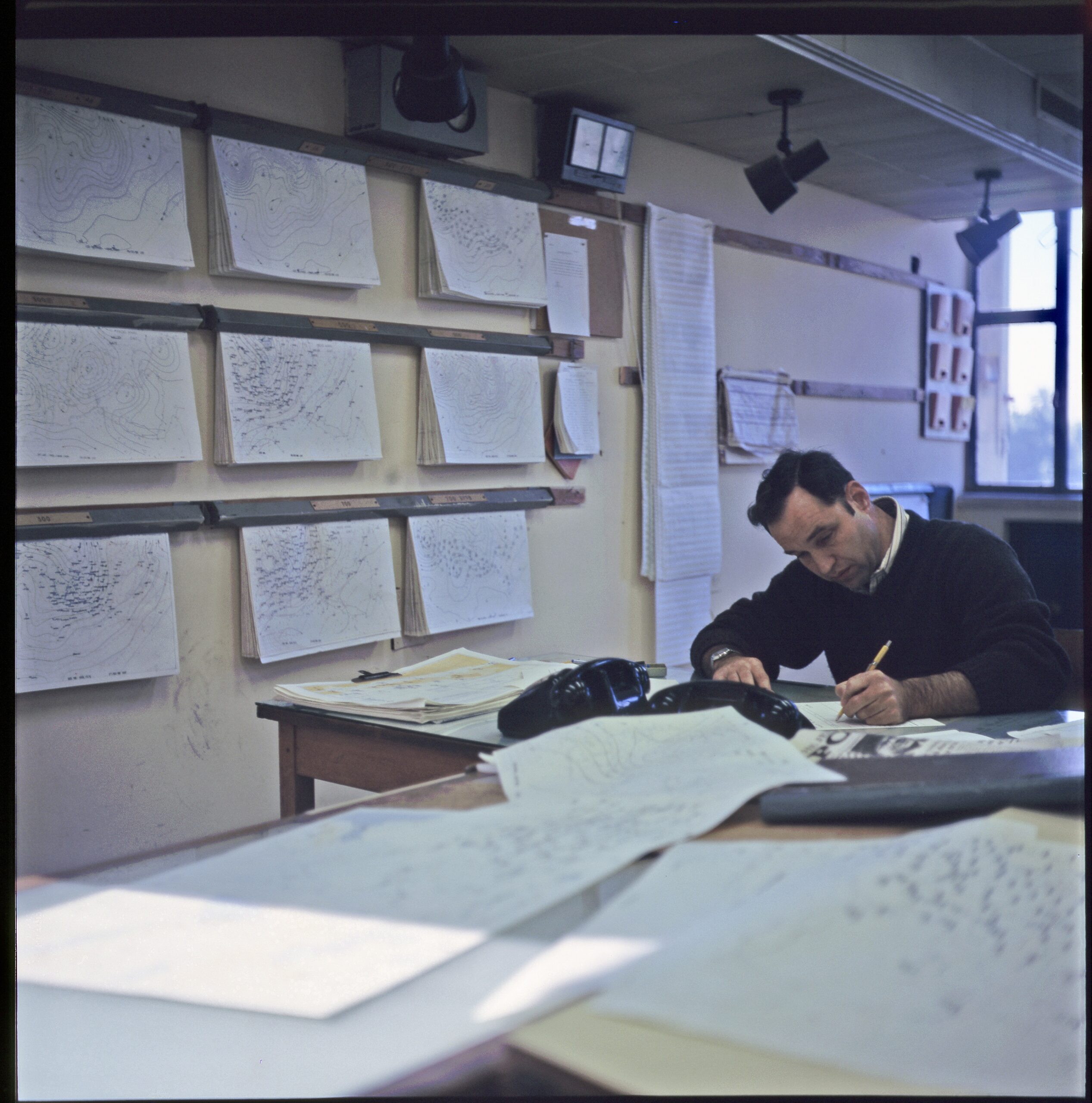
Here is the IMS Headquarters building I worked in and the little desk space they gave me, two of the several officemates I had, and a shot of the IMS map and briefing room.

Zohar Moar (?) working next to my little desk space in the Climate Division office of the IMS.

Ronit Ben-Sara and Geulah Siles in the climate division office.

Forecaster Uri Batz in the IMS map room.

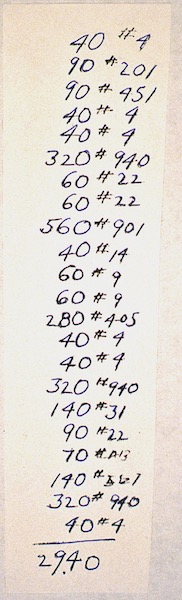
Below these is a list of the bus rides I took on ONE storm day, always sitting behind the driver and looking out the front window, recording drop sizes and nature of the rain  on  the  front  window::

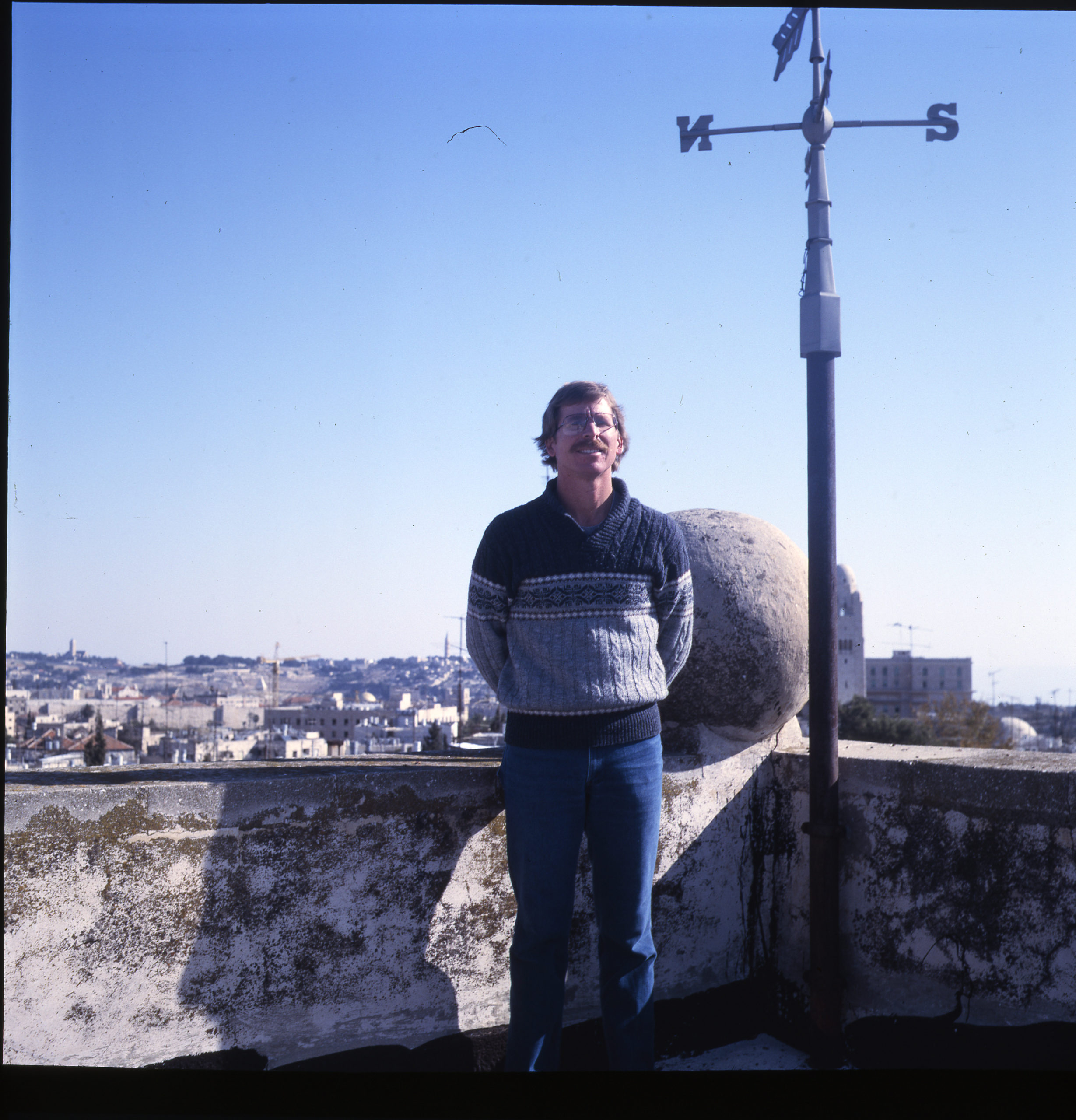
In some interesting cases, such as in the hill region and the Golan Heights, I would get out and walk around in the wind and clouds, the latter often topping a hill region such as Jerusalem.   I had my heaviest clothing, but it really wasn’t enough to keep me warm, and I had no gloves. Temperatures during storms were usually in the low 40s in Jerusalem with winds of 20-30 mph and passing showers.  Once, I could not pull the shutter lever on my Rolliecord film camera to take a cloud photo my fingers were so cold.

This weather, too, really put an edge on those Bible stories.  I could not imagine how miserable it really was for people living here in the winters.  It even snows in Jerusalem from time to time as I saw myself in a January 1986 storm pocked with thunder.   I listened to the IMS weather briefings most mornings, too.  I was in heaven.

First Impressions

What was particularly interesting to me was that I encountered more skepticism about Israeli cloud seeding efforts in the IMS than there seemed to be in the entire world outside of it!

My first meeting with Prof. Gagin:   January 10, 1986

It was an extremely cordial meeting in his office at the Rivat Gam branch of the Hebrew University of Jerusalem at the end of a dry week in Israel.  That was followed by a family dinner at his residence where he regaled me with so many interesting stories.  I really thought at that time that he didn’t mind my intrusion into his cloud seeding world, and I began to feel some guilt about it since he was so nice to me!  But I had to persevere in my “task” I thought.

Prof. Gagin took this photo atop the HUJ satellite campus at Rivat Gam during that first meeting. He would not allow me to take his photo.  I also suggested at this time that if I “found something” that perhaps we could co-author a paper.  He deferred.

Not too surprisingly, all the weather forecasters I spoke with in the Israel Meteorological Service in 1986 were well aware that clouds much shallower than Prof. Gagin was describing as seeding targets, that is, those with tops >-10°C rained.  It must have seemed bizarre to them that I had come 7,000 miles to document something they deemed so ordinary!

But where were Tel Aviv University atmospheric scientists in in these matters?  Think how embarrassing it might be to all Israeli scientists to think that a minor foreign science worker had  traveled thousands of miles to inform them about the true nature of their own clouds as they were described in the peer-reviewed literature!

You may have guessed the possible answer to this puzzle about the lack of involvement of other scientists in questioning or overturning Prof. Gagin’s cloud reports.

It turned out that considerable funding from cloud seeding operatives in Israel went to Tel Aviv University (Z. Levin, 1986, private conversation).  He simply could not openly help me, he stated, in our one and only meeting.   He also had trouble believing at that time that my cloud assessment (ice particles onset in Israeli clouds with tops between -5°C and -8°C, and that concentrations of “50-200” per liter were present by the time cloud tops reached -12°C, was correct.  I wrote this same assessment following my 2nd meeting with Prof. Gagin to Professors Roscoe R. Braham, Jr., at North Carolina State University, Gabor Vali, University of Wyoming, Peter V. Hobbs and  Lawrence F. Radke at the University of Washington, and to Dr. S. C. Mossop (of the Hallett-Mossop riming and splintering process).  Why I wrote to them will become clear in the next segment.

January 19, 1986:  My second meeting  with Prof. Gagin

There had been several shower days in Israel when Prof. Gagin and I met for the second time.  He asked me at the very beginning, after handing me a cup of coffee,  “What have you found?”

I unloaded a boatload of findings contrary to his cloud reports.  Suffice it to say, our meeting did not go well after that.  In a sense, I was Professor Gagin’s nightmare; an under-credentialed worker coming to “his house” to expose faulty cloud reports.  But, with his radars and aircraft, how could he possibly not have known that his reports were faulty?

I had also felt true drizzle falling in Jerusalem in the early morning hours during the very first storm.  Drizzle tiny (<500 um in diameter) drops that are close together was something that was not supposed to occur in Israel due to the polluted nature of the clouds reported by Prof. Gagin.   I certainly did not expect to see it, and when I stuck my hand out of my apartment window, I yelled, “drizzle?” to no one in particular.

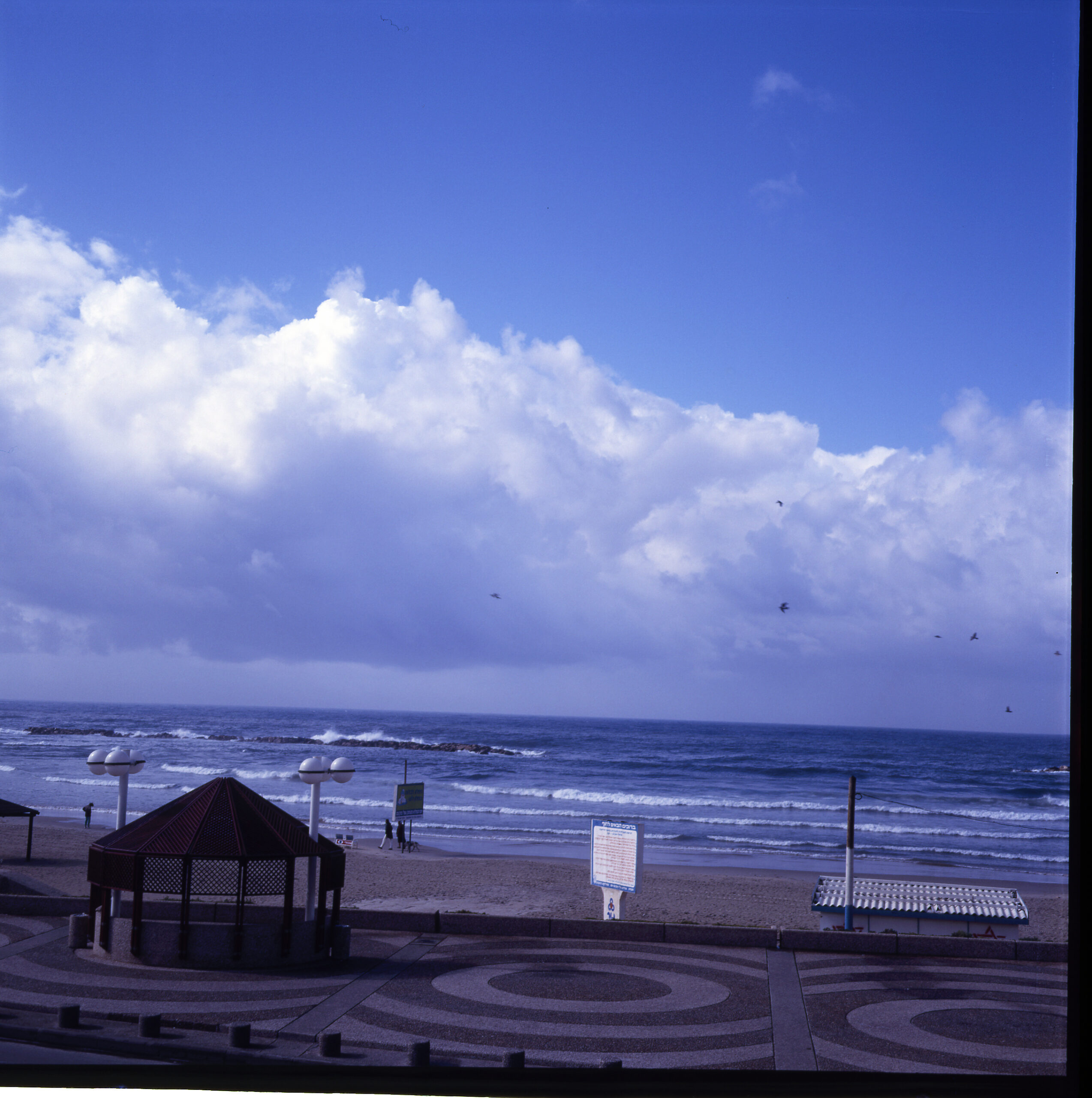
Then, when I came down from Jerusalem on a bus that morning to the coastal plain, I was amazed by shallow, glaciating clouds (modest Cumulonimbus clouds) rolling in from the Mediterranean Sea.  Namely, in less than three hours of the first storm, I had seen all I needed to know that Prof. Gagin’s clouds reports had described non-existent clouds.

In this 2nd meeting, I had brought with me an IMS sounding from Bet Dagan when rain was falling lightly throughout the hill region of Israel that had a cloud top, marked by a sharp inversion and strong drying,  at -5°C.  Professor Gagin was non-plussed by the sounding, stating that balloon soundings are unreliable for the purpose of assessing cloud top temperatures.

Prof. Gagin Had Heard Enough.

He informed me how offended he was by my visit to check his cloud reports.  He asked me, “Who do you think you are, the Messiah, come to expose the liars?” He immediately then asked, “Did Hobbs send you?”

Peter Hobbs had not sent me5! !

I was reeling at that point in my meeting with Prof. Gagin, almost speechless even though I knew something like this, being bawled out,  might happen.   However, I did cough up an admonition: “Don’t be like Lew Grant,” referring to Grant’s stubbornness in accepting new information.  Prof. Gagin replied, “I don’t appreciate the comparison.”  This is the first time I have mentioned this quote.  Prof. Grant deemed Abe Gagin a good friend and wrote a testimonial on his behalf when Prof. Gagin died.  I would be willing to bet that Prof. Gagin later deeply regretted uttering that about Grant.

Before many more words were spoken, Prof. Gagin was escorting me out of his office and telling me not to come back; “Do your own thing,” he said.  I went back to my apartment and wandered down King David boulevard in Jerusalem in kind of a haze.

For me, to “do your own thing” was continuing to gather historical data at the IMS on fair weather days and travel around eye-balling and photographing clouds and rain on storm days.  I decided I needed to alert my former colleagues at the University of Washington and other scientists in this field about what had happened and what my so-called, “findings” were.  I wrote to five leading scientists of the day, Prof. Peter V. Hobbs and Prof. Larry Radke at the University of Washington, the leaders of my former group, to Professor Roscoe R. Braham, Jr., at North Carolina State University, Professor Gabor Vali, at the University of Wyoming, and to Dr. S. C. Mossop at the Commonwealth Science and Industrial Organization in Australia.  All wrote back except Hobbs and Radke who were on a field project in North Carolina.

All that replied supported what I was doing.  Vali described my investigation as “spectacular,” and Mossop stated that I was a “genius for discovering sometimes unwelcome results.”  Mossop was alluding also to my discovery of that an aircraft can create ice in clouds at temperatures around -10°C (Rangno and Hobbs 1983, J. Appl. Meteor.) a paper that had little credibility until confirmed in trials eight and 18 years later, it was that unexpected.

I  felt an obligation to tell ASAP what had happened with Prof. Gagin to IMS Director, Y. L. Tokatly, in case he might wish to revoke my visitor privileges.  He did not!  He replied that it was just a difference of opinion, and I could continue to visit the IMS and gather data!  How magnanimous was that?

February 3rd, 1986:  My Third and Last Meeting with Prof. Gagin Takes Place at His Ben Gurion AP Radar.

A third meeting was arranged, despite what had happened in our 2nd meeting, after I learned that Prof. Gagin and his cloud seeding group had their own radar located on the outskirts of Ben Gurion AP.   I did not even know that Prof. Gagin had his own radar at that point until informed of the “private radar” by an Israeli air traffic control person when I was looking for pilot reports of cloud tops!  I had to call Prof. Gagin, as hard as that would be, and ask him about visiting it.  A third meeting was arranged.  Prof. Gagin was cooperative.

But what about that radar, located on the outskirts of Ben Gurion Airport?  That radar would surely prove that Prof. Gagin was right and I was wrong; that rawin soundings indicating high cloud top temperatures of precipitating clouds were, indeed, unreliable as Prof. Gagin asserted.

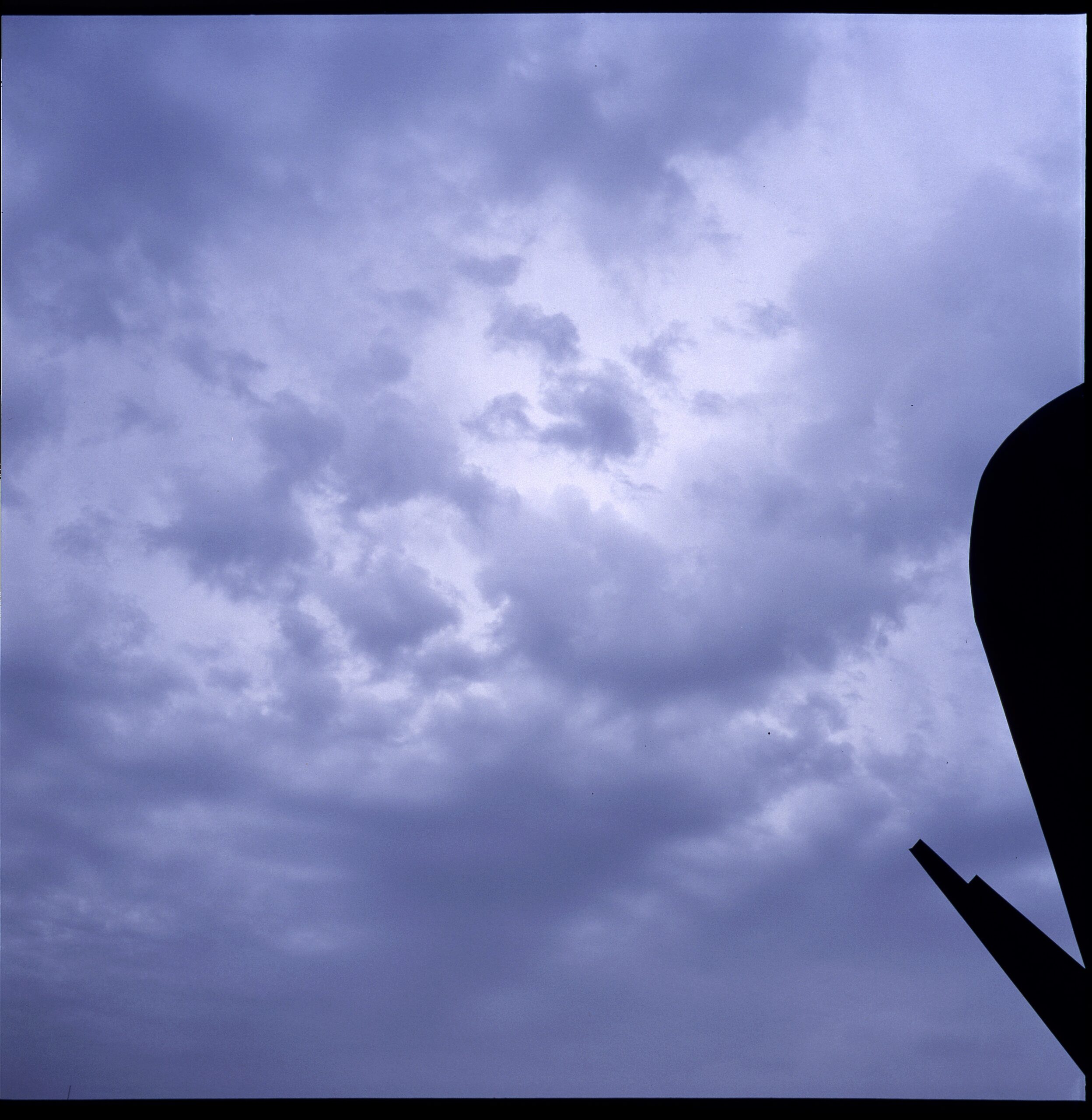
I bicycled from my Riviera Hotel in Tel Aviv to this meeting.  The sky was overcast in deep Altostratus (a mostly ice cloud) underlain by Altocumulus opacus clouds.  A storm was approaching, but it would be hours before rain arrived.  Below, a vertical look at those clouds from the site of the Ben Gurion radar as I was leaving.

The main thing I wanted to ask Prof. Gagin in our third meeting was whether I could go to this radar during storms and see cloud top heights.   He said “no,” giving “airport security” as the reason.  He repeated to me  how (understandably) offended he was by my visit to Israel to check his cloud reports.

But, “airport security?” I had just bicycled to his radar on the outskirts of Ben Gurion; no problem!  Later, a grad student at Tel Aviv U. in Professor Zev Levin’s group,  Graham Feingold, would erupt over the “airport security”  claim as a lie, as it clearly seemed to to be at the time.

Prof. Gagin further assured me in this meeting at his radar that radar top measurements would only confirm his reports (that is, if I could only view those top heights on his radar!)

I also informed Prof. Gagin that due to his behavior in our 2nd meeting that I had asked several scientists around the world to intervene with him on my behalf.  He asked me who I had written to and I told him (those listed earlier).

How crazy was this episode?  

A minor, but well-known cloud seeding critic, as I was at that time, could be easily convinced that he was wrong by examining Prof. Gagin’s  radar top height measurements.  But he was denied the opportunity to be proved wrong!

Learning about private flying in Israel and then getting a pilot to be on “standby” for cloud sampling

Late in February,  I learned that there was a robust private aircraft touring business in Israel.  I had assumed, based on the reports of Professors Mason, Hobbs, and Vali,  that research groups weren’t able to get in, that flying around in Israel to sample clouds couldn’t be done due to security issues.  But then, how could there be a strong tourist flying program?

I then went to one of the aircraft touring sites at Sade Dov Airport near Tel Aviv, and found that I could get a single engine aircraft and pilot, Yoash Kushnir, who would sample the tippy tops of clouds along the coastline of Israel with me along.  He said it would cost $250 an hour and I was willing to spend about $500 to do give it a try.   His aircraft had a ceiling of about 14 kft as I recall,  just “high enough” to sample cloud tops that would average >-10°C.  Tippy tops is not the best place to find much ice.  Higher concentrations of ice are found lower down when ice is developing, as a rule, unless the top has completely glaciated.

The pilot I had on standby, incidentally, was angry that it was believed outside of Israel that you couldn’t fly research in Israel and sample clouds.  It was a presumption I had, too, because the University of Wyoming and the British teams were not able to get in to sample Israeli clouds.  This pilot regularly flew tourists to view ruins at Masada and other historical sites in Israel.

While Prof. Levin felt he could not openly support my efforts due to funding issues, he did provide me with a graduate student, Graham Feingold, who was willing to go along on a flight.  He  would act as a witness to what was found in those “tippy tops.”  I had planned to use the “black glove” technique used decades earlier in sampling clouds for the presence of ice.  You literally stick a black-gloved hand (or a black stick) out of the window of the aircraft and look for what hits.

You can only imagine how crazy these people thought I was!  Years later I learned that I had been described by Graham, who was to become my friend, as, “that cowboy from America.”

No flight ever took place as the weather dried out by the time l learned I could hire an aircraft to sample cloud tops.  Ironically, the only rain after having Yoash Kushnir on standby fell briefly from clouds whose tops were near the freezing level, and likely, if I had flown that morning, no ice would have been found in them!  It was a surprise weather event that produced barely measurable rain.

My Meeting with Israeli experiments’ “Chief Meteorologist,” Mr. Karl Rosner

Late in my 1986 cloud investigation, I met the Israeli cloud seeding experiments’ “Chief Meteorologist,” Mr. Karl Rosner.  It was IMS’ scientist, Alexander Manes, that got me in touch with him.  I learned that the chief meteorologist, too, knew that Israel clouds rained having tops warmer than -10°C!  It then seemed that the only three people in Israel who did not know that rain fell from such clouds were those who studied them in great detail, Prof. Abe Gagin, his frequent co-author, Jehuda Neumann,  and Prof. Gagin’s only graduate student, Daniel Rosenfeld!

But Mr. Rosner had a more important and astounding thing to tell me:  Prof. Gagin had refused to publish the result of the south target random seeding for Israel-2.   Mr. Rosner had launched a campaign to see that it got published.  The results of the “full” Israel-2 experiment were published by Gabriel and Rosenfeld (1990).   Prof. Gagin, his co-author, J. Neumann, had stated in their 1981 journal paper that the seeding of the south target was “non-experimental.” They wrote that this was due to the lack of a suitable coastal control zone like the that they used to evaluate the north target’s random seeding.  Previously, in 1974 these authors had given the result of random seeding in the south target as suggesting a decrease in rain after two rain seasons, and by 1976 at conference, stated the south target results were inconclusive for the full Israel-2 experiment.

So, here I was questioning the cloud reports and then learning from Mr. Rosner that half of the Israel-2 experiment had not been reported!  In Gabriel and Rosenfeld’s 1990, we learned that the “full” result of Israel-2 was a -2% suggested effect on rainfall;  it had not replicated Israel-1 as was previously believed based on the partial reporting of Israel-2.

Some Speculation About Why Prof. Gagin Might  Not Known Have Known About the Natural Precipitating Nature of Israeli Clouds

It may be that Prof. Gagin’s graduate student knew the true cloud/rain situation but did not pass that crucial information along.  It does happen that lab directors and important scientists have staff and students who do all the research, and upper echelon scientists are not close to what’s being done by the lower echelon staff;  the latter might not pass along all the relevant information if it goes against the beliefs of their bosses.

One must conjure up a dizzying amount of incompetence concerning the three principal Israeli cloud seeding researchers (Gagin, Neumann,  and Rosenfeld) who could not identify the most basic aspects of their clouds;  the depth  and cloud top temperatures  at which they started to rain.

But is an “incompetence” hypothesis credible? Or was it that a knowing graduate student did not pass along to Prof. Gagin information that would have eroded his cloud reports?  Read on….

Prof. Gagin and his student had monitored cloud tops with a vertically-pointed radar with tops having been confirmed by aircraft flyovers.  This was done for two rain seasons in the late 1970s (Gagin 1980, Atmos. Res.)  Prof. Gagin made no mention in his article of the shallow raining clouds that violated his cloud reports, ones that had to have passed over his radar during those two rain seasons.

Dr. Rosenfeld studied radar data and satellite cloud patterns in his 1980 master’s thesis and 1982 Ph. D. dissertation2.  Yet, he did not bring to his country’s attention or to the scientific community, those shallow raining clouds with relatively warm tops, either.  Such reports, if outed, would have had a profound effect on the viability of cloud seeding to increase rain in Israel, perhaps saving the country 10s of millions of dollars in wasted seeding efforts, as we now know happened when an independent panel (Kessler et al. 2006) found no via evidence that cloud seeding for 27 rain seasons had increased runoff into Lake Kinneret (Sea of Galilee).

Moreover, these researchers were recording echo top data from their Enterprise 5-cm wavelength radar at Ben Gurion AP after it had been deployed in support of cloud seeding efforts in the late 1970s.  Dr. Rosenfeld cited 1986 recorded radar top data in his 1997 “Comment” on the Rangno and Hobbs 1995 J. Appl. Meteor. paper.  Another enigma.

 A regret about stridency

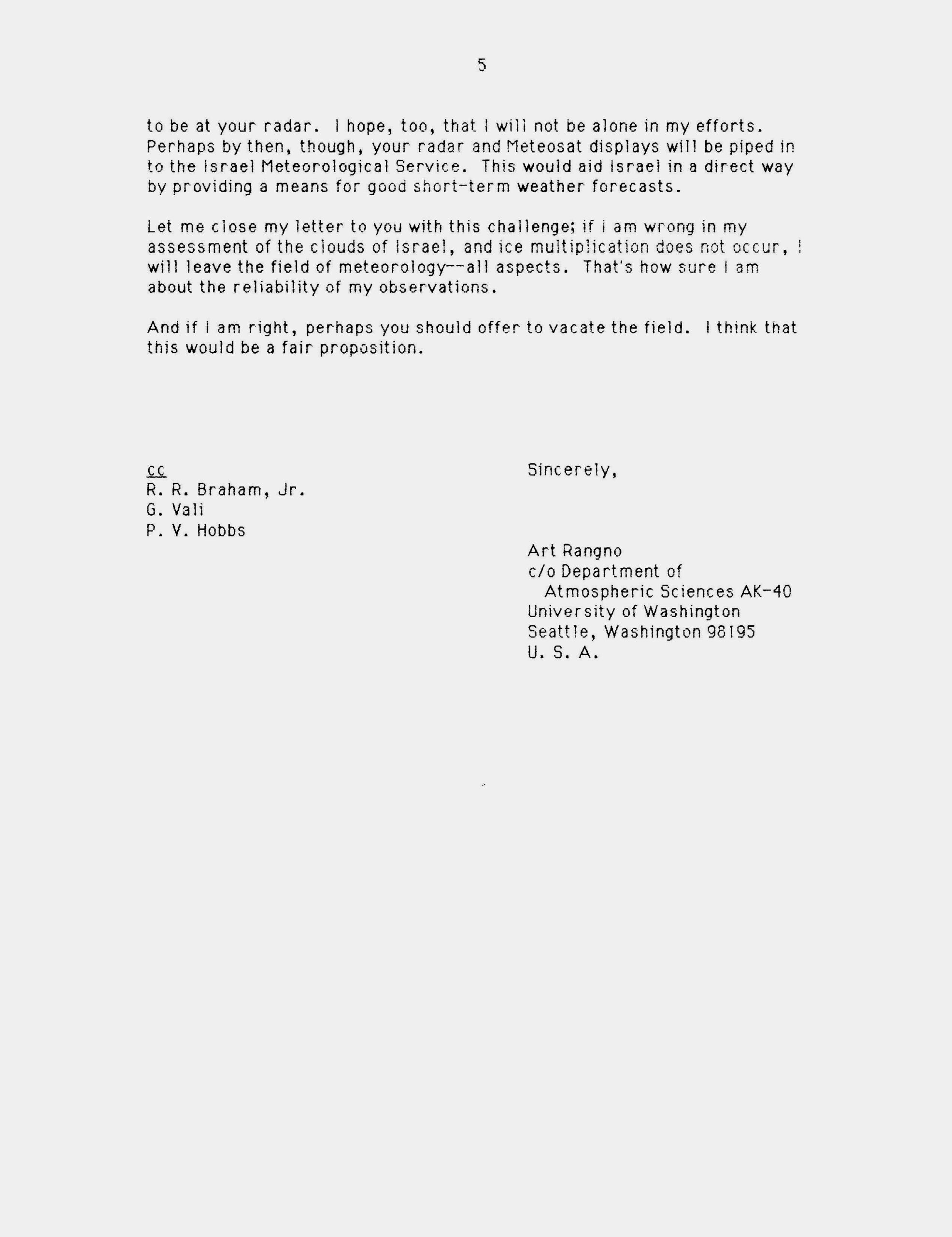
My last communication to Prof. Gagin following my cloud investigation trip was from Seattle in June 1986.  In that long letter I recapitulated the elements of my cloud investigation.  This letter was copied to Prof. Peter Hobbs, Roscoe R. Braham, Jr.3, at North Carolina State University, and Prof. Gabor Vali at the University of Wyoming.

The one thing I came to regret was how I closed that June 1986 letter.  I closed it with a challenge:  That I, myself, would leave the field of meteorology, all aspects, if my Israeli cloud observations were wrong; that ice was not forming in high concentrations in Israeli clouds with top temperatures >-12°C (eyeballing 50-200 per liter as I wrote in my letters from my experience sampling glaciating clouds at the University of Washington).   I then challenged Professor Gagin himself to leave the field of meteorology instead of me if my observations were later proved correct:

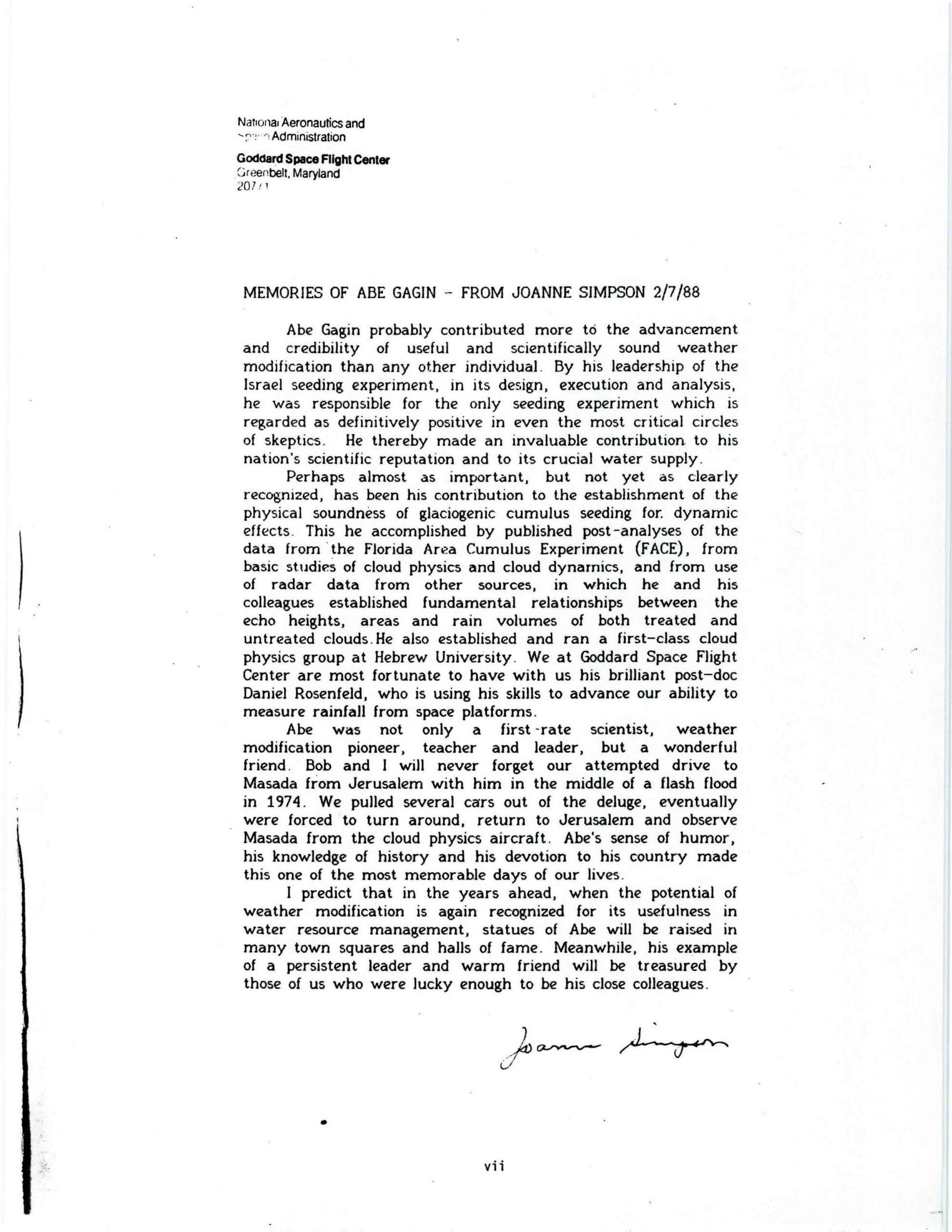
So, there I was, the person who was told to give up meteorology by Joanne Simpson, who believed that “statues will be raised in his honor” challenging that very professor to quit the field.

Joanne likely never remembered who I was, and I had a couple of cordial correspondences with her due to my cloud seeding reanalysis publications that began reaching the literature in the late 1970s and early 1980s.  Later, when it was thought there was  some overarching claims about “global warming,” she sent me her banquet talk given in October 1989 to a statistical conference, shown here to indicate this cordial relationship:

1990 1-22 Simpson, from, about GW and cloud seeding_color version_ocr

I wish I had gotten to know her.

The End

===============

Joanne Simpson’s homage to Prof. Gagin:

==============================

1This was, and is even today (!),  a sore point for me; that someone might believe this.  Prof. Hobbs was clueless about Israeli cloud anomalies and the Israeli experiments except for those plots and information that I relayed to him while studying those experiments on my own time.  As most professors would do,  he read in the peer-reviewed literature and took it at face value.

2Rosenfeld’s works are in Hebrew and have never been translated into English, but should be.

3The full letter, and others that I wrote to Prof. Roscoe R. Braham, Jr., are in an archive of his professional correspondence at North Carolina State University.

CHAPTER 3: THE REVIEW OF THE ISRAELI CLOUD SEEDING LITERATURE BEGINS

By the end of the 1970s, Prof. Gagin and his work had become of interest to me.  After all, as I learned in Durango, nothing could be taken at face value in the cloud seeding literature unless I had personally validated that literature by scrutinizing every detail of the published claims in it, looking for omissions and exaggerated claims, something reviewers of manuscripts certainly did NOT do.

I had a lot of experience by this time.  I had reanalyzed the previous published reports of cloud seeding successes in the Wolf Creek Pass experiment (Rangno 1979, J. Appl. Meteor.);  the Skagit Project (Hobbs and Rangno 19781, J. Appl. Meteor.), and had authored comments critical of the published foundations of the Climax and Wolf Creek Pass experiments in Colorado (Hobbs and Rangno1 1979, J. Appl. Meteor.) and others.

What was to transpire was that the person Joanne Malkus Simpson suggested to give up meteorology, me, helped eliminate the reasons why anyone, let alone her, would continue to believe that “statues” should be raised to honor Prof. A. Gagin’s contributions to cloud seeding.  Here’s what happened.

The Israel chapter of my cloud seeding life begins

In about 1979, the Director of my group at the University of Washington, Prof. Peter V. Hobbs, challenged me to look into the Israeli cloud seeding experiments:  “if you really want to have an impact, you should look into the Israeli experiments.”  I guess he thought I had a knack seeing through mirages of cloud seeding successes.

I did begin to look at them at that time.  Prof. Hobbs asked me to prepare a list of the questions I had come up with after I started reading the literature about the Israeli experiments.  He wanted to ask questions of Prof. Gagin at the latter’s talk at the 1980 Clermont-Ferrand International Weather Modification conference in France.  Those at the conference said that he did ask Prof. Gagin questions but it wouldn’t have been like Prof. Hobbs, as I began to learn over the years in his group, to have said, “My staff member has some questions for you, Abe.”  Maybe he thought that wasn’t important.

I already knew something of the rain climate of Israel long before reading about the Israeli cloud seeding experiments.  This was due to a climate paper I was working on when I arrived in Durango, CO, as a potential master’s thesis for SJS.  My study was about “decadal” rainfall shifts in central and southern California and I wanted to know if what I observed in California had also been observed in Israel, a country with long term, high quality rainfall records and one having a Mediterranean climate like California.  I received several publications from the Foreign Data Collections group at the National Climatic Center in those days, such as Dove Rosnan’s 1955 publication, “100 years of Rainfall at Jerusalem.”

So, I was not coming into the Israel cloud seeding literature “blind” to its surprisingly copious winter rain climate.  Jerusalem averages about 24 inches of rain between October and May, something akin to San Francisco despite being much farther south than SFO.

My interest in the Israeli cloud seeding experiments, however, ebbed and flowed in a hobby fashion until the summer of 1983 when I decided to plot some balloon soundings when rain was falling, or had fallen within the hour, at Bet Dagan, Israel, and Beirut, Lebanon, balloon launch sites. Anyone could have done this.

The plots were stunning!

Dashed line is the pseudoadiabatic lapse rate; solid line, the adiabatic lapse rate.   The synoptic station data are those at the launch time or within 90 min.  

Rain was clearly falling from clouds with much warmer tops at both sites than was being indicated in the descriptions of the clouds necessary for rain formation in Israel  by Prof. Gagin, descriptions that made them look plump with seeding potential.  His descriptions were of clouds having to be much deeper, 1-2 km,  before they formed rain.   And those descriptions were key in supporting statistical cloud seeding results that gave the first two experiments, referred to as Israel-1 and Israel-2,  so much credibility in the scientific community (Kerr 19821, Science magazine).    The deeper clouds described meant that there was a load of water in the upper parts of the clouds that wasn’t coming out as rain.  

Shallower clouds that were raining meant that there wasn’t going to be so much water in deeper clouds that could be tapped by cloud seeding; much of it would have fallen out as rain before they reached the heights thought to be needed for cloud seeding.

I also scrutinized Prof. Gagin’s airborne Cumulus cloud reports that appeared in the early and mid-1970s.  I found several anomalies in them when compared to other Cumulus cloud studies and our own measurements of Cumulus clouds.  One example:

While the 3rd quartile droplets became larger above cloud base as expected, droplets >24 um diameter were nil until suddenly increasing above the riming-splintering temperature zone of -3° to -8°C.  Those larger drops should have increased in a nearly linearly way as did the 3rd quartile drop diameters. If appreciable concentrations of  >24 um diameter droplets had been reported in this temperature zone, cloud experts would have deemed them ripe for an explosion of natural ice, not for cloud seeding.  So this odd graph left questions.

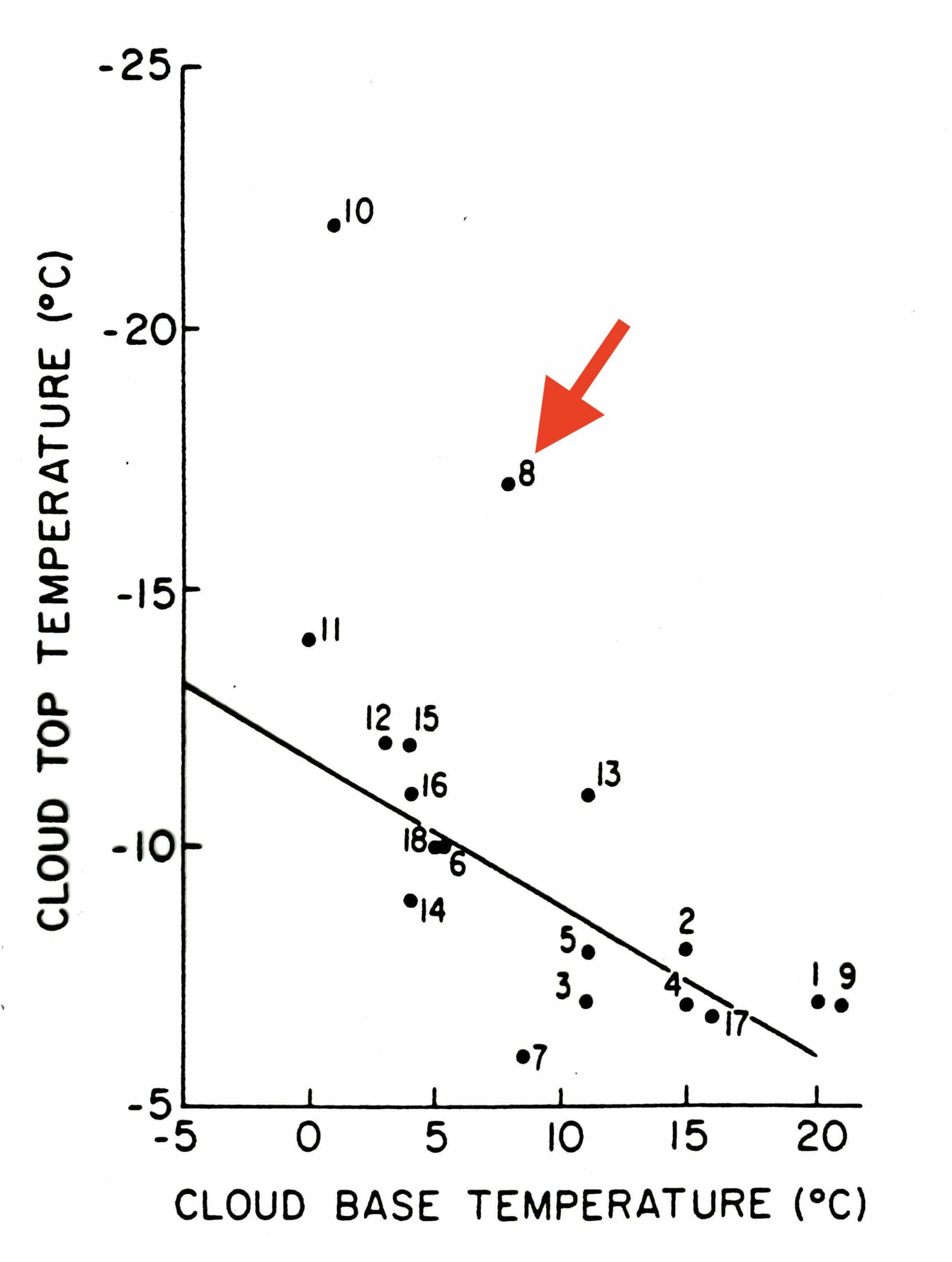
Too, the temperature at which ice first appeared in Israeli clouds, according to Prof. Gagin’s reports, was much lower than similar clouds as seen by data point 8 in the figure below constructed in 1984 (published  in  1988,  Rangno  and  Hobbs,  Atmos.  Res.)

When I read about how seeding was carried out in the first experiment, Israel-1,  I learned to my astonishment that only about 70 h of seeding was done during whole winter seasons upwind of each of the two targets by a single aircraft.  I concluded that there could not possibly have been a statistically significant effect on rainfall from seeding clouds given the true precipitating nature of Israeli clouds, the number of days with showers,  and the small amount of seeding carried out.  In Israel-2, the experimenters added a second aircraft and 42 ground cloud seeding generators (NAS 1973).  They, too,  must have realized they hadn’t seeded enough in Israel-1, I though.

Another red flag jumped out in the first peer-reviewed paper that evaluated Israel-1 by Wurtele (1971, J. Appl. Meteor.),   She found that the greatest statistical significance in Israel-1 was not in either one of the “cross-over” targets, but in the Buffer Zone (BZ) between them that the seeding aircraft was told to avoid.  This BZ anomaly had occurred on days when southernmost target was being seeded.   In her paper, Wurtele quoted the chief meteorologist of Israel-1, Mr. Karl Rosner, who stated that the high statistical significance in the BZ could hardly have been produced by inadvertent cloud seeding by the single aircraft that flew seeding missions.

The original experimenters, Gagin and Neumann (1974) addressed this statistical anomaly in the BZ  but did attribute it to cloud seeding based on their own wind analysis.

A Hasty 1983 Submission

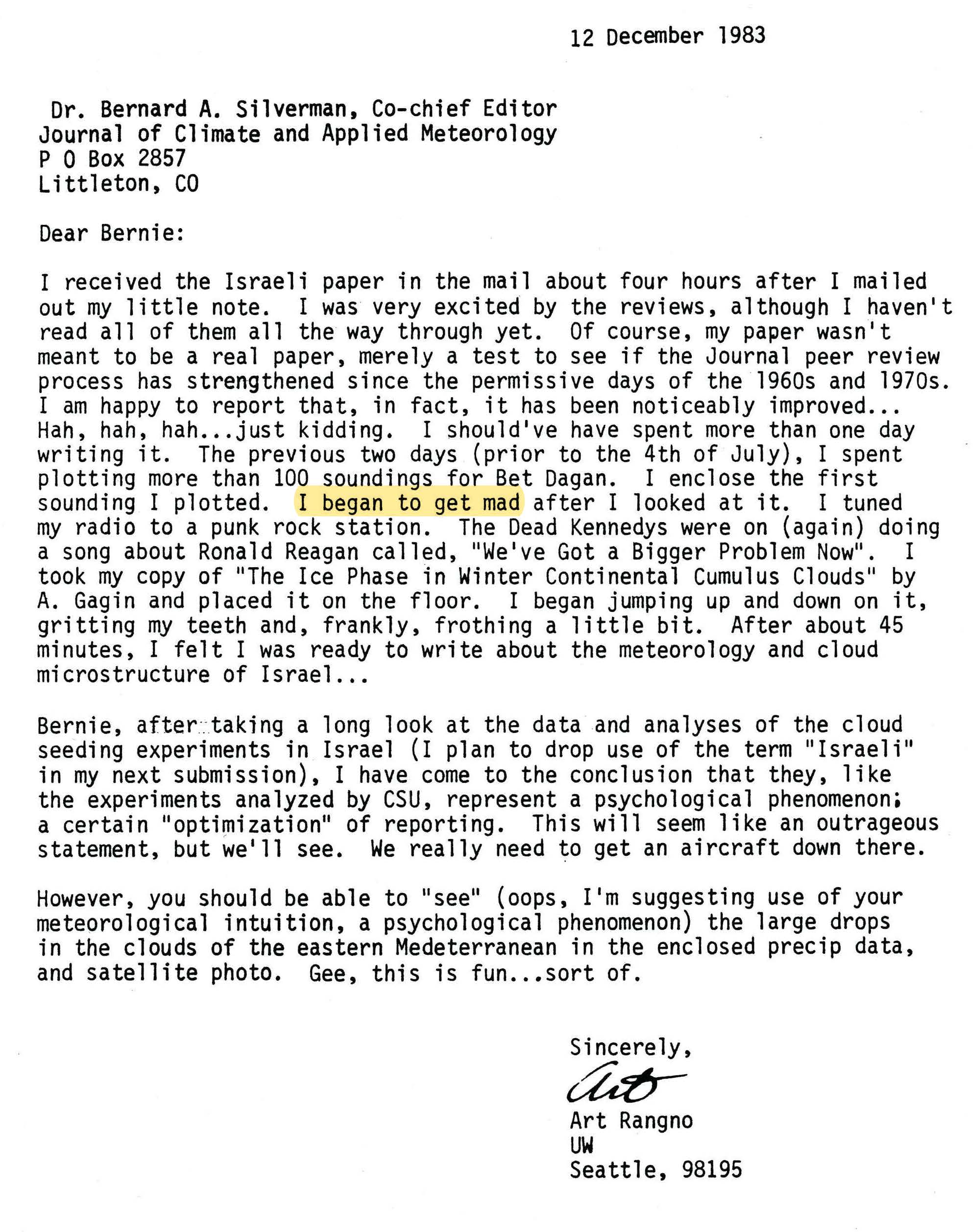
Armed with all these findings, I decided to see how fast I could write up my findings and submit them to the J. Appl. Meteor.;  I came into the University of Washington on July 4th, 1983, and wrote the entire manuscript that day. I submitted it to the J. Appl. Meteor. the next day.    (Prof. Hobbs was on sabbatical in Europe at this time.)

I was sure it would be accepted, though likely with revisions required.  No reviewer could not see, I thought, that there was a problem with the existing published cloud reports from Israel.

My conclusions were against everything that had been written about those experiments at that time, that the clouds were not ripe for cloud seeding, but the opposite of “ripe” for that purpose.

In retrospect, it wasn’t surprising that I was informed six months later that my manuscript was rejected by three of four reviewers: “Too much contrary evidence.  You can’t be right” was the general tone of the message.

Nevertheless, I was surprised by the rejection, thinking my evidence was too strong for an outright rejection.  I tried to make the best of it in a humorous way to the journal editor, Dr.  Bernard A. Silverman, passed the news along.  I hope you, the reader, if any,  smile when you read this: In 1984 at the Park City, UT, Weather Modification Conference, I had my first personal interaction with Prof. Gagin.   I was giving an invited talk with an assigned title at that conference about the wintertime clouds of the Rockies, “How Good Are Our Conceptual Models of Orographic Cloud Seeding?”

Prof. Gagin  informed me that he had been one of the four reviewers of my 1983 rejected manuscript.  He “lectured” me sternly between conference presentations about how wrong I was about his published descriptions of Israeli clouds that had a hard time raining naturally until they got deep and cold at the top.

Rejection and Lecture Have No Effect

The rejection of my 1983 paper and Prof. Gagin’s “lecture” about how wrong I was about Israeli clouds, however, had no effect whatsoever on what I thought about them. 

I felt I could interpret balloon soundings just fine after the hundreds and hundreds I examined in Durango with the CRBPP while looking out the window to see what those soundings were depicting.  I marveled, instead, that reviewers couldn’t detect the obvious, especially Dr. Bernard A. Silverman, the Editor of the J. Appl. Meteor.

After that rejection that moved on to studies of secondary ice formation in clouds in Peter Hobbs group, published in Hobbs and Rangno 1985, J. Atmos. Sci.), but the thought of going to Israel began to surface.    Someone has to do something!

It was about this time that I read about American physicist, R. W. Wood, going to France to expose what he believed to be the delusion of N-Ray radiation reported by Prosper René Blondlot (Broad and Wade 1982, Betrayers of the Truth).  I thought, “I bet I could do that same kind of thing,” thinking that  Prof. Gagin might well be similarly deluded about his clouds.  

A Resignation Followed by the Cloud Investigation Trip to Israel 

And so, following the historical precedent that R. W. Wood set, I hopped on a plane to Israel at the beginning of January 1986 following my resignation from Prof. Hobbs’ Cloud and Aerosol Research Group.

Resigning from the Job I Loved .

My resignation was in protest over issues of credit here and there that had been building up for nearly a decade in Peter Hobbs group2.  Peter had lost several good researchers over this same issue.  In a late December 1985 meeting with Prof. Hobbs prior to my January 1986 trip,  he described me as “arrogant” for thinking I knew more about the clouds of Israel than those who studied them “in their own backyard.”

“Confident” would have been more appropriate than the word, “arrogant” Prof. Hobbs had used.  I smirked when he said that; I couldn’t help myself.  I had done my homework in the process of writing that short paper in 1983 critical of those cloud reports when Peter was on sabbatical.  In fact, I was so confident about my assessment of Israeli clouds that I told Prof.  Peter Hobbs,  Prof. Robert G. Fleagle (also with the University of Washington) and Roscoe R. Braham, Jr.3,  North Carolina State University, and others, that I was about “80 % sure” of my assessment of Israeli clouds from 7,000 miles away even before I went.

My Agenda

It was true, however, that I wanted to show the world by going to Israel that I was the best at “outing” mistaken or fraudulent cloud and or cloud seeding reports, ones that were considered credible by the  entire scientific community, including Prof. Hobbs4.  However, virtually any low-level forecasting meteorologist could do what I did, especially storm chasing types like me, that was the fun of it.

And, here was a chance to do something that would be considered, “historic,” just like Wood’s trip to France was!

Another intriguing factor contributing to the idea of going to Israel was the statement expressed by Peter Hobbs to me a few years earlier; “No one’s been able to get a plane in there.”  He told me that British meteorologist and cloud physics expert, Sir B. J. Mason, had said the same thing to him.  I wasn’t a plane, but by god, I was going to “get in there.”   The view of Prof. Hobbs and Sir B. J. Mason  was later to be confirmed in a letter to me in Israel by Prof. Gabor Vali, University of Wyoming cloud researcher who wrote of six attempts to do airborne research of Israeli clouds, all denied.

Too, I looked forward to going to Israel and seeing what that country was like, too, with all of its biblical history.

And, if it was a case of delusion, as American physicist, R. W. Wood, encountered with the N-Ray episode, Prof. Gagin would be happy to cooperate with me and let me see radar tops of precipitating clouds. Prosper-René Blondlot had cooperated with Dr. Wood, allowing him to watch an N-Ray experiment.

But if Prof. Gagin didn’t cooperate with me, I could just hop on the next plane back to America.  I would “know” I was right about those clouds without even seeing them!

=============

1Corrections to Kerr’s 1982 Science article were published by Prof. Hobbs in Science in October 1982.  In the original article, Prof. Hobbs inadvertently led Kerr to believe that he himself, and not me, had conducted the reanalysis and other work that undermined the Climax cloud seeding experiments.  Prof. Hobbs apologized to me as soon as he saw Kerr’s article. Still…..

2Authorship sequences on publications under Prof. Hobbs’ stewardship sometimes did not represent the progenitor of a work; i.e., that person who should be first author;  the person who originated the research, wrote the drafts describing results,  the person who had done all the analysis that went into it, as in these footnoted cases of authorship where  Prof. Hobbs had placed himself as lead author.    Prof. Hobbs was a wonderful science editor and made great improvements to drafts that he received.   The authorship sequence problem was to mostly go away after I resigned.

3My resignation letter was 27 single spaced pages!

4Prof. Braham kept the letters I wrote to him and they can be found in his archive at North Carolina State University.

5See Prof. Hobbs 1975 “Personal Viewpoint” comment in Sax et al. 1975, J. Appl. Meteor., “Where Are We Now and Where Should We Be Going?” weather modification review.

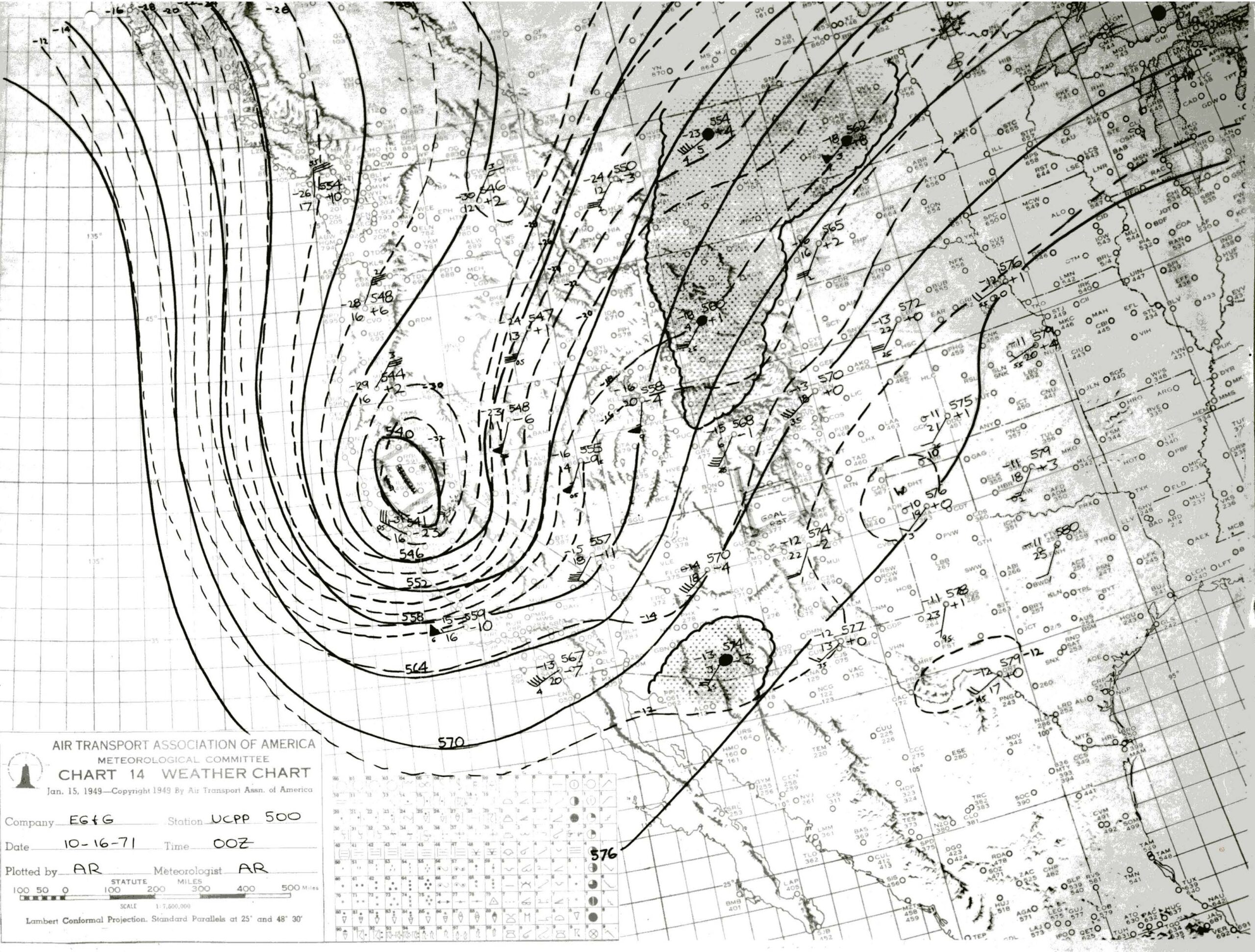
Chapter 2: A JOB IN DURANGO, COLORADO, THAT EVENTUALLY LED ME TO ISRAEL

This story begins with my first full-time job after graduating from San Jose State College.  I was hired as a weather forecaster by E. G. & G., Inc.,  in Durango, Colorado in support of a massive randomized cloud seeding experiment called the Colorado River Basin Pilot Project (CRBPP).  It was intended to prove that seeding wintertime mountain storms was a viable way of adding water to western rivers over a large area.   I was to work under lead forecaster, J. Owen Rhea, an expert on wintertime mountain storm forecasting.  Paul Willis was the Project Manager.  The project was intended to replicate stunning cloud seeding successes reported in Colorado by Colorado State University (CSU) scientists, but in the CRBPP, over a much larger area than in the CSU experiments.

The Durango job was to change my life forever, and eventually lead me to Israel as a skeptic of reports of cloud seeding successes.  Ironically, that change was to involve North American Weather Consultants,  and it’s president, Mr. Robert D. Elliott, for whom I had worked in 1968 in Goleta, CA,  as a summer hire between semesters at San Jose State, and again when on loan from the CRBPP  in the summer of 1972 in statewide cloud seeding program in South Dakota.

By time the Colorado River Basin Project (CRBPP), the nation’s largest, most costly ever mountain randomized cloud seeding experiment  ended after five winter seasons,   I had become an orographic cloud seeding “apostate. ”

What caused this epiphany?

This metamorphosis from  an idealistic and naive forecaster  coming right out of college happened due to seeing what I think most scientists would term “misconduct” in the journal literature during the CRBPP in 1974 combined with misleading news releases from the BuRec sponsor of the CRBPP.  In the journal article,  the two authors were asserting things they knew weren’t true.  I personally knew that they knew this.  I decided that  I was going to do something about this deplorable situation after the CRBPP ended.

I then had come to believe that the cloud seeding successes reported by CSU researchers couldn’t possibly have been real ones  due to the many seeding impediments that turned up during the CRBPP (clouds not ripe for seeding as had been described, inversions that blocked the seeding material in the wintertime,  cloud tops not at the heights they were supposed to be, etc.)

It was very troubling to me that the many published scientists that were associated with the CRBPP and knew that false claims had been published in the 1974 journal cloud seeding paper  did nothing.  In that 1974 paper, for example, one reads that the temperature at 490 mb in the atmosphere (about 18,000 feet above sea level) above Wolf Creek Pass, a central target of the CRBPP, was representative of cloud top temperatures during storms.   Both authors, due to the hundreds of rawinsondes launched during CRBPP storms, knew this was untrue.  Robert D. Elliott was one of the two authors.

I  waited years for a correction by the authors, or a journal “Comment” by a knowledgeable, published scientist pointing out that at least this one claim in that article was untrue.  The silence on the part of those many scientists I expected to do SOMETHING was deafening.   I, too,  was part of that “silence.”

Talk Sounds of Silence slide:  a pptx that after hours of investigation I am not able to insert, thanks to changes in WP.  It downloads and then you can play the slide.  In the meantime, this poor substitute for the real thing:

The false claim/misconduct I am referring to appeared in one of the most cited cloud seeding articles of all time, entitled, “The Cloud Seeding Temperature Window.”

Robert D. Elliott, one of the two authors of that 1974 paper was intimate with the CRBPP data as the official evaluator of the CRBPP.  That CRBPP data demonstrated that the claim in his paper that cloud top temperatures over Wolf Creek Pass averaged 490 mb  was false.  In his next visit to Durango I asked him,  “How could you write that (claim)?”   He replied that he had, “just sort of gone along with Lew” (Lewis O. Grant) his co-author.

I thought of Shoeless Joe Jackson and the little kid that said to him, “Tell me it ain’t so, Joe!”, that he had cheated in the Black Sox World Series scandal.  I felt just like that little kid must have.  This was the same Bob Elliott that I had worked for in Goleta  and admired so much.

So, that was the epiphany for me.   I then thought that nothing might be true in the cloud seeding literature no matter how highly regarded that literature or experiment was by the scientific community.

I had come into CRBPP a little too naïve and idealistic, and  when the CRBPP ended, that idealism was nearly gone and replaced by suspicion of any orographic cloud seeding success unless I had personally validated it. Over the next two decades, I was to reanalyze six prior cloud seeding successes in the peer-reviewed literature and not ONE was the success it was deemed to be by the experimenters who conducted it.

This ephiphany set the stage for what was to happen a few years later concerning the scientist in Israel whose work in clouds and cloud seeding Prof. Joanne Malkus Simpson admired so much.

After the CRBPP had ended, I was asked to do an interview about it in November 1975 in the local newspaper, the Durango Herald.   In that interview, I stated exactly what I planned to do; reanalyze all the Colorado State University cloud seeding work that had led to the massive funding of the CRBPP since I now deemed that literature highly unreliable.

After living the winter of 1975-76 in Durango, living off my savings while gathering runoff and CRBPP precipitation data, I was hired for a May-August seeding project in South Dakota by Atmospherics, Inc.  I had worked for them in the summer and fall of 1975  as a radar meteorologist in Madras (now Chennai), Tamil Nadu, India.  While mountain cloud seeding was suspect, Joanne Malkus Simpson and co-authors were published results of successful cloud seeding of tropical Cumulus clouds like those in India.  That’s why I had no qualms about taking that job in India in 1975,  Joanne had influenced me again.

Near the end of the 1976 project in SD, I was interviewed for a job at  the University of Washington by Prof. Larry Radke and Prof. Peter V. Hobbs.  I joined Prof. Hobbs, Cloud Physics Group, as it was known then, in September 1976.

After unraveling bogus cloud seeding successes in Washington State (Hobbs and Rangno 19781 and in Colorado (Rangno 1979, Hobbs and Rangno 19791),  Prof. Peter V. Hobbs who saw I had an interest and skill in examining the cloud seeding literature, said to me that “if you really wanted to have an impact, you should look into the Israeli experiments.”  It wasn’t long before I began reading critically about them.

1Authorship sequences in Prof. Hobbs group, as in these cases, do not reflect who initiated the work, carried out the analyses and wrote the drafts that Prof. Hobbs improved with his great editing skills.


Chapter 1. JOANNE, ABE, AND ME: MY ONLY MEETING WITH JOANNE

This is a story about Joanne (Malkus) Simpson and our mutual study interest, Prof. Avraham “Abe” Gagin of the Hebrew University of Jerusalem, the leader of the world famed Israeli cloud seeding experiments that took place in the 1960s to 1970s.  This is a story having irony.  For more about Joanne Simpson and her major contributions to meteorology, see J. R. Fleming’s, “First Woman: Joanne Simpson and the Tropical Atmosphere”.  She was a real superstar.

(https://www.amazon.com/First-Woman-Simpson-Tropical-Atmosphere/dp/0198862733).

My own modest claim to fame,  partly for the work reported here:

washington.edu/…/two-uw-researchers-honored-by-un-for-excellence-in-weather-modification

Following the untimely passing of Professor Abe Gagin[1], Joanne Simpson stated that, “statues will be raised in many towns and halls of fame” in his memory due to his contributions to cloud seeding. Her testimonial appeared in the 1988 memorial issue to A. Gagin of the J. Weather Modification and is shown at the end of this account.  The memorial issue of that journal is here:

(https://journalofweathermodification.org/index.php/JWM/issue/view/38/_24)[2]

As a measure of Prof. Gagin’s stature when he passed and why statue building might be considered for him, the October 1989 J. of Appl. Meteor. also issued a memorial volume to Prof. Gagin in due to his work in cloud seeding.  The preface to that memorial issue, written by Arnett S. Dennis, a former co-author of Joanne’s, is also shown at the end of this account.  Hardly any scientists are tributed by memorial issues of journals, much less, two!  Prof. Gagin’s frequent co-author in describing the results of the Israeli cloud seeding experiments, Prof. Jehuda Neumann, was ALSO tributed with a memorial issue of the J. Appl. Meteor. when he passed ten years later.

Prof. Gagin passed in September 1987 at the untimely age of 54, a few months after learning in a letter from Prof. Peter Hobbs that my manuscript, “Rain from clouds with tops warmer than -10°C in Israel,” had been accepted for publication by the Quart. J. Roy. Meteor. Soc.  This paper showed that the clouds of Israel were completely different than the ones Prof. Gagin was repeatedly describing in the literature and at conference.

At the same time of his passing, Prof. Gagin was also being pressured by his own chief meteorologist, Mr. Karl Rosner, to publish the previously omitted data for the south target of Israel-2.  This was the 2nd randomized cloud seeding experiment that was conducted from the 1969/70 through 1974/75 Israeli rain seasons.  The reporting of Israel-2 had been confined to the north target where there was an appearance that cloud there had pretty much replicated what had been reported in ALL of Israel-1.

The testimonials to A. Gagin by many leading scientists in the cloud seeding domain were omitted in the digital version of the 1988 JWM volume when digitizing  was done many years later but can be found at the end of this story.

My one and only in-person interaction with Joanne Malkus Simpson:  “Go into journalism not meteorology.”

I met with Joanne (Malkus) Simpson in January 1963 at UCLA.  She had been brought to my attention when she had been named, Los Angeles Times “Woman of the Year.”  I was meeting with her, a professor of meteorology, to try and convince her that as a 20-year old junior college student, I was worthy of getting into the UCLA meteorology program even though I did not have a high enough grade point average to do so.  UCLA required a minimum of 2.4 and mine was barely above 2.0000x.  And I had to repeat all but one of my calculus and physics classes at Pierce Junior College.  I had spent too much time playing and practicing for intercollegiate baseball, but I also had no natural aptitude for physics and calculus.

UCLA was the only school offering courses for a degree in meteorology in California in 1963, and that’s why I went there to meet with Dr. Malkus, as she was known as then.  It seemed like UCLA offered the only hope of achieving my dream to become a meteorologist.   I thought explaining my fanaticism about weather would do the trick.  For example I had gone to Louisiana and ended up near Galveston, Texas, chasing Hurricane Carla in September 1961, and chased numerous thunderstorms in the Southern California desert during the summers.

Some early background that if told to Joanne, would convince her I was worthy of UCLA’s program

I began collecting weather maps out of the Los Angeles Daily News when I was in the 4th grade.  (Thank you, Mr. Borders and Mr. De la Gega, my 4th and 5th grade teachers, for encouraging my budding interest!).  Below a sample of a real weather map with isobars from the Los Angeles Daily News for December 26, 1951.  How exciting is this?

Too, I was subscribing to the “Daily Weather Map” by the time I was ten years old.   By the time I was 13 years old, I  was subscribing to the Monthly Weather Review and several states’ government, “Climatological Data” from NOAA.   (Well, my mom subscribed for me.)

I crazily thought that telling Joanne about all this would get me in to UCLA sans the grade requirement.

“The Meeting”

The first thing Joanne Malkus asked me when she kindly took a minute out of her busy schedule (I had made no appointment) was how my grades were in math and physics.   I told her I got “Cs” but did not reveal to her that those “Cs” were on the second try!   She then asked me, “How are your grades in the humanities?” “B’s.”   With my answers to but two questions, Prof. Malkus then advised me to give up the thought of becoming a meteorologist, and become, perhaps,, “a journalist and write about weather.”  And that was the end of the meeting; in less than five minutes I was advised to give up a life-long dream.

Yes, I “held myself back,” to repeat courses in math and physics, and in doing so lost my collegiate baseball eligibility.  Who would do this?But.. that stubbornness, to keep at it, not giving up  my dream, turned out to be key to my whole life.  But perhaps it could be seen as a character flaw, too?

Joanne Malkus assessment of my potential as a student in the UCLA meteorology program was, in fact, “spot on.”

Thank you, Joanne (Malkus) Simpson.

Why?

In retrospect, I never could have gotten through the highly theoretical program at UCLA in those days, a program that featured Morton Wurtele, Yale Mintz, Morris Neiburger, Jörgen Holmboe, Zdenek Sekera, James Edinger, and Jacob Bjerknes, the latter who had founded the Department in 1940.  Fjørtoft, a visiting Norwegian professor of meteorology, or possibly Holmboe, was slinging vector equations across a blackboard as I walked down the hall following my meeting with Prof.  Malkus.  At UCLA in those days, one would have walked the halls with giants. A few years earlier I had tried to get the autograph of Prof. Bjerknes at UCLA since meteorologists like him were to me,  like baseball superstars to other, “normal” kids.  Prof. Bjerknes was not in his office that day, but rather there was a sign said he was, “emeritus,” which I took to mean he was especially good as a scientist, not that he was retired.

After my 1963 meeting with Joanne Malkus I was angry and hurt and promptly went to the UCLA bookstore and bought one of the books they were using in their meteorology program, I was that mad.  The book?  “Introduction to Theoretical Meteorology” by Seymour Hess.  I stopped reading it after a day or two.  It had too many equations. 

It took me more than 25 years to realize that Joanne Malkus Simpson had saved me from myself.   I wrote her a note thanking her  for her keen assessment in the early 1990s.   She did not reply.  

Life After “The Meeting”

In  the spring of 1963 I had lucked out and gotten a job as a “research analyst” at Rocketdyne in their H-1 rocket group in the Simi Hills above the San Fernando Valley.  Rocketdyne was a division of North American Aviation.  By mid-1964, I was “suddenly” married and had a son.  Becoming a meteorologist was slowly slipping off the radar, but I loved my job at Rocketdyne (about Rocketdyne)  and the young, great engineers that led my group, like Wayne Littles  who later became the 8th director of the NASA Marshall Space Flight Center in Huntsville.  They set great examples as engineers and leaders.

Rocketdyne’s Simi Hills test division where I worked, had a weather forecast office and I bugged the guys there, Joe Glantz (former State Climatologist for California) and Hank Weiss, virtually EVERY lunch time during the winter rain season.  We talked “progs” such as they were then.

I also started on another path toward being a meteorologist while married, still not giving up on my goal.  I took two correspondence courses in meteorology from Penn State University (graded by A. K. Blackadar and F. B. Stephens).

When my marriage was going on the rocks in the mid -1960s due to my immaturity, I learned that San José State College had started a program in meteorology.  I applied and got accepted even with my crummy grade point average from junior college.  It was an exciting time for me to meet, for the first time in my life, other weather-centric guys like me when I arrived at SJS in the spring of 1967.  One of them, Bill Hall, was to become something of a modeling superstar at the National Center for Atmospheric Research.  Byron Marler, who ended up with PG&E,  became a life long friend.

I also became friends with the chair of the Meteorology Department in those days, Dr. Albert Miller.  He helped me tremendously by hiring me as a student assistant while I was an undergraduate, and later, as a graduate assistant in the synoptic lab.  Dr. Miller was like a 2nd dad to me.  Also key to being able to continue at San Jose State  was my former Rocketdyne supervisor, A. Dan Lucci, who re-hired me as a summer employee at Rocketdyne in 1967 after my first semester at San Jose State.

Another person whom I became good friends with at SJS due to working together, was C. Donald Ahrens, who was to go on and write the most popular meteorology book for 101 college classes in the nation, “Meteorology Today” and several other books.    His wife was to type the first chapter of his Meteorology Today book on my very own Hermes 3000 manual typewriter!

Don and I also worked together on tetroon (constant level balloon) paths in the Bay Area that disclosed where the onshore maritime air was going.  We worked in a corrugated metal building next to the football stadium far from the meteorology department.  To pass the otherwise tedious time, we had KGO-FM’s no commercials, top 40 radio station with DJ “Brother John” blaring.  And, we would break into song!  We really liked the Four Seasons, Western Union, by the Five Americans, and so many others that  we sang to many of them, harmonizing,  while our heads were down plotting tetroon paths.  I still smile thinking of those days.

In the summer of 1968, I worked for non-other than North American Weather Consultants under CEO, Robert D. Elliott.  That  summer Tor Bergeron came to visit!  For those readers who remember NAWC in Goleta, California, here’s the photo I took of the whole gang, Elliott, Bergeron, Keith Brown, Russ and Elona Shaefer, John Walter and others whose names I  can’t bring to the “surface:”

I’ve never had a job I loved as much as that summer one at NAWC, or people I had so much in common with there.   I also had a chance to meet the head of NAWC, the famous Robert D. Elliott, whom I came to admire so much while at NAWC.  My assignment at NAWC was mainly to draw weather maps of frontal systems coming into southern California and “lake effects” for the Great Salt Lake in winter.  I was in heaven.

Back at San Jose State in the fall of 1968, I started a tiny forecast blurb on the front page of the Spartan Daily.  It devolved into political satire at the suggestion of the Daily’s editor after one my forecasts, “…with the stratus, not the campus, burning off by noon.”  There had been some fires set in trash cans by protestors the day before on the San Jose State campus.   The Daily editor said I should do more of that, and off I went into some pretty lame stuff.  Oh, well; “let’s move along now, nothing to see here.”

I also began to write opinion pieces in the San Jose State Daily, mostly due to the encouragement of Prof.  Phil Wander, my speech teacher.  I deem him one of the most important influences in my life. He thought I had something to say, such as this from a talk I gave in his class:

I was also writing articles for the college paper on ending student funding of intercollegiate athletics due to Governor Reagan’s budget cuts, pollution and the effects on minorities (above), suggesting parking costs be based on the number of people in the car, and on the war in Vietnam, the latter as many others were.  My SJS experience is pretty much reprised in the “friendly” article below, miniaturized for the sake of humility, of which, I probably don’t have enough of:

I graduated from modest San José State College, as it was known then, with a Bachelor of Arts degree in meteorology in January 1969.   My grades, for so much effort I put into my meteorology classes with lots of math were,  nevertheless, mostly mediocre except in synoptic classes.  However,  I was a good weather map drawer and getting A’s in synoptic classes really helped raise my grade point average.

Perhaps due to writing topical articles in the SJS Spartan Daily,   I received the Meteorology Department’s Achievement Award when I graduated in January 1969.  Egad.   I was never sure I deserved it with big hitters and great students like future NCAR cloud modeler, Bill Hall, and other top students like Norm Hoffman, Chris Fontana, in my class getting “A’s.”

An example of over valuing my satirical talent that were on display in the Spartan Daily weather forecasts,  in the summer of 1969, I went to KRLA-AM in Los Angeles to suggest that I could be a weather forecaster for them.  KRLA was a top 40 station whose news team suddenly began doing news satire in 1968, and they dared to offend.   What they did was astounding to me and was even noted in Time magazine!

I wondered if I could be their weather forecaster, and maybe chip in to the their comedy team,  later called,  “The Credibility Gap”.  I showed a page of my Spartan Daily forecasts to a young Harry Shearer, a member of the KRLA satirical news team.  He quickly glanced across them and summarized his thoughts on them like this; “They’re not that funny, are they?”  End of interview.

I hung around San Jose State attending graduate classes until the spring of 1970.   At that time I was offered a job as an assistant weather forecaster with the nation’s largest ever randomized mountain cloud seeding experiment headquartered in Durango, CO,.  Funded by the Bureau of Reclamation, it was called the Colorado River Basin Pilot Project (CRBPP).   I was hired after being interviewed by J. Owen Rhea of E. G. & G, Inc.  in San Jose!  E. G. & G., Inc. had just been selected over North American Weather Consultants (NAWC) as the seeding contractor for the CRBPP.  Owen was going to be the lead forecaster under Paul T. Willis, the E. G. & G., Inc., Project Manager.

I really didn’t belong in grad school, either; too many equations.  Nevertheless,  it was hard to leave the excitement of SJS of those days.  SJS track stars, Tommy Smith and John Carlos had just drawn national attention to SJS,  that season’s NCAA track champion,  at the 1968 Olympics in Mexico City with their raised, “black power” fists.

I also received a job offer from NAWC in Goleta, CA, at that time, too.  I did not know until decades later that they were finalists in bidding on the same contract that E. G. & G., Inc. had won from the Bureau of Reclamation for the seeding and forecasting operations for the Colorado River Basin Pilot Project.

But the job in Durango seemed so important and exciting; I was going to be a part of a giant scientific experiment to see if cloud seeding worked and so that’s where I went.  The thought that it was exciting that I would also be living in a new climate after a lifetime in California’s.

1970:  It was now seven years since Joanne had advised me to give up the idea of being a meteorologist.  And now I was going to enter a field that she was a top expert in; weather modification by cloud seeding.


JOANNE, ABE, AND ME: THE “LONG AND WINDING” STORYBOARD

(Joanne Malkus/Simpson and Abe Gagin)

A modern-day story with elements similar to that of American physicist R. W. Wood and his exposé of non-existent “N-Ray” radiation in 1904.  R. W. Wood went to France to expose “N-rays” as the product of experimenter delusion at the turn of the century (Broad and Wade 1982); our protagonist1 went to Israel in 1986 to expose faulty cloud reports by possibly deluded scientists.

The underlying message in this life story chapter?

Hold on Tight to Your Dreams“, one of the greatest-ever song messages.  You just might make something out of yourself even when it appears you don’t have the grey matter to do it, as in my case (the “protagonist” in the outline below.)  “EOM”–skip the rest if busy.

Story board

  • A young, “weather centric” student in junior college, the protagonist in this story, meets with Prof. Joanne Malkus, a famous woman scientist and faculty member at UCLA in meteorology in 1963. He is there because her university is the only one in his state of California that offers courses leading to a degree in meteorology.   She has come to his attention because she had just been named, Los Angeles Times “Woman of the Year.”
  • Though he has loved clouds, weather and forecasting since he was a little kid, he tells her he is struggling in junior college with the courses that future meteorologists are required to take, ones heavy in calculus and physics, and doesn’t have the grade point average to get into UCLA from junior college.  He is hoping to convince her he is worthy of a shot in their meteorology program anyway due to his enthusiasm about becoming a meteorologist.
  • Malkus, after hearing about our protagonist’s poor grades in math and physics, suggests it would be best for him to give up his dream of being a meteorologist and to go into something less rigorous, perhaps “go into journalism and write about weather.”
  • Eventually, and holding himself back by repeating courses in math and physics to get “C’s,”  the stubborn young man becomes a meteorologist, anyway, matriculating at San Jose State College, one that starts a meteorology program a few years after his 1963 visit to UCLA.
  • By chance, our protagonist eventually ends up being an expert in the same specialty as Prof. Malkus (now Joanne Simpson) whom he had met with many years earlier;  rainmaking by cloud seeding and Cumulus cloud structure at the University of Washington under Prof. Peter V. Hobbs.
  • Simpson is particularly enamored of the work of a leading rainmaking scientist in Israel, Prof. Abe Gagin. When Prof. Gagin passes in 1987 at the age of 54,  she proclaims that, “…statues will be raised in many towns and halls of fame to his memory.”  Her view about that rainmaker is shared by many others around the world.
  • Through the rigorous execution of two well designed rainmaking experiments in Israel, each with similar increases in rain, in turn supported by repeated descriptions of Cumulus clouds plump with rainmaking potential, the experiments in Israel, by the 1980s, are deemed to be the one true rainmaking success in the world among all those undertaken.


  • Our protagonist, who on his own initiative, has exposed mistaken or fraudulent claims of “successes” in the peer-reviewed rainmaking literature since the late 1970s, comes to doubt the validity of the published work of that very same scientist for whom “statues will be raised.”
  • In the late 1970s after exposing ersatz seeding successes in Colorado and Washington State, our protagonist’s lab chief, Prof. Peter V. Hobbs, challenges our protagonist, a mere staff member in his group, to investigate the famous experiments in Israel, advising him, “if he wanted to have a greater impact” in his specialty of unraveling false cloud seeding claims.
  • Our protagonist begins to do so, and supplies a list of questions, at the request of Prof. Hobbs, to ask Prof. Gagin about his experiments when Prof. Gagin reports on them at a 1980 international conference in France.
  • In 1983, while Prof. Hobbs is on sabbatical in Europe, our protagonist submits a paper to a journal that asserts that the clouds in Israel are not ripe for rainmaking, but rather quite the opposite, and that too little seeding was carried out in the Israel-1 cloud seeding experiment was not enough to have affected rainfall.  Israel-1 was the first of the two famous experiments.
  • The paper is rejected by three of four reviewers. One of the “reject” reviewers he later learns, is Prof. Gagin himself.
  • Our protagonist is undaunted by the rejection of his paper, and begins to contemplate going to Israel after he also reads about American physicist, R. W. Woods’ trip to France to expose N-Rays.
  • Our protagonist resigns at the end of 1985 from the job he has loved over credit issues with Prof. Hobbs and goes to Israel on 4 January 1986.
  • Prof. Hobbs is not onboard with our protagonist’s views on the clouds of Israel before he leaves. He describes our protagonist as “arrogant” for thinking he knows more about the clouds in Israel than those “who have studied them in their own backyard.”
  • Our protagonist eventually exposes the famed rainmaker’s faulty work on several fronts beginning with his self-initiated and self-funded cloud investigation to Israel in 1986, a science excursion that resembles the historic trip by R. W. Wood to France. During the first storm in Israel he finds that the cloud descriptions by Prof. Gagin are, indeed, in error.


  • Our protagonist is welcomed by the Israel Meteorological Service (IMS) and given a tiny amount of desk space where he collects historical  data concerning Israel’s clouds and rains, data that will be used in a journal paper.


  • Not surprisingly, he finds that all the IMS forecasters know that it rains from clouds that are contrary to those described by Prof. Gagin’s descriptions in the journal literature.  They are much shallower than those described as necessary to develop rain by Prof. Gagin, making them appear necessary for seeding to take place to make them rain.


  • Following a first cordial meeting at Prof. Gagin’s office following a week of dry weather,  a second meeting occurs after several days with rain. Our protagonist discusses his observations with Prof. Gagin, which are sharply at odds with his journal cloud descriptions of Israeli clouds.  Gagin, understandably at the end of our protagonist’s discussion, asks him to leave and never come back; “do your own thing.”


  • Despite what happened in the second meeting, a third and final meeting is arranged with Prof. Gagin on 2 February 1986.    It occurs at the offices of his  rainmaking headquarters on the grounds of Ben Gurion International Airport.  Our protagonist asks if he can visit this headquarters to observe radar cloud top heights during storms.  His request is declined by Prof. Gagin, who insists that his cloud descriptions are correct.


  • In  mid-February 1986 our protagonist meets with the “Chief Meteorologist” of the Israeli cloud seeding experiments, Mr. Karl Rosner. He is informed by Mr. Rosner that a large amount of data was omitted in the reporting of the 2nd “confirmatory” rainmaking experiment whose results were published in 1981.  As it was published without that data, Israel-2 appeared to be a strong confirmation of the results of Israel-1 in the eyes of the world. Mr. Rosner, he tells our protagonist,  is now trying to get Prof. Gagin to publish the missing data.


  • The weather fails to deliver any more significant storms through 10 March, and our protagonist departs Israel after 11 weeks of cloud studies and data thanks to the IMS.


  • In June 1986, in a letter to Prof. Gagin, our protagonist summarizes his cloud findings; his letter is copied to several leading scientists. In this letter, our protagonist vows that he will leave the field of meteorology altogether if his observations concerning the clouds of Israel are wrong; that high concentrations of ice crystals occur in clouds with tops >-12°C. He challenges Prof. Gagin to leave the field if he is right.
  • Gagin, just 54 years old, passes in 1987 a few months after being notified in a letter by Prof. Hobbs that our protagonist’s cloud investigation has been accepted for publication in the Quart J. Roy. Meteor. Soc.
  • Two journals issue separate memorial issues to Prof. Gagin’s memory in 1988 and 1989, an exceptionally rare tribute that testifies to his standing. Joanne Simpson’s testimonial to Abe Gagin is published along with several others in the 1988 issue of the J. Wea. Mod.
  • The results of our protagonist’s cloud investigation are also published in 1988. It concludes that the clouds aren’t plump with cloud seeding potential as they have been repeatedly described by Prof. Gagin, but are quite the opposite of those descriptions, repeating the conclusions in his rejected 1983 journal submission to the J. Appl. Meteor.  The paper questions how cloud seeding could be effective given the actual nature of Israel’s precipitating clouds.
  • Like N-rays, it is eventually it is revealed in multiple reports that the clouds ripe with rainmaking potential that were described by Prof. Gagin do not exist.
  • 1990: the “full” results of the Israel-2 cloud seeding experiment are reported as urged by Mr. Rosner.  It is now found that the “full” Israel-2 experiment, incorporating previously omitted data, had a null result contravening the previous view of Israel-2 as unambiguous rainmaking success.
  • However, it was also hypothesized in the 1990 journal article that there could have been increases and decreases in rain separately in each of the two targets in Israel-2.   Thus, when these differing results were combined as the design of Israel-2 called for, they canceled each other out, thus causing the null result of the whole experiment and leaving an enigma.
  • 1992: Our protagonist’s 1988 cloud reports are first corroborated in airborne measurements by Tel Aviv University scientists unaffiliated with seeding activities. The Israeli clouds, indeed, appear to have little rainmaking potential due to having high concentrations (10s to hundreds per liter) of natural ice crystals in them at cloud top temperatures >-13°C.  These airborne reports are reiterated in separate publications in 1994 and in 1996.  More research supporting our protagonist’s cloud investigation appears over the next 20 years.
  • 1992: a journal paper by the promoters of rainmaking, one a protégé of Prof. Gagin, claim that dust interfered with Israel-2; that actual increases in rain occurred when there was no dust and decreases in rain occurred when there was dust.   Thus, a “dust hypothesis” is put forth to explain possible real increases and decreases in rain that were suggested in the full result of the 2nd experiment in the north and south targets.


  • Joanne Simpson, who advised our protagonist to give up the thought of being a meteorologist, finds the “dust hypothesis” highly credible. Our protagonist and Prof.  Simpson are now on a collision course in opinions again.


  • Our protagonist finds the 1992 dust claim ludicrous due to his 11-week cloud investigation in Israel in 1986.  He decides that something must be done about the dust claim.  He begins working at home on his own time in 1992 on the daunting task of reanalyzing Israel-1 and Israel-2.
  • Our protagonist’s reanalyses of the two statistical experiments in Israel are published in 1995 in the J. Appl. Meteor.  Prof. Hobbs is a co-author.  The reanalyses conclude that rainmaking activities did not increase rain in either Israel-1 or in Israel-2.  The clouds are also shown to form precipitation rapidly, leaving little opportunity for rainmaking.
  • 1997: Critical commentaries of the 1995 paper are published. The number of pages of criticism of the 1995 paper sets a record for the pages of  “Comments” on a paper ever published in an Amer. Meteor Soc. journal.  An ox has been gored.  In effect, our protagonist and Prof. Hobbs have become the most “criticized” meteorologists in the history of the Amer. Meteor. Soc.
  • However, the 1995 reanalyses and the 1997 journal exchanges trigger the first major independent review of rainmaking in Israel by the Israel National Water Authority (INWA). This organization had previously relied on the reports of the rainmaking promoters and other rainmaking partisans that rainmaking was working to increase runoff into the country’s largest freshwater lake, the Sea of Galilee, aka, Lake Kinneret.


  • 1998:  The results of 19 winter seasons of randomized cloud seeding in Israel-3 in the southern part of Israel are reported. There has been no effect on rainfall due to seeding.  The results again indicate that the clouds of Israel are unsuitable for cloud seeding.


  • 2006: After several years of study, the independent Israeli review panel reports that they can find no viable evidence that rainfall has been increased in 27 years of rainmaking (1975-2002)  targeting the Sea of Galilee  watersheds.
  • The independent panel’s finding corroborates the conclusions in the 1995 reanalyses by our protagonist and Prof. Hobbs, and supports the findings of our protagonist’s cloud investigation published in 1988: the clouds in Israel are not viable for rainmaking.
  • Once again, this rainmaking story seems to have reached a conclusion when rainmaking  is terminated in 2007 or 2013.      But it is not so.
  • The promoters of rainmaking in Israel argue that air pollution has suddenly canceled increases in rain due to rainmaking activities during the last decade of the program .  They argue that the review panel’s findings of no viable increases in rain are faulty because they do not include air pollution effects.
  • The independent review panel, and several other scientists in Israel find the air pollution argument by the promoters of rainmaking unconvincing and cloud seeding of the Sea of Galilee watersheds does not resume.
  • In 2010  Tel Aviv University scientists find that the supposed rain increases in the Israel-2’s north target days lacking in “dust,” were bogus. The seeding partisans had been misled in their conclusion because stronger storms happened on days when rainmaking took place in the “dust-free” target.
  • Once again, the story seems to have reached a conclusion in 2010 due to the new independent reanalysis described above. But again, it is not so.
  • 2012: The Israel National Water Authority is convinced to try once again to see if rain can be increased by cloud seeding in a new, sophisticated, randomized experiment, Israel-4.  This time the experiment targets the mountainous, northern extremity of Israel.
  • The conduct of a new experiment is supported by airborne reports by the rainmaking partisans who conclude that the clouds have a lot of rainmaking potential in northern Israel.
  • Importantly, instead of being carried out by seeding partisans, the new experiment is carried out by independent Israeli scientists.
  • Israel-4 ends in 2020 after seven winter seasons. There is no indication that a viable amount of rain has been increased by rainmaking.   The official null “primary” result has since been published by Benjamini et al. 2023, J. Appl. Meteor.
  • This result of Israel-4 parallels the several prior conclusions by external skeptics concerning all the rainmaking activities in Israel, including those by our protagonist and Prof. Hobbs concerning Israel-1 and -2.
  • The null results of Israel-4 experiment also reiterate those of our protagonist in 1988 concerning the clouds of Israel; they are not conducive to rainmaking.
  • This time, in 2023, our “story” finally seems to have reached an end.
  • But how can the “story” end?  Think of the courage it would take for those who promoted seeding in Israel for so many decades and who have cost their own country so much in wasted seeding programs to walk away from repeated faulty analyses and descriptions of non-existent, ripe for seeding clouds?  They won’t.  Count on it!

1Art and Prof.  Peter V. Hobbs, the Director of his group,  were honored by the UN partly for the work reported here.  The 2005 monetary prize was adjudicated by the World Meteorological Organization.

If anyone has gotten this far, you can go even deeper in these posts:

Chapter 1: My One and Only Meeting with Joanne Malkus/Simpson

Chapter 2:   A Story About Lost  Idealism Concerning Science that Leads Eventually to Israel

Chapter 3: The Review of the Israeli Cloud Seeding Literature Begins

Chapter 4:  The Trip to Israel to See the Ripe for Cloud Seeding Clouds that I Doubt Exist

Chapter 5, the last:  Got Published!

A Progress Report on Science Doings…and More (updated in August 2023 after a year-long hiatus)

Dear Friends,
 
First,  turned the big Eight-Oh last year.  Truly bad; time running out.  The Grim Reaper can’t be far behind me.  Let us calm down by listening to some content about death from the Swedish band,  Ghost:
 
 
Still doing science as best I can with this ancient brain!  Lots still to do.  Why even right now, a history of the Colorado River Basin Pilot Project, conducted in the early 1970s, still the nation’s largest, most costly randomized mountain cloud seeding experiment, is in review at the J. Appl. Meteor. and Climate.  My co-author is Dave “Eloquent Science” Schultz!  Will it get published?  I dunno.  It’s not the best science story due to major oversights, failed peer-review of the prior work on which it was based, the usual stuff.
 
Some recent “contributions” posted in the past two years at cloud-maven.com:
 
One-Sided Citing in Cloud Seeding
 
 
The above was submitted to the Bull. Amer. Meteor. Soc. (BAMS) as an “essay” but was rejected by J. Rosenfeld, Chief Ed., in 2019.  This version has been rewritten and expanded from the submitted one and the word “misconduct” removed from the original title which asked the question if one-sided citing should be considered so.  I have a low threshold of scientific misconduct…
 
 One sided citing is a plague, not only in science where controversy exists,  but also in the media.  It is a phenomenon that doesn’t tell the full story but misleads readers.  Please read Sharyl Attkisson’s book, “Slanted” for media examples.
 
The Rise and Fall of Cloud Seeding in Israel
 
A special interest of mine began in 1979 or so when Prof. Peter Hobbs, the director of my group, challenged me to look into the Israeli cloud seeding experiments after I had outed faulty cloud seeding work in Colorado and Washington State.  The history alluded to in the title above has been updated after the seven season Israel-4 randomized experiment ended in 2020 with a null result.  Wow.  
 
I had previously published on the clouds of Israel in 1988, and performed extensive reanalyses of the first two Israeli experiments in 1995 with Prof. Hobbs as a co-author/editor.   Both these pubs were on my own initiative, and considerable time and dime.  (My poor wife!)  You can get the “skinny” here though the piece is pretty “fat” being a full history of the Israeli seeding experience:
 
 
A shorter version of the above article, lacking the result of Israel-4,  was rejected in 2019 by BAMS Special Ed, James Rodgers Fleming, a former member of Peter Hobbs’ group (my former group)!  I got two reviews; an anonymous, “accept, important paper, minor revisions”, and a “reject” by a promoter of cloud seeding at the Hebrew University of Jerusalem, Dr. Daniel Rosenfeld, who signed his review.
 
BAMS would not let me respond to the comments of the reviewers (Special Ed. Rodgers kindly asked BAMS “higher ups”) , so I could make those few necessary revisions to my manuscript.   I thought this refusal was unheard of, especially due to the disingenuous comments of the seeding partisan.  
 
When I queried BAMS last year after the Israel-4 null result became known, BAMS officials indicated that they were not interested in this history.   Amazing.
 
I think the long and winding road of the Israeli cloud seeding experience is a science story that every organization from states to local water districts that have paid for cloud seeding should read. You probably aren’t getting what you think IMO, as the Israeli’s found out when they got independent evaluations of their seeding efforts.
 
The Israeli story is pretty incredible because as much as $100 million in 2022 dollars was wasted on ineffectual cloud seeding due to seeding partisans who missed faults in their evaluations in reporting statistical seeding successes (or omitted data to make them look that way) and described imaginary, “ripe-for-seeding” clouds that buttressed those ersatz statistical results.   I am hoping to get a science medal from Israel for all my volunteer work.  :), sort of.
 
If you want the “big kahuna,” a full book length autobio about how a young, idealistic weather forecaster saw his idealism about science dissipated and then got into questioning the most highly regarded cloud seeding successes after he entered the murky domain of cloud seeding, its all here, in fact, too much.  But “hey” there are embedded slide shows!


LIFE STORIES
 
Also am assembling “life stories,”  a kind of “memoirs,” if you will,  a writing task that was inspired by those of my neighbors, Big Bill Cotton, and Big Roger Pielke, Sr. , both former faculty at Colorado State University, who have written their own fascinating stories.    Prof. Pielke had his own Amer.  Meteor. Soc. Symposium Day last January!  Prof. Cotton  got a medal given out only once every four years last year from the International Committee on Cloud Physics.  Wow.  While I am a pop gun compared to these science howitzers, I do think I have some interesting tales to tell.
 
Here are some chapter titles:
 
“Joanne, Abe, and Me
(Malkus/Simpson, Gagin)” 
 
Contains irony.  
 
Joanne, then at UCLA, advised me to give up the idea of being a meteorologist in 1963, and with good reason; my poor grades in math and physics.   But I became an expert in her field of cloud seeding and cloud microstructure and ended up on opposite sides on the cloud seeding reports of success emanating from Israel.  Irony+.  I was eventually proved correct in doubting those reports.  But Joanne was right in one sense; I could have never have made it through the highly theoretical UCLA program and, instead, matriculated at San Jose State, in a meteorology program that emphasized weather and forecasting along with the “hard stuff.”  I only wanted to be a weather forecaster.  Period.
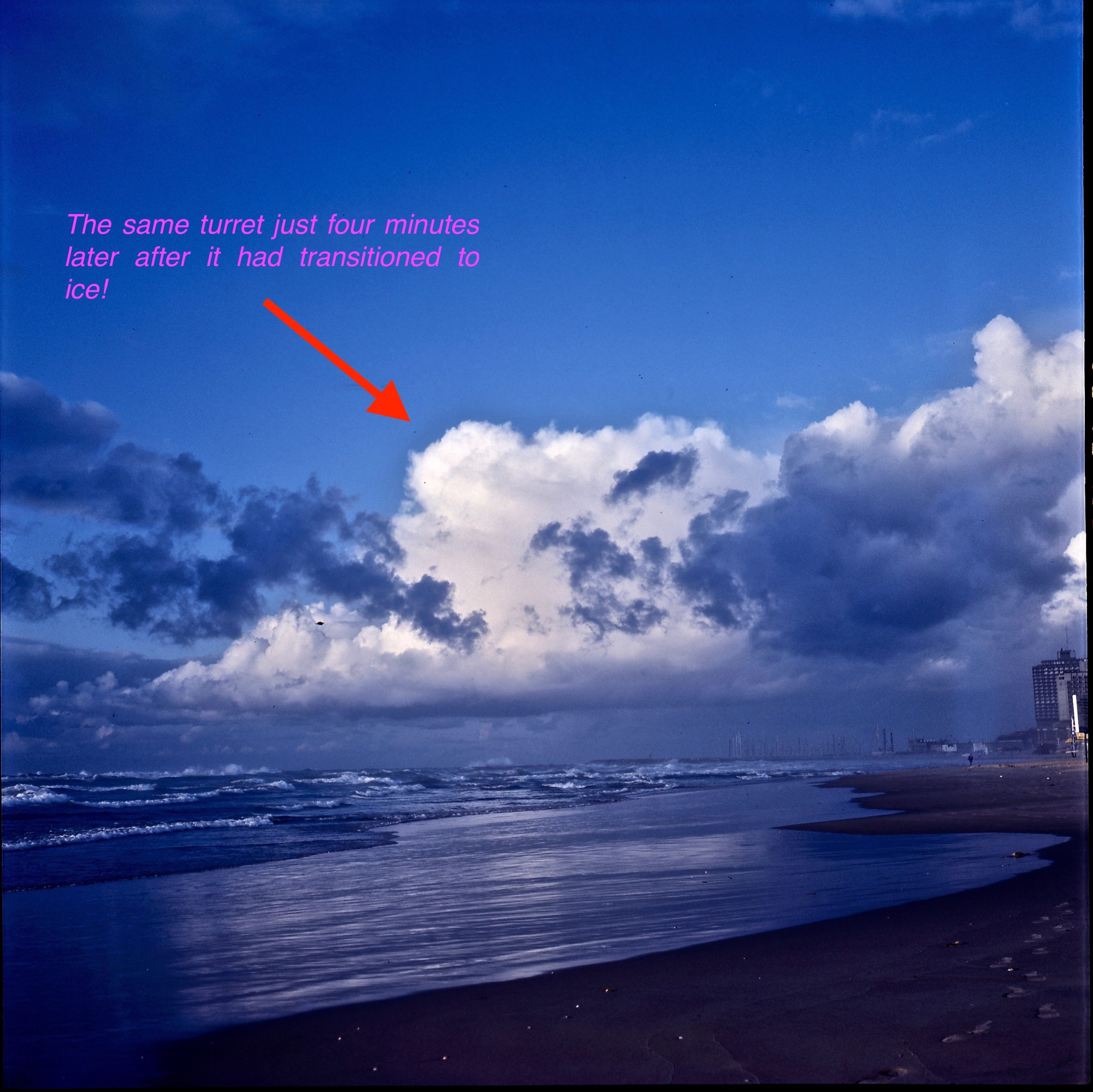
 
“Peter Hobbs and Me:  Conflict Followed by Reconciliation.”
 
I went from seeing misconduct in a journal while working in Colorado in the early 1970s to another kind of science conflict when arriving at the University of Washington; the misappropriation of credit that had embittered some members of the group I had just joined in 1976.  I got sensitized to this issue immediately by professors and staff members.  I eventually resigned from a job I loved in December 1985 in protest over this issue submitting a 27 page tome to Peter about it.    But, by December 1987, I was rehired by Peter Hobbs!  There were no further credit issues!  What a story.  I’m still amazed!  I could not have done what I did without him.
 
“The Nightmare Before Banff”
A Science ‘Coming Out  Party’ for a Cloud Seeding Activist Who Had Never Before Presented at a Conference.”  
 
I saw months in advance  in the Bull. Amer. Meteor. Soc. program for Banff that it was going to be reviewed by the seeding experimenters whose work I had reanalyzed before I gave it! “WTF.”  I had months of palpitations concerning my upcoming and sure humiliation at Banff.  But the evening before my presentation, the lead professor of the experiment I showed was due to a natural storm bias he told me they weren’t going to talk about my paper.  
 
“The Trials and Travesties of a Seattle Mariners Batting Practice Pitcher.”  
 
Yeah, I did that for a couple of years inn the Kingdome in the early 1980s before I was fired for throwing balls that had  “movement” (cutting the ball) a backup catcher said.  Maybe, too, for beaning Joe Simpson in the knee, the Mariners’ center fielder…
 
And maybe one entire life chapter about that 1960 baseball game in which I got my third hit, a walk off single in the 10th inning to defeat the hated L. A. Dodger Rookies. The Rookies was a premier baseball team that no one on my White Front Redlegs team was good enough to make.   Let us review that historic game here as I do everyday:
 
 
Brain now empty,
 
“Octo” Art